Coalitions for Shorebird Conservation

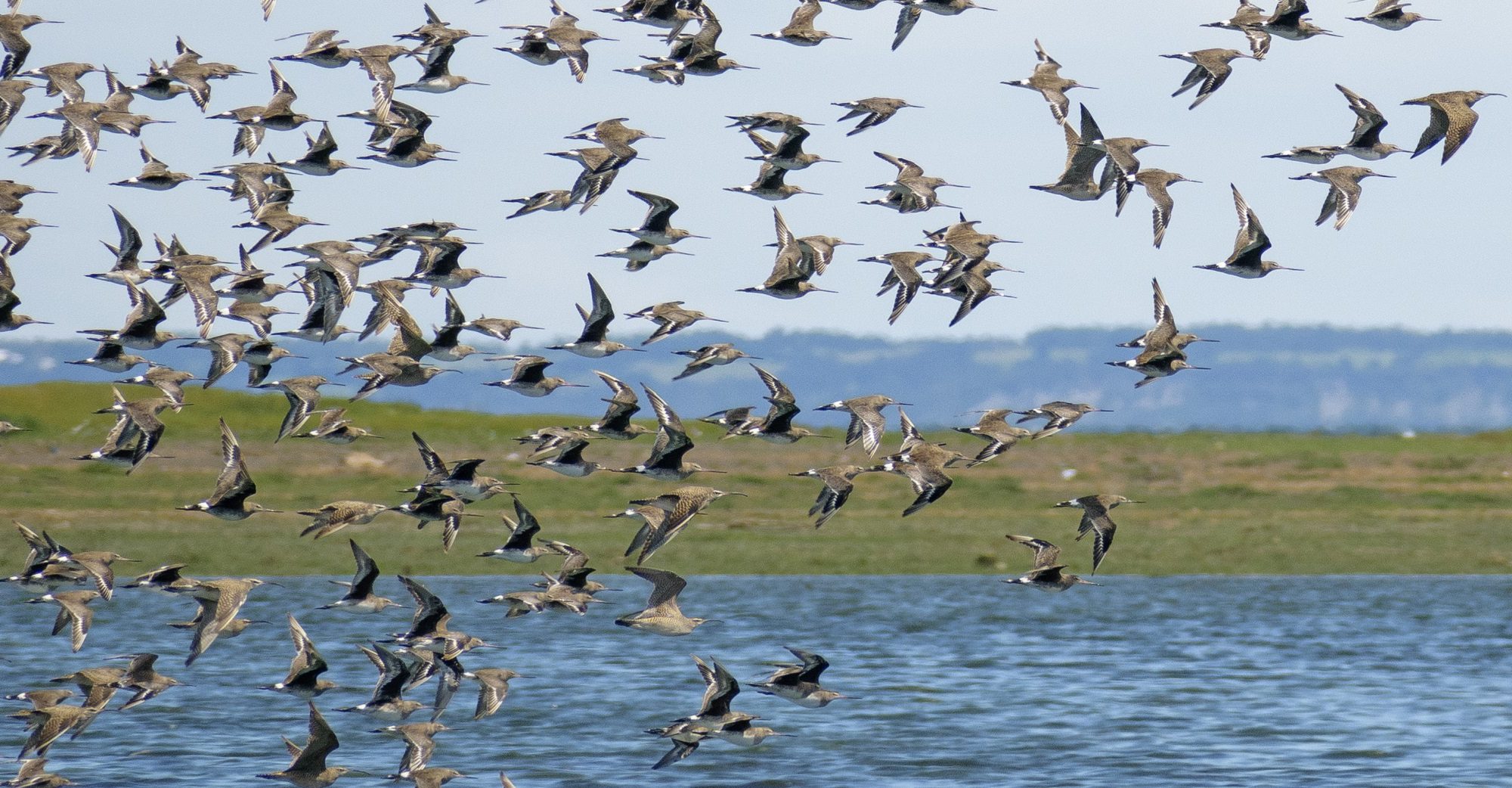
Today, shorebirds are undergoing one of the most dramatic declines of any bird group worldwide. Recent studies show that we have lost more than one-third of all coastal shorebirds since 1970. To stabilize and rebuild shorebird populations and safeguard their vital habitats, Manomet has launched the Coalitions for Shorebird Conservation to accelerate and support targeted conservation efforts at 13 of the most important shorebird sites in the Americas. At each location, we are improving the quality and quantity of critical shorebird habitats and increasing local capacity for conservation action.

Shorebirds face many challenges, including habitat loss and degradation, human disturbance, unregulated and illegal hunting, increasing predation, and climate change. These challenges are greater than any single organization can address alone. That means the most important thing we can do to safeguard shorebird populations is to build coalitions that work together to address these threats. Coalitions for Shorebird Conservation connects site-based and hemisphere-scale conservation planning and action. Through a targeted approach to site conservation, Manomet is helping these sites bridge the divide between local and global action, to inspire and to inform coordinated and comprehensive shorebird conservation in the Americas.

Sites Map

Shellfish Aquaculture and Management

Shellfish landings in Maine are at historic lows—due to the effects of climate change and an increase in predators like the invasive European green crab (Carcinus maenas) and the milky ribbon worm (Cerebratulus lacteus). Manomet is working with shellfish harvesters and aquaculturists on a suite of aquaculture projects to diversify clam, oyster and quahog harvests.

Soft-shell clam aquaculture
Soft-shell clams (Mya arenaria) are the second most valuable fishery in Maine—valued at about $18 million in 2014. Unfortunately, soft-shell clam landings in many coastal communities have reached historic lows.  A soft-shell clam farm involves seeding sub-productive intertidal flats with hatchery-raised clams and then covering the seeded area with plastic netting to protect the clams from one of its main predators, the European green crab (Carcinus maenas). This “seeding and netting” method has been used in Maine and elsewhere to protect shellfish beds from predators for over thirty years. Some towns use the “seeding and netting” method for enhancement of their public soft-shell clam resource. As predation of wild clam flats intensifies with warming seawater temperatures, there is growing interest in clam farming as a means of adapting to changing conditions.

In 2014, Manomet worked with a shellfish harvester to establish, Heal Eddy Clam Farm, the first commercial-scale experimental clam farm in Maine.  Then, funded by a NOAA Saltonstall-Kennnedy grant, Manomet helped establish five additional pilot farms  in Maine. Our research is ongoing to determine the financial viability of this technique.

Manomet developed a guidebook to provide practical information for starting and maintaining a farm.

Georgia Bight Shorebird Conservation Initiative

The Georgia Bight Shorebird Conservation Initiative was launched in May 2018 to address specific threats to the shorebirds dependent on the southeastern region of the Atlantic Coast. By increasing the involvement of the public, as well as state and federal agencies, we strive to build a local, holistic culture of shorebird conservation to ensure the region continues to provide the resources necessary to sustain shorebirds throughout the year.

For many shorebirds our focal geographic area, which encompasses coastal South Carolina, Georgia and northeastern Florida, provides exceptional habitat. This section of the coast is studded with barrier islands and highly dynamic inlets and estuaries that support more than 300,000 shorebirds annually. The unique curved coastline of the Georgia Bight results in large changes of water depth between low tide and high tide every day. This intertidal zone of extensive salt marshes, expansive sand and mud flats, and undisturbed areas of beach creates huge areas of potential food resources that are exposed by the receding tide. In recognition of the value to shorebirds in the Bight, there are three Western Hemisphere Shorebird Reserve Network (WHSRN) sites encompassing much of coastal South Carolina and Georgia.

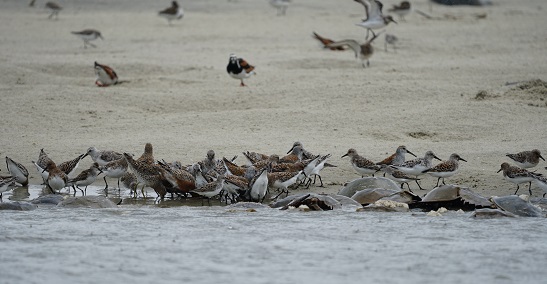
Many of the species that rely on this important landscape are exhibiting population declines. During periods of fall and spring migrations, Canadian and Alaskan nesting shorebirds such as the Short-billed Dowitcher (Limnodromus griseus), Red Knot (Calidris canutus), Semipalmated Plover (Charadrius semipalmatus), and Black-bellied Plover (Pluvialis squatarola) use the region to rest and replenish themselves on the rich, abundant foods. The Georgia Bight is equally important for shorebirds that spend the winter here including the Great Lakes breeding population of the Piping Plover (Charadrius melodus circumcinctus) and the American Oystercatcher (Haematopus palliatus). Breeding birds such as Wilson’s Plovers (Charadrius wilsonia) and American Oystercatchers also rely on the barrier islands, shell rakes and offshore sand bars along the Georgia Bight.

Arctic Shorebird Demographics Network (ASDN)

Recent shorebird trend analyses indicate that many Western Hemisphere shorebird species are declining, but we do not fully understand why. The goal of the Arctic Shorebird Demographics Network (ASDN) is to conduct demographic analyses for several target species that will help determine the factors limiting their populations.

The ASDN measures demographic rates like adult survival and productivity and other demographic parameters at various life history stages.

The project is designed to substantially increase our ability to address a wide variety of other science and conservation goals that can only be approached at a regional or global level, such as migratory connectivity studies that require work across the entire range of a species.

Climate Lab

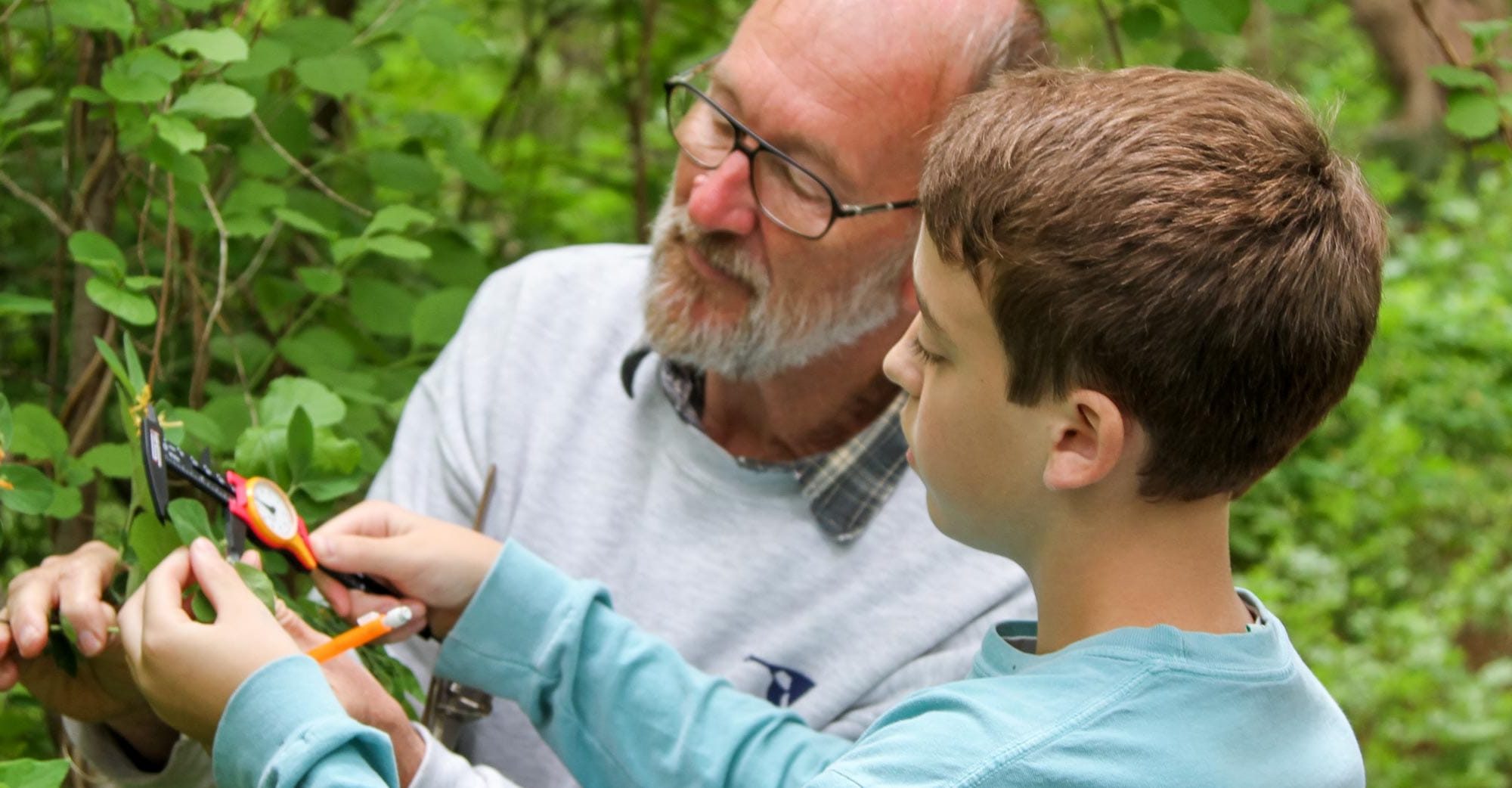
Young boy and man measuring in forest

The impacts of climate change are already becoming apparent, and part of our response must be to prepare our children—the next generation of decision makers—to understand and deal with this altered landscape.

Manomet has partnered with curriculum experts at TERC to address this need through Climate Lab, a program through which students learn about and collect data on biological indicators of climate change. Our goal is not only for us to give participating middle-school students and teachers an opportunity to learn from and work with real scientists, but to also compile student data that contribute to a nation-wide citizen science database. Participating schools can expect:

  • Curriculum materials (in alignment with the Next Generation Science Standards);
  • Teacher professional development courses held at Manomet HQ or online;
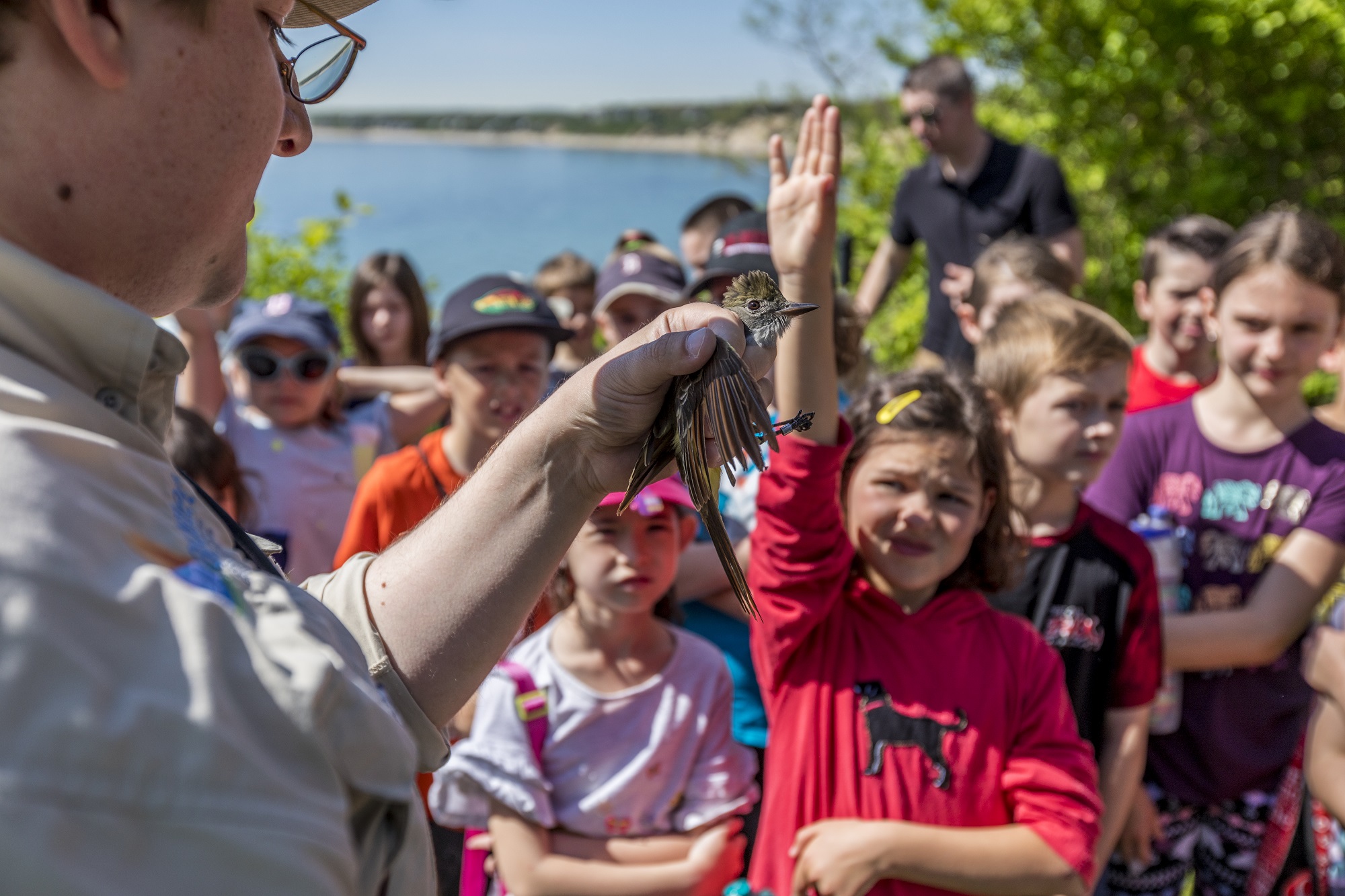
  • Hands-on experiences at the Manomet HQ bird banding laboratory or by Skype for schools unable to travel to Manomet’s campus;
  • Classroom assistance from scientists throughout the school year, including establishing on-site transects. We also work with partner science organizations to engage out-of-state schools;
  • Access to an interactive website which supports data reporting and analysis, discussions and other collaborative exchanges;
  • A linkage between current science research, citizen science participation and the demands of the modern science classroom.

Students engaged in Climate Lab will

  • Gain increased knowledge of local natural systems, including habitats and their associated species;
  • Gain a better understanding of climate change and scientific indicators used to estimate the local impacts of a changing climate;
  • Experience first-hand collection of scientific data and gain a better understanding of how long-term databases are key resources in studying ecological change;
  • Get hands-on use of field equipment;
  • Experience one-on-one interactions with scientists in the field.