


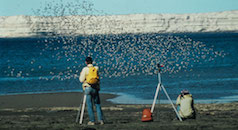
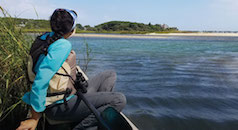
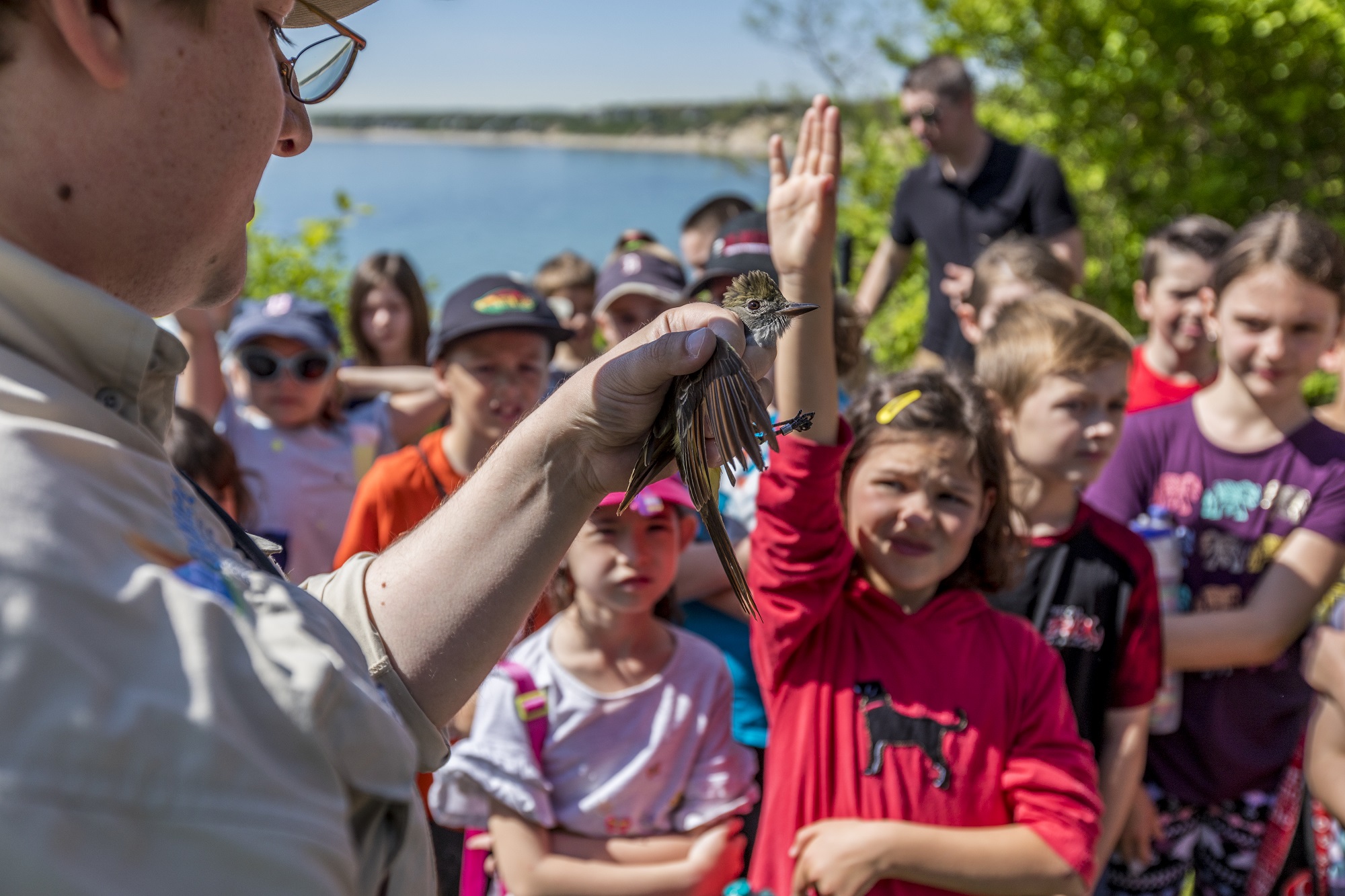
Alan is a Senior Conservation Biologist at Manomet, where he is involved in a variety of science initiatives. His current priorities include the expansion of Manomet’s shorebird research in eastern Massachusetts, as well as contributing to Whimbrel conservation efforts in the Atlantic Flyway. Alan also helps manage science and education at Manomet Observatory, with a particular interest in monitoring songbird populations at their long-term banding station and the restoration of retired cranberry bogs into wetland habitat.
Rob Clay, Ph.D.
Rob Clay has been active in migratory bird conservation in the Western Hemisphere for more than 20 years. A native of the United Kingdom, his interest in Neotropical birds and conservation began during an undergraduate expedition to Paraguay in 1992, which led to Ph.D. studies of manakins in Costa Rica and Panama.
Prior to joining the WHSRN Executive Office (and Manomet) in May 2014, Rob worked for BirdLife International as Senior Conservation Manager in the Americas Secretariat. There, he led the development of conservation programs for a wide variety of migratory birds and globally threatened species. He was instrumental in building BirdLife’s Southern Cone Grasslands Alliance, a coalition of cattle ranchers, government agencies, research institutions, and conservation organizations working together in the South American Pampas grasslands.
Through his role at BirdLife, Rob worked closely with WHSRN staff and site partners over the years. He also served on the WHSRN Hemispheric Council, and is a past Chair of the Waterbird Conservation Council, and former Vice President of the Heron Specialist Group (HeronConservation). He is a member of the Executive Committee of the Atlantic Flyway Shorebird Initiative, the Steering Committees of the Pacific and Midcontinent Shorebird Conservation Initiatives, the Americas Steering Committee of the Arctic Migratory Bird Initiative, and a Conference of the Parties Appointed Scientific Councilor for Birds to the Convention on Migratory Species.
In 1997, Rob helped found Guyra Paraguay – now the country’s leading conservation NGO, and he has called Paraguay home ever since (except for two years in Ecuador). Rob and his family live in Asunción, where he conducts regular monitoring of shorebirds at the Asunción Bay WHSRN site.
Why Manomet?
It takes a special kind of organization to coordinate, guide, and oversee the Western Hemisphere Shorebird Reserve Network – a complex network of organizations and individuals working across languages, cultures, and social and political divisions. Manomet is such an organization – willing to listen and learn from partners, to share experiences and opportunities, and to make a long-lasting commitment to finding innovative solutions to local problems while tackling global drivers of threats.
Isadora Angarita-Martínez
Isadora is Colombian by origin and joined the Manomet team in May 2018. She is in charge of promoting the incorporation of shorebirds within national conservation agendas, assessing the uses of resources at WHSRN sites, and building the capacity of partners in ecosystem service assessments. Isadora has been working on the conservation of birds in Colombia and throughout the Western Hemisphere for over 15 years.
Isadora gained her conservation experience through working on research in the field and through engaging with communities in her native Colombia as part of Asociacion Calidris, moving later to Southeast Asia to work in conservation of endangered and traded species. Before joining Manomet Isadora worked since 2011 for the BirdLife International Americas Secretariat as the Americas Flyways Coordinator, including representing BirdLife on the WHSRN Hemispheric Council. At BirdLife she supported the development of conservation programs for grassland birds and migratory birds including globally threatened migratory birds, she also developed and help build BirdLife Partners’ capacities on ecosystem services assessments at site scale.
Isadora is a biologist with a major in ornithology from Universidad del Valle in Colombia, completed a Diploma in Endangered Species Management at the Durrell Wildlife Conservation Trust, and University of Kent (UK) and holds a Master in Conservation Leadership from the University of Cambridge (UK).
Why Manomet?
I am proud of being part of the Manomet team as I believe biodiversity conservation depends on multidimensional approaches, and Manomet is a place where such approaches are developed. The approaches for biodiversity conservation that Manomet develops have their bases on the best science, research effort, community engagement, land management, and land use planning, and strategic partnerships. What conservationist would not want to be part of such an extraordinary team and organization?
Diego Luna Quevedo
Diego is originally from Montevideo, Uruguay, and currently resides in Santiago, Chile. He joined Manomet Conservation Sciences in 2009 and serves as Policy and Governance Specialist. From the WHSRN Executive Office (housed in Manomet’s Flyways Program) he works to promote partnerships, coalitions, and agreements aimed at strengthening the effective conservation of shorebirds and their habitats. In Latin America, one of his main areas of focus has been strengthening governance capacity and supporting the participatory development of action plans for WHSRN sites.
He has led participatory processes for the design and implementation of national shorebird conservation plans in Ecuador, Peru, Chile, Argentina, and Brazil, as well as the development of a binational agenda between Chile and Argentina focused on the recovery and conservation of the Magellanic Plover.
Before joining Manomet, he led the nomination process that resulted in Bahía Lomas being designated as a WHSRN Site of Hemispheric Importance. Located in Tierra del Fuego, Bahía Lomas represents the most important wintering site in South America for the rufa Red Knot.
Diego has extensive experience in governance processes, multi-stakeholder partnership building, and network development across issues related to biodiversity, energy, water, and climate change. Over the past 20 years, he has worked in the management of regional and technical cooperation projects, the design and facilitation of dialogue processes, and the delivery of specialized consulting services with institutions such as Fundación Futuro Latinoamericano (FFLA), Chile’s National Petroleum Company (ENAP), Climate and Development Knowledge Network (CDKN), and the Independent Consultation and Investigation Mechanism (MICI) of the Inter-American Development Bank Group. He is also an observer member of the Energy Task Force of the Convention on the Conservation of Migratory Species of Wild Animals (CMS).
Abby Sterling, Ph.D.
Manomet brings together people from across the entire hemisphere for conservation and has an incredible legacy of working with sound science and dedicated people to make a difference. Addressing the challenges that shorebirds face necessitates this wide-ranging, multi-faceted approach, and I’m working with Manomet because I believe that in being a part of this team, I can help make a difference.
The Georgia Bight is a region with incredible habitat for shorebirds throughout the year, ranging from expansive marshes, mudflats, and sand bars, to undeveloped barrier island beaches which provide sites for nesting, feeding, and roosting. By working with the stakeholders actively involved in shorebird conservation, identifying research and management objectives, building education and outreach efforts, and increasing partnerships, we will achieve measurable progress for shorebirds along the South Carolina, Georgia and Northern Florida coasts.
I earned my doctorate from the University of Georgia, where I studied how habitat and landscape features influence beach nesting shorebirds and chick survival. Prior to my degree, I lived on Little St. Simons Island in Georgia, where I worked as a naturalist guide and assisted on a variety of environmental projects, educated visitors about coastal ecology, and explored the Southeastern coast. Before migrating south, I grew up in Western New York and attended SUNY College of Environmental Science and Forestry for my B.S. in environmental biology.
When I’m not birding or working, I enjoy spending time with friends and family, going on adventures, learning new things, and snuggling my dog, Baxley.