

Search Results

Antonie (Toni) Chute
Toni Chute retired from a position as a Biological Sciences Technician with NOAA Fisheries at the Northeast Fisheries Science Center. She specialized in stock assessments for regional fish and invertebrates, including windowpane flounder, red hake, and Atlantic deep-sea red crab. She also conducted age and growth research on Atlantic sea scallops. Toni has contributed over 25 research articles on ResearchGate. She holds a B.A. in Field Biology from Connecticut College and has an M.S. in Marine Biology from the University of Massachusetts
Fall Shorebird Walk and Wildlife Beach Area Tour – Georgia Bight
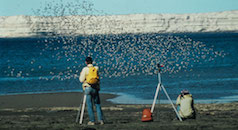
Join Allie Hayser, shorebird biologist with Manomet’s Georgia Bight Shorebird Conservation Initiative, to learn why Fish Haul Beach and Port Royal Sound are so important to shorebirds throughout the year. These areas provide critical places for migrating birds to rest and refuel, as well as habitat for species that spend the winter along our coast. The walk will highlight the creation of Fish Haul’s new Wildlife Beach Area and the partnerships working to protect this habitat while keeping the surrounding shoreline open for the community to enjoy. This small section of shoreline, about the size of two football fields, was created to provide shorebirds with a safer and quieter place to feed and roost. Visitors and their dogs can continue...
Fall Shorebird Walk and Wildlife Beach Area Tour – Georgia Bight
Join Allie Hayser, shorebird biologist with Manomet’s Georgia Bight Shorebird Conservation Initiative, to learn why Fish Haul Beach and Port Royal Sound are so important to shorebirds throughout the year. These areas provide critical places for migrating birds to rest and refuel, as well as habitat for species that spend the winter along our coast. The walk will highlight the creation of Fish Haul’s new Wildlife Beach Area and the partnerships working to protect this habitat while keeping the surrounding shoreline open for the community to enjoy. This small section of shoreline, about the size of two football fields, was created to provide shorebirds with a safer and quieter place to feed and roost. Visitors and their dogs can continue...
Tracking the Fall’s Migrating Birds | The Provincetown Independent
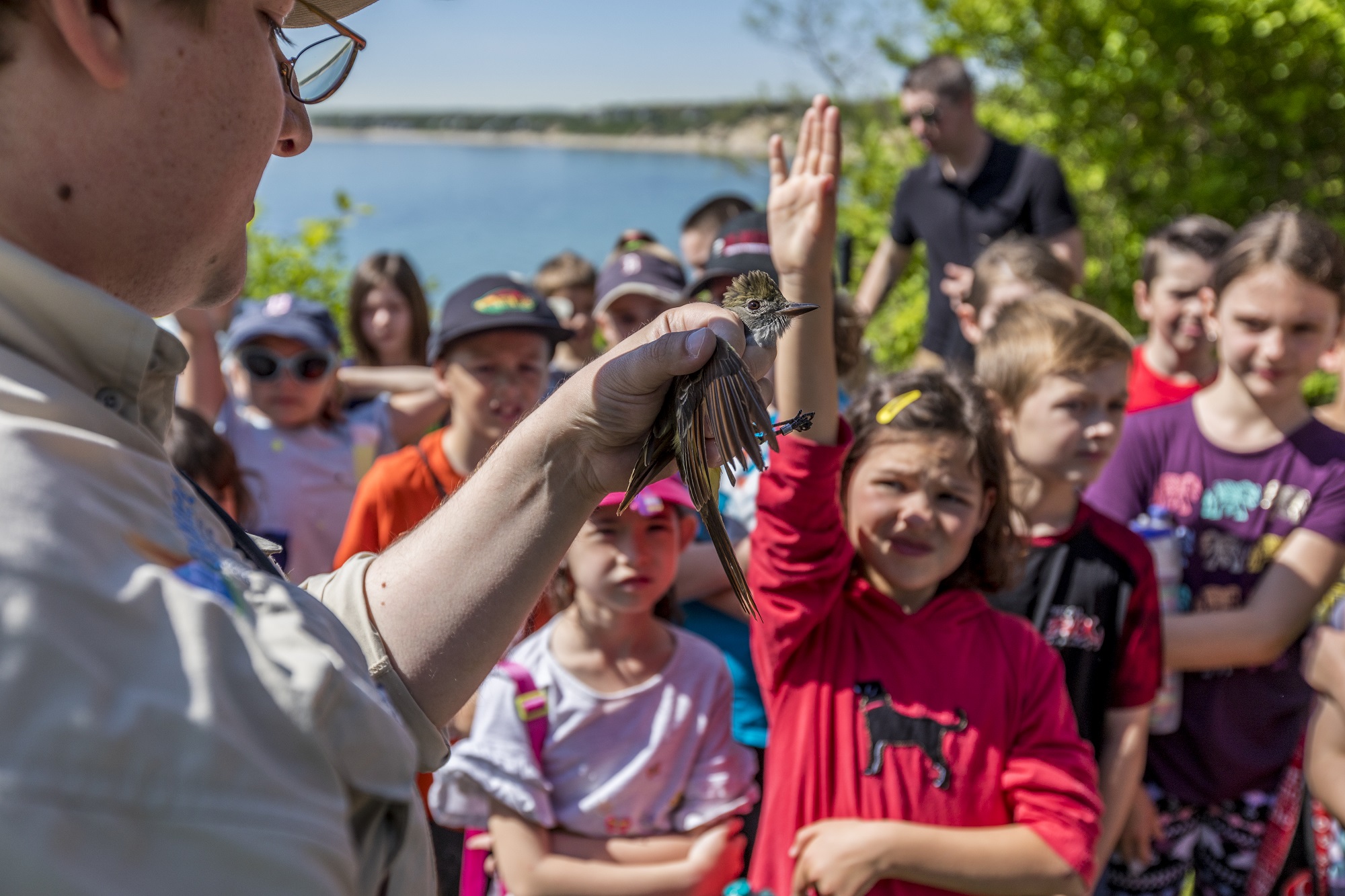
WELLFLEET — A remarkable songbird has become a regular visitor at Mass Audubon’s Wellfleet Bay Wildlife Sanctuary. Rizzy, 8, is the world’s oldest documented pine warbler and was seen three times this spring in his preferred breeding territory. Rizzy’s reappearance year after year is a bright spot amid signs that American bird populations are waning. Eastern forest birds, including pine warblers, have declined 27 percent since 1970, according to the 2025 U.S. State of the Birds report produced by the North American Bird Conservation Initiative. Every May, pine warblers like this male named Rizzy return from their wintering grounds in the southeastern U.S. in colorful breeding plumage. (Photo courtesy Mass Audubon Wellfleet Bay Wildlife Sanctuary) Rizzy, a scruffy yellow and...
A Very Late Spring for PRISM Surveys!
2026 marks the 25th year since we began Manomet’s Arctic shorebird research program! This year we had 4 projects, the most we have done simultaneously in a single field season. The first 3 we have already posted about: PRISM surveys (Program for Regional and International Shorebird Monitoring) in the National Petroleum Reserve—Alaska, Acoustic monitoring in Utqiagvik, and Whimbrel tracking in the Arctic National Wildlife Refuge. In this post we cover the 4th project, PRISM surveys on State of Alaska lands from the Kuparuk River west of Prudhoe Bay east to Point Thompson on the Canning River, in partnership with our partners at the Alaska Department of Fish & Game (ADF&G) While an exceptionally late spring was challenging for all four...
Newport-area birders help Massachusetts scientists track fast-moving whimbrel | Lincoln Chronicle
On July 17, a biologist with Massachusetts-based Manomet Conservation Sciences contacted retired U.S. Fish & Wildlife Service manager Roy Lowe of Waldport regarding a satellite tagged Hudsonian whimbrel that according to tracking data was using the beaches from Otter Rock to Newport and Yaquina Bay. The biologist asked if someone might be able to make an observation, perhaps take a photo and report on the bird.Unable to do that himself, Lowe posted a “be on the lookout” request on Oregon and Lincoln County birders websites. Approximately 26 hours later, Amy Summerfelt of Newport located the bird — easily identified by the light green colored leg band with the code FM3 on it — on the beach just north of Yaquina Head. A...
Manomet Conservation Sciences Statement on Revisions to the Rules Implementing the Endangered Species Act: Protecting Wildlife Requires Protecting Habitat
For Immediate Release Contact: Ashley Baker, Vice President of External Relations | [email protected] Manomet Conservation Sciences Statement on Revisions to the Rules Implementing the Endangered Species Act: Protecting Wildlife Requires Protecting Habitat Manomet Conservation Sciences is grounded in the science of wildlife conservation and we are deeply concerned by recent revisions to the regulations implementing the Endangered Species Act (ESA) that narrow the long-standing regulatory definition of "harm." These changes remove habitat modification and degradation from the regulatory definition of prohibited harm under Section 9 of the ESA. This statement summarizes the legal change and the extensive body of peer-reviewed scientific evidence demonstrating that habitat loss and degradation are among the principal causes of population decline and extinction risk for...
Oystercatchers, known for sharp bills and beady eyes, are making a comeback | ABC NEWS
On a pristine Rhode Island beach teeming with noisy seabirds, a group of biologists armed with nets sneak up on a pair of American Oystercatcher chicks. But just as they move in to capture them, one of the football-size birds, with bright-orange bills and long legs, scampers into a coastal salt pond. The other briefly takes to the air, sending the team running across the mile-and-a-half-long (2.4-kilometer-long) beach in pursuit. “There is a problem. They can fly,” Alan Kneidel, a senior conservation biologist with the environmental group Manomet Conservation Sciences, said as he watched the team go after the chicks. Eventually, the U.S. Fish and Wildlife Service biologists tracked down both birds. They bundled them each into white pillow cases and gingerly...
An Invasive Species, Deliciously Reimagined
Can an invasive species become a delicious dish? At the Green Crab Working Summit, the answer was a resounding yes. The summit was one of many events during Green Crab Week, a week dedicated to raising awareness of the invasive green crab and building culinary markets for the species. The day-long event brought together harvesters, chefs, and scientists to share knowledge and foster collaboration for the green crab industry. For those unfamiliar with green crabs, they are invasive to North America, and their environmental impact is far-reaching. Not only do they harm the local fisheries by feeding on a variety of shellfish, but they also slice through eelgrass habitats. Those eelgrass beds are vital nursery habitats that support numerous juvenile...
Listening to the Arctic: Acoustic Monitoring on the Tundra
Each summer, Manomet scientists and partners travel to multiple field sites across the Arctic to better understand the factors driving dramatic declines in shorebird populations. Through this research, we are working to unlock the mysteries of these long-distance migrants and generate the science needed to guide conservation efforts across the Western Hemisphere. Manomet Conservation Sciences has been working in Arctic shorebird science for 25 years. In this field blog entry, we head to Utqiagvik, Alaska, the northernmost city in the United States. Our research Associate in Data Science and Acoustic Ecology Morgan Ziegenhorn spent the 2026 season deploying acoustic monitors to explore whether sound can replace traditional visual surveys for estimating shorebird breeding populations, a method that could change how we count birds across the Arctic. From May...