


 Back to all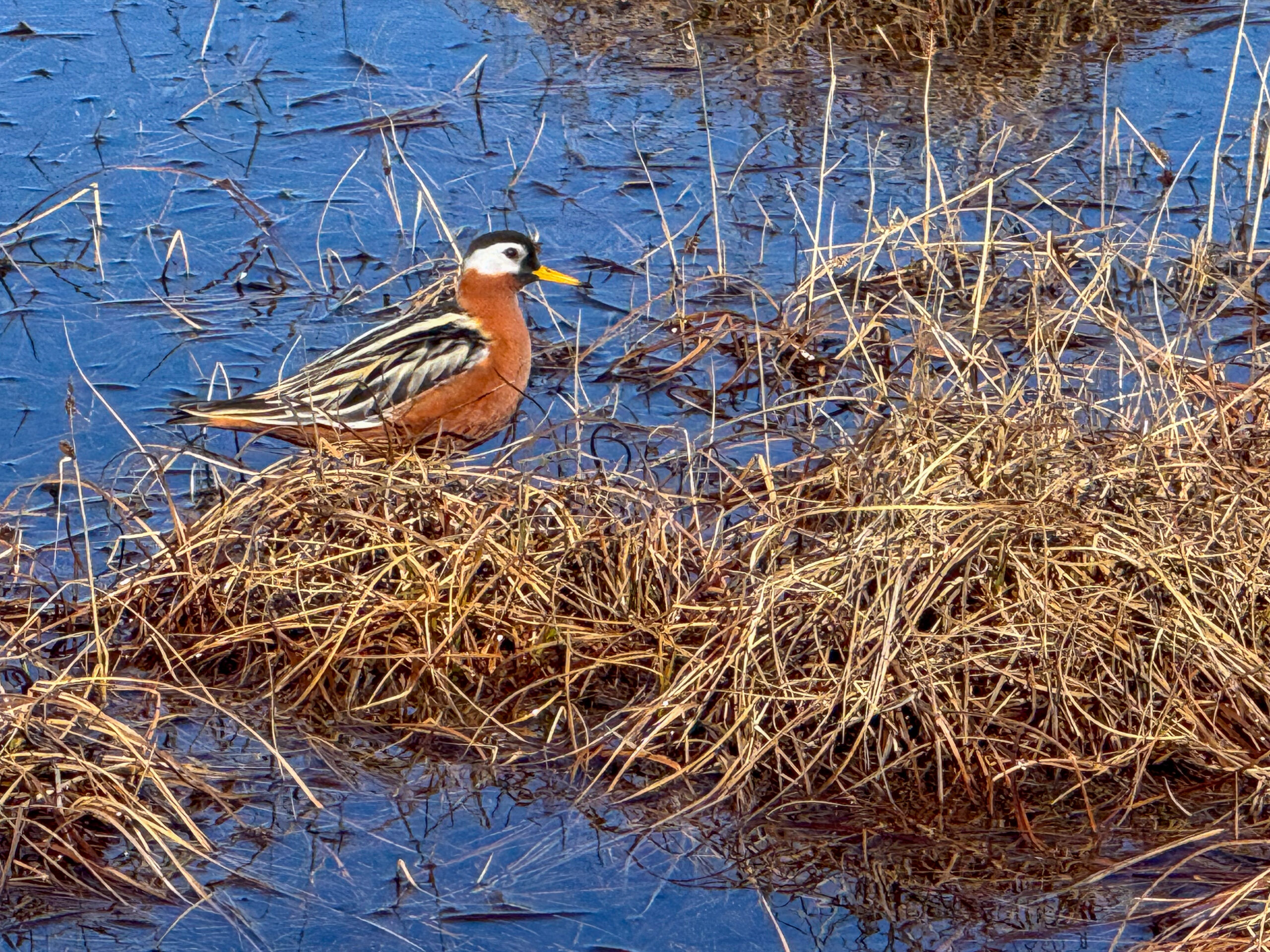

Stephen Brown
VICE PRESIDENT, SCIENCE
2026 marks the 25th year since we began Manomet’s Arctic shorebird research program! This year we had 4 projects, the most we have done simultaneously in a single field season. The first 3 we have already posted about: PRISM surveys (Program for Regional and International Shorebird Monitoring) in the National Petroleum Reserve—Alaska, Acoustic monitoring in Utqiagvik, and Whimbrel tracking in the Arctic National Wildlife Refuge. In this post we cover the 4th project, PRISM surveys on State of Alaska lands from the Kuparuk River west of Prudhoe Bay east to Point Thompson on the Canning River, in partnership with our partners at the Alaska Department of Fish & Game (ADF&G)
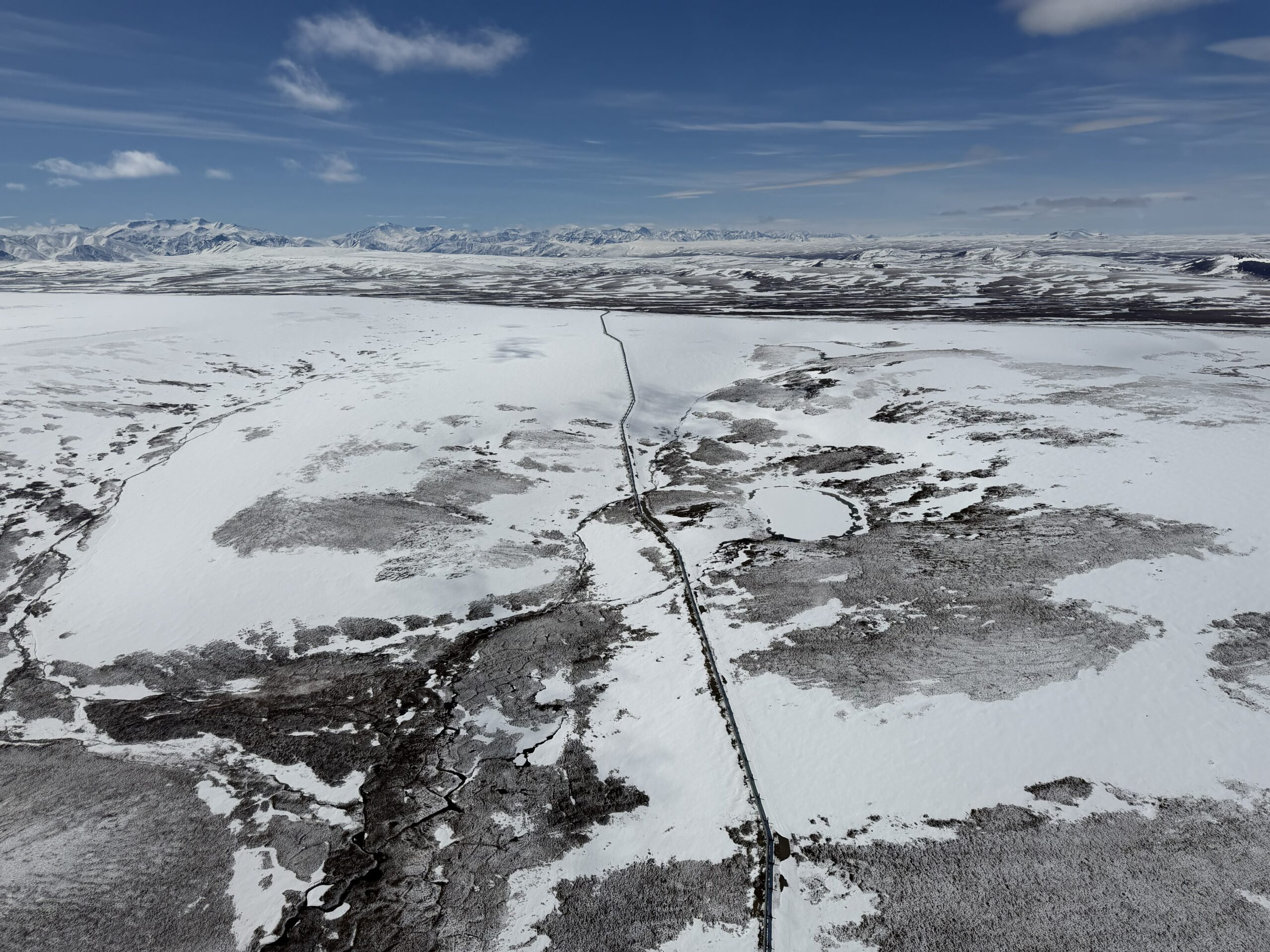
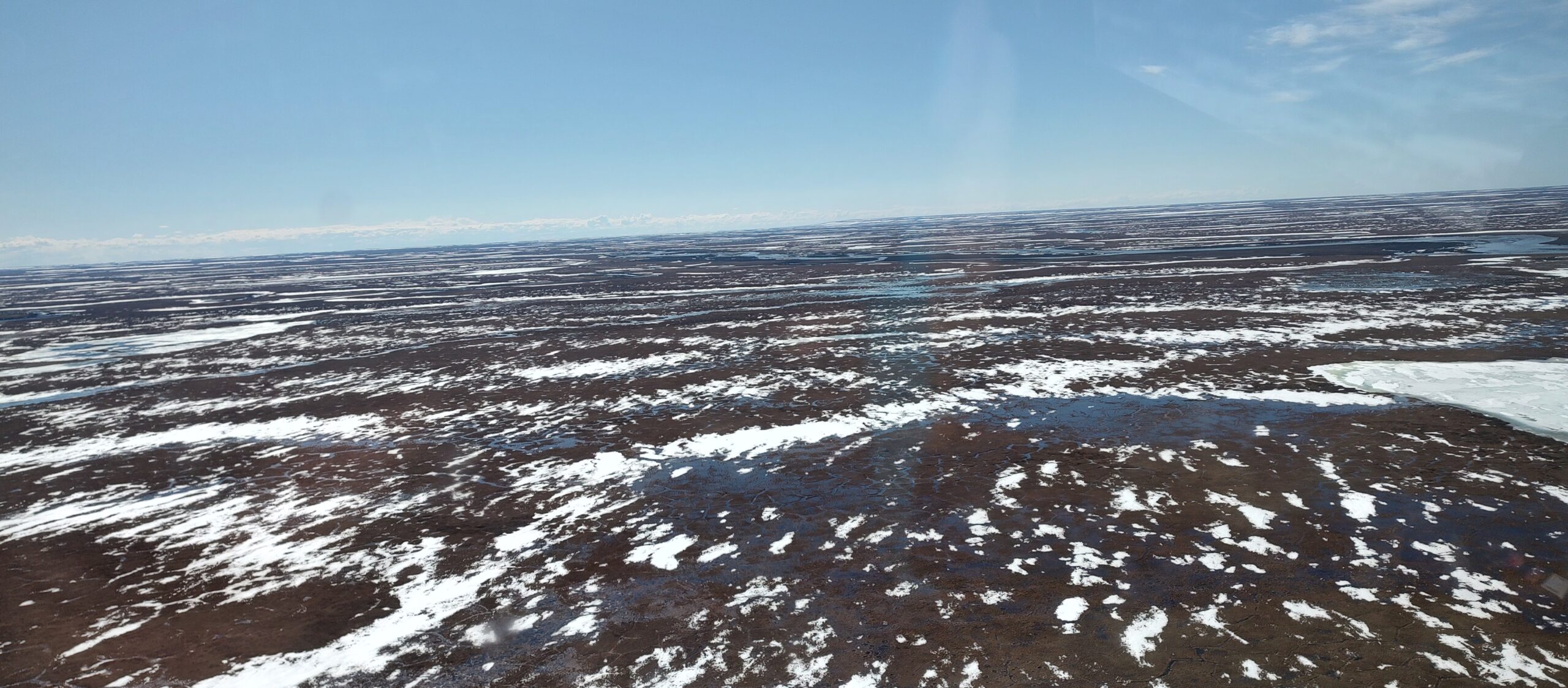
While an exceptionally late spring was challenging for all four projects, it was most challenging for our ADF&G surveys June 10-21. An extremely cold spring and a deep snowpack there resulted in the tundra being dominated by snow and ice then flooding through June 19. This substack post from Arctic climatologist Rick Thoman shows that in our study area around Prudhoe Bay temperatures were colder and precipitation higher than average, and this was enough to adversely impact the arrival of spring. Even in early July, as you can see in this photo from his July 6 post, the sea ice on Alaska’s Arctic coast was completely land fast, even though the Arctic worldwide was warmer than usual.
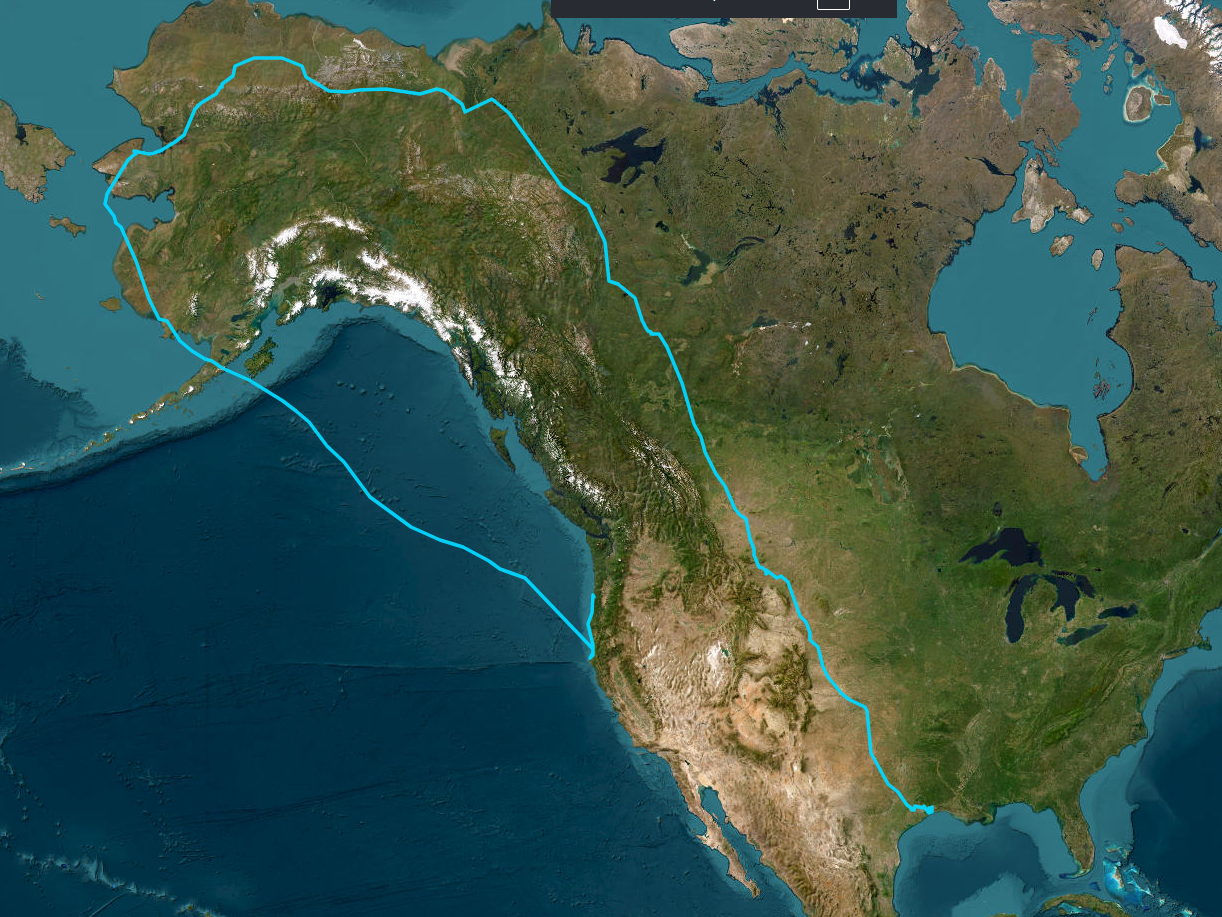
As we analyze the data from surveys and the Audio Moth recorders we will be keen to see if we can discern any impacts or disruptions of the late spring on breeding shorebirds in our study area. Anecdotally, colleagues in southern Alaska reported shorebirds lingering there well into June, and this map of a Whimbrel track tagged by Manomet’s team in the Gulf this spring shows this individual migrated north of the Brooks Range but turned back before breeding and migrated to Oregon. We hope that in 2027 when we return to survey the State of Alaska lands west of the Kuparuk to the Colville River conditions will be better for birds and our crews.
Below, you’ll find field notes from each member of the crew.
Metta McGarvey:
When Stephen and I arrived shortly before midnight to the Arctic National Wildlife Refuge cabin at Galbraith Lake on 7 June it was 26° and snowing sideways. We had only one day, June 8, to set up the helicopter fuel cache, learn how to operate the mechanicals for the cabin, and get everything else ready to go.
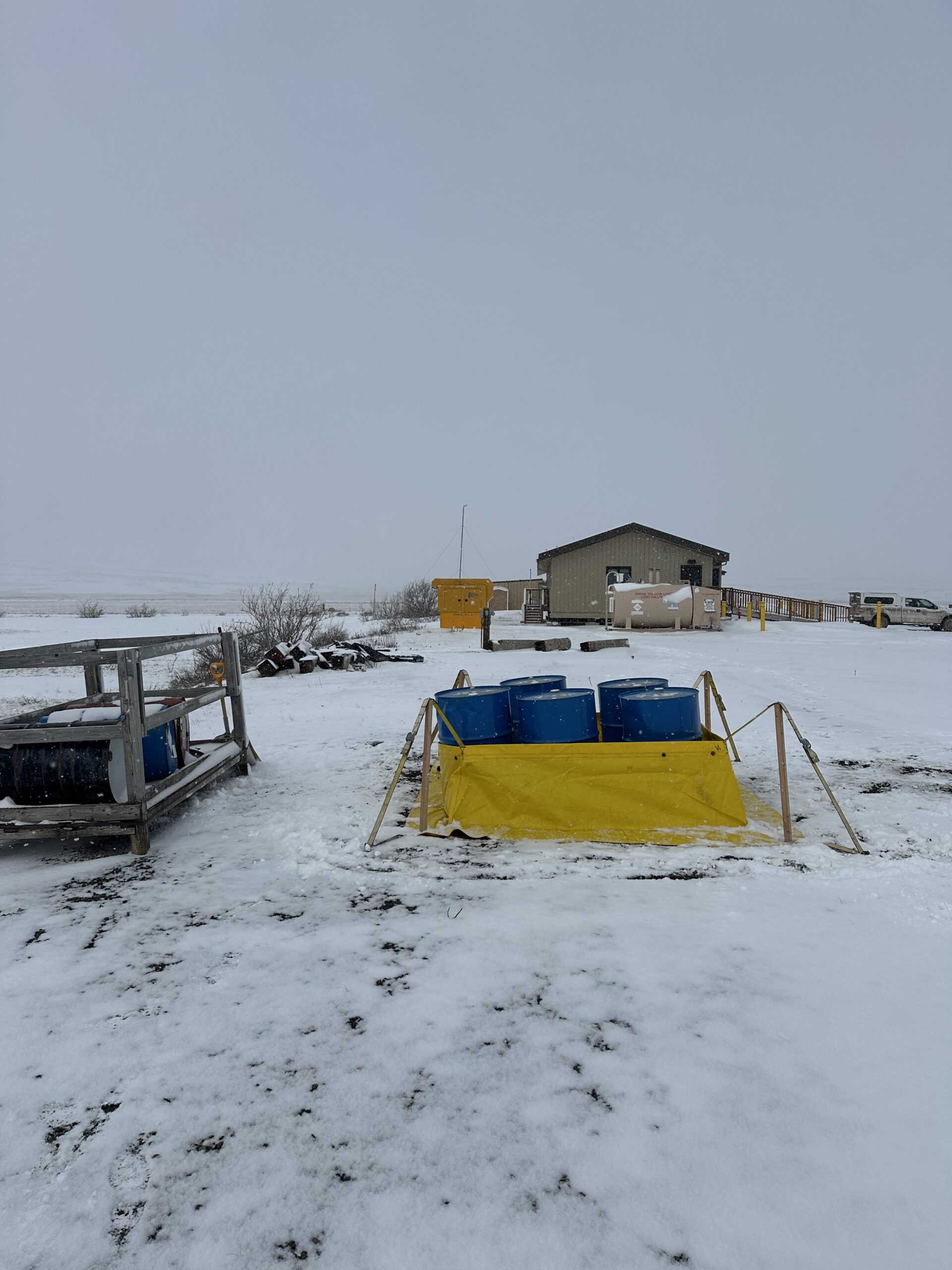
But June 9 dawned beautiful for the drive to the Deadhorse airport at Prudhoe Bay where Stephen would fly out on the plane that brought 3 of our crew in.
Evan had already arrived to deploy Audio Moth recording devices in 2 arrays south of Deadhorse on 8 & 9 June, one in a lowland and one in an upland area, and he and our Pollux pilot, David Holesapple, met us at the cabin.
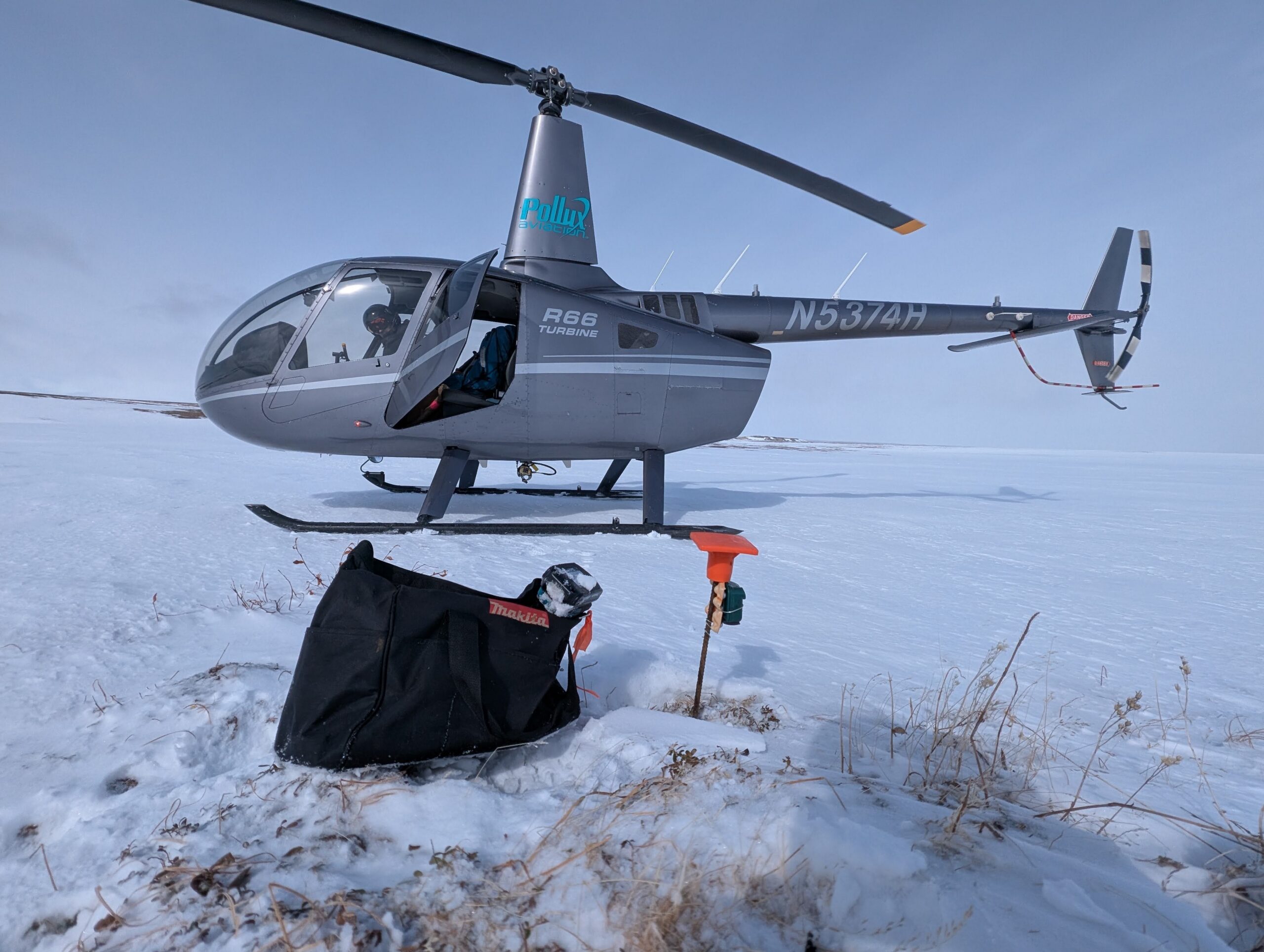
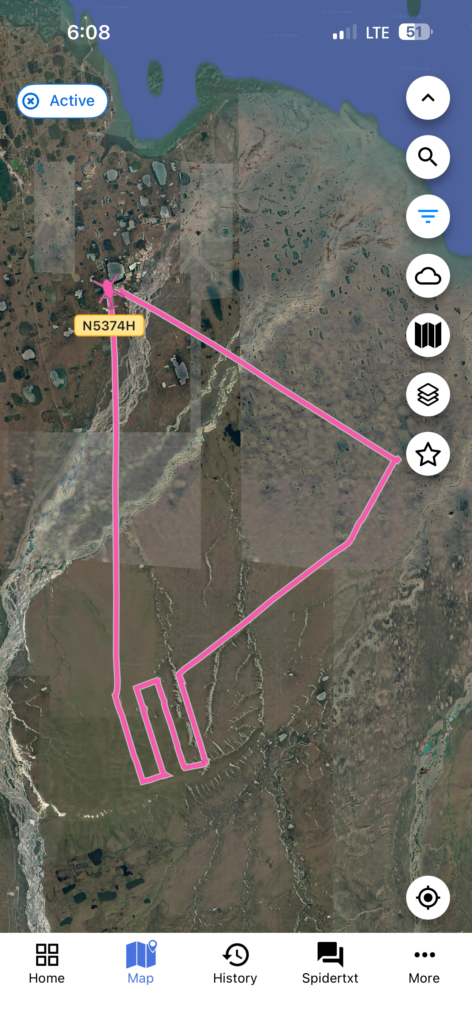
Among my responsibilities are being the first point of communication for the pilot, and this year our helicopter company, Pollux, added me to Spider Tracks, their sophisticated software for following their helicopters in real time.
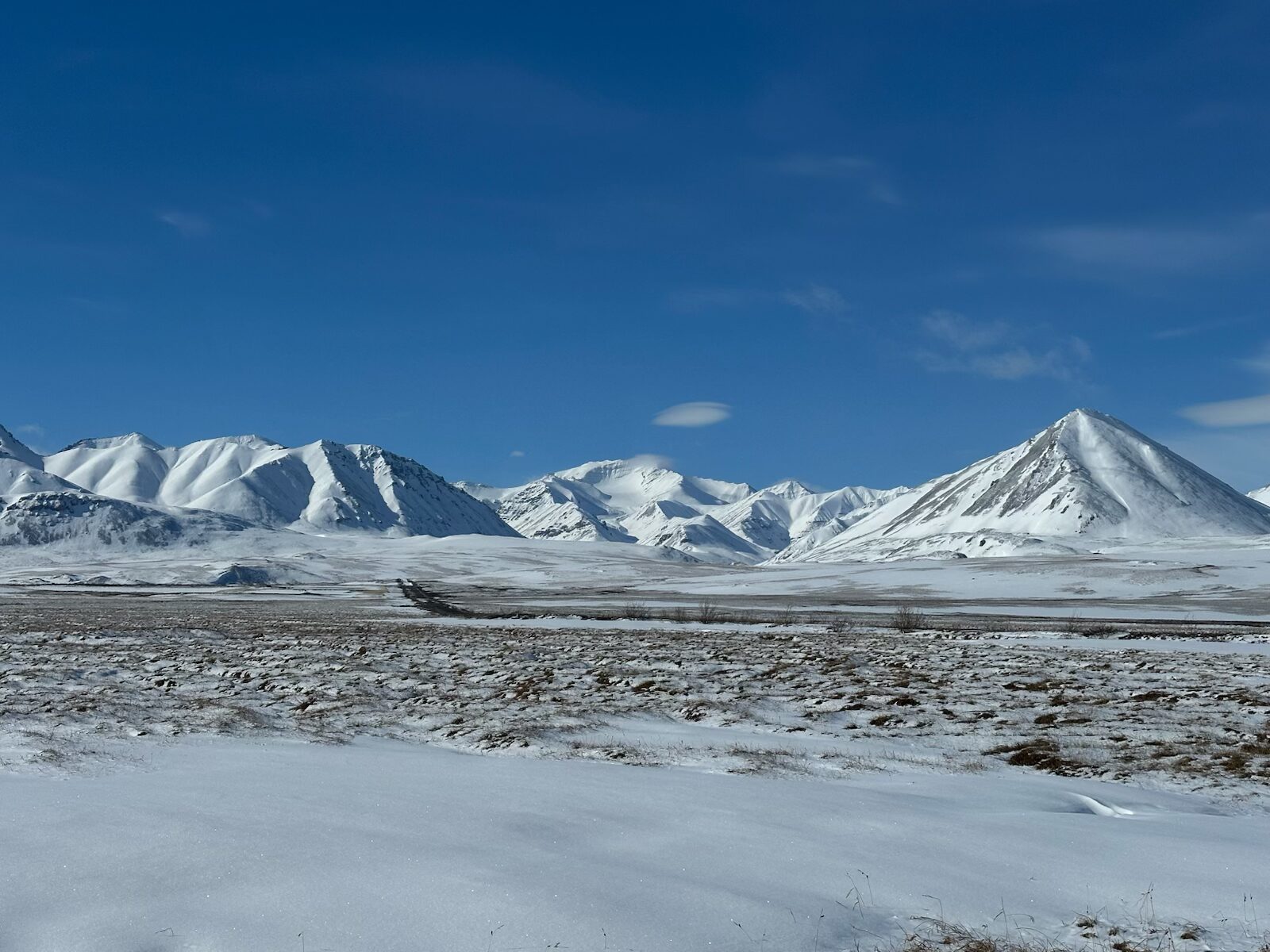
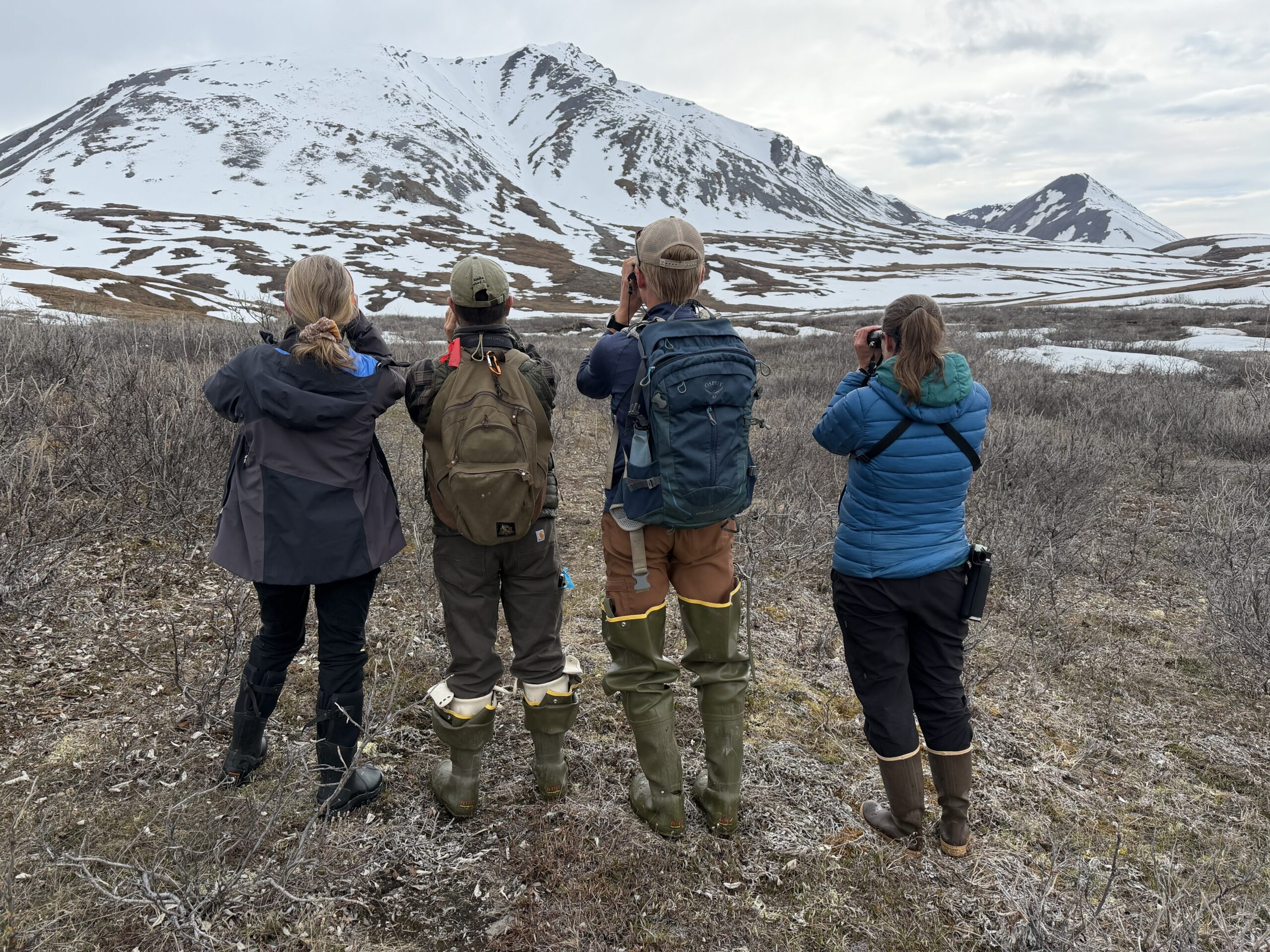
With the spring so late and the tundra virtually 100% snow covered, our crew spent our first few days at Galbraith setting up and surveying practice PRISM plots, brushing up our Arctic bird ID and GPS skills, and enjoying a hike up Atigun Gorge.
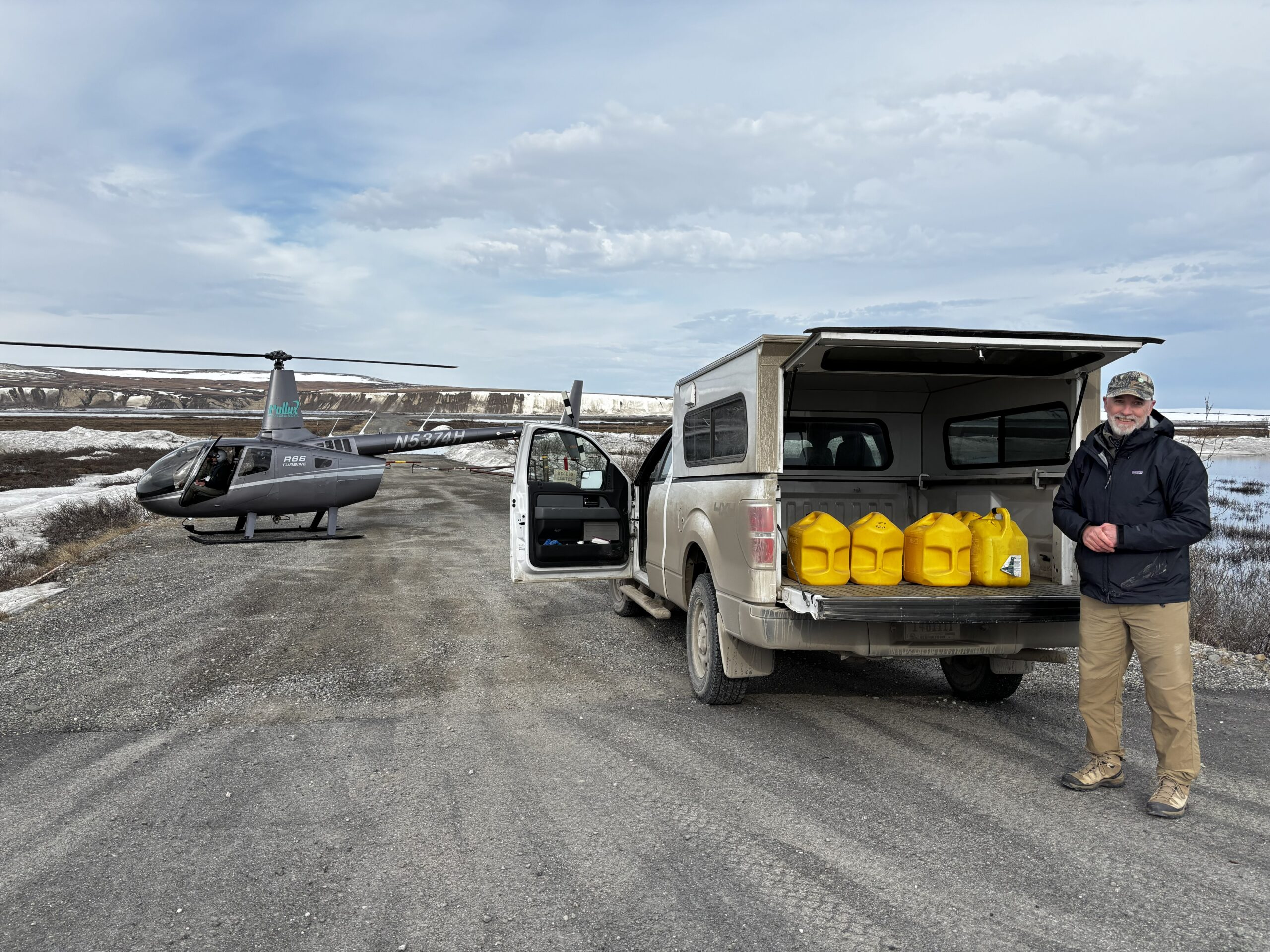
On the first day of PRISM surveys the airport at Deadhorse was fogged in so Jim and I drove the truck to meet the helicopter on the Dalton Highway with jerry cans from our fuel cache for the helicopter.
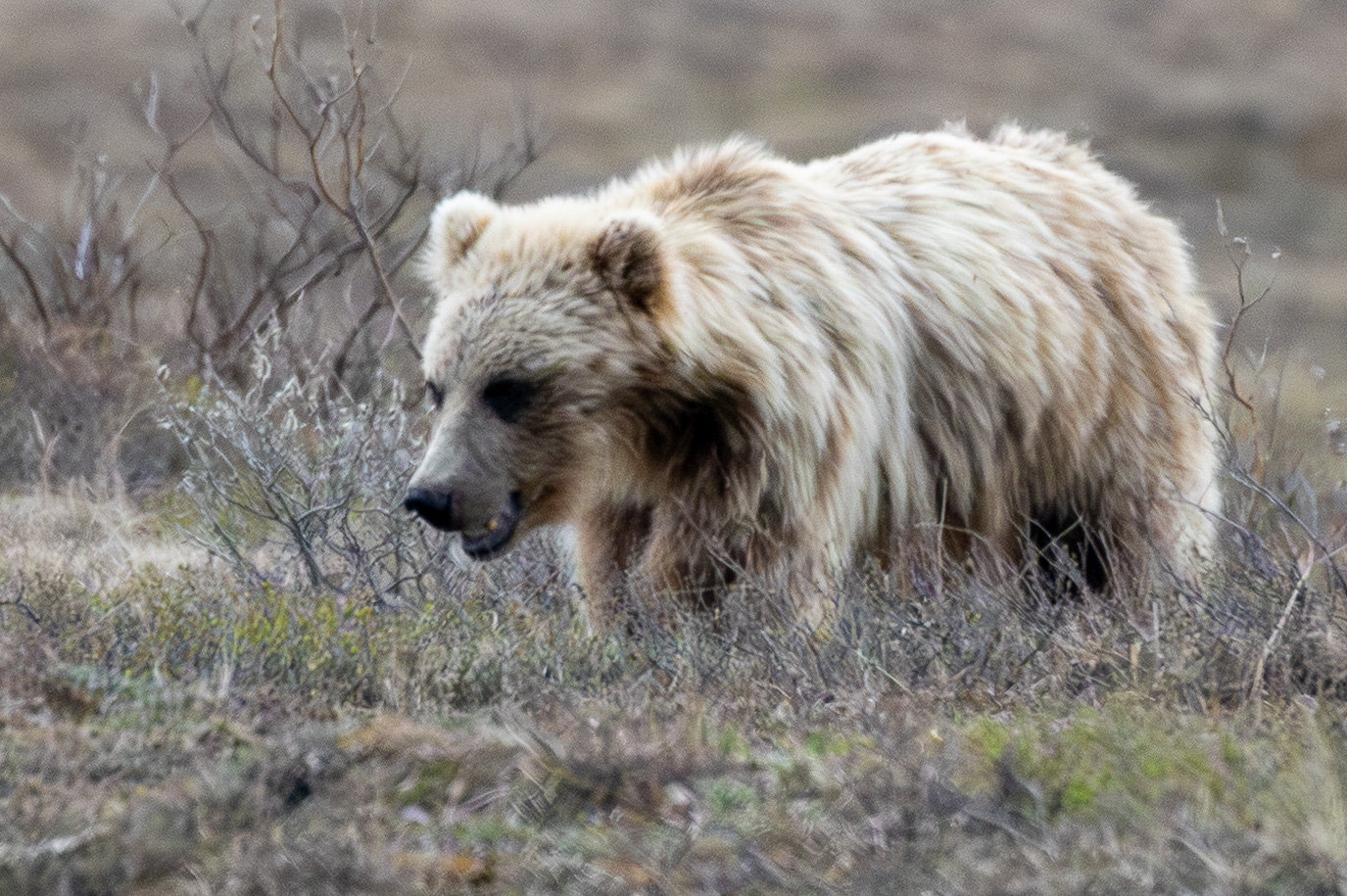
We then had a lovely trip back down to Galbraith between 20:30 and 00:30 with multiple sightings of Brown Bear, Musk Ox, Bar-tailed Godwit, Long-billed Dowitcher, Pacific Loon, and vast numbers of geese and ducks.
While the very late spring was tough for the birds and our crew, we were extremely grateful to have a great team and the Arctic Refuge cabin at Galbraith where we enjoyed meeting some of the other crews that came through while we were there. We missed Shiloh terribly of course, and hoped he would be proud of us doing our best to carry the work forward.
River Gates:
The Arctic does not follow a set schedule. During this year’s Arctic Shorebird PRISM surveys in the central Arctic Coastal Plain, spring arrived much later than expected. Even after several days delay, only about half of the landscape was snow-free, with remaining snow, frozen wetlands, and ice-covered ponds affecting survey conditions throughout the short survey period.
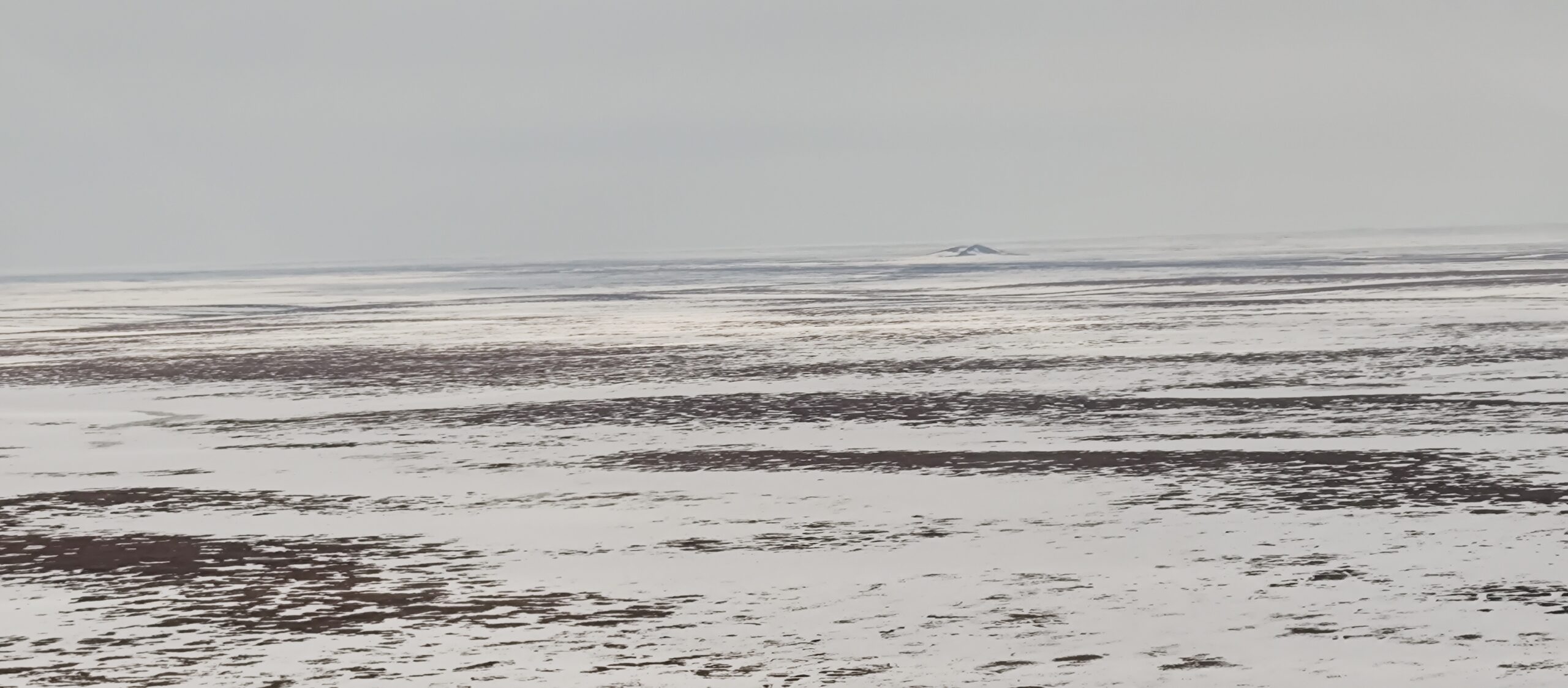
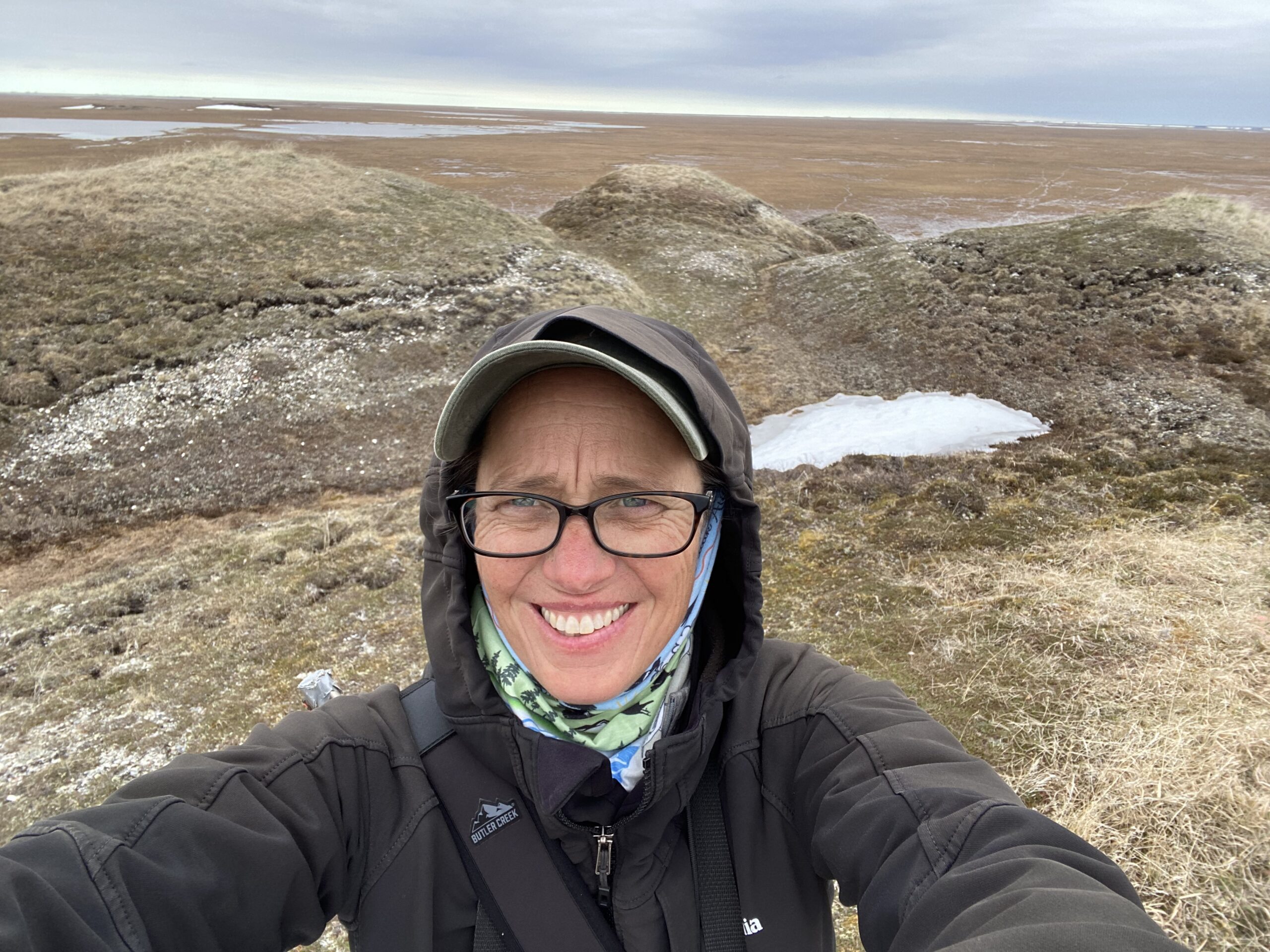
Despite the delayed thaw, shorebirds and other waterbirds had begun returning to their breeding grounds. Seeing less common shorebirds such as singing Bar-tailed Godwits and Stilt Sandpipers across the study area was a pleasure, alongside more common species such as Semipalmated Sandpipers, Dunlin, Pectoral Sandpipers and Red-necked Phalaropes. This year’s special treat was the opportunity to climb Percy Pingo near mile 376 on the Dalton Highway. From approximately 250 feet above the tundra, the view captured a wetland landscape transitioning quickly into summer as flooded waters receded and vegetation emerged.
Wyatt Egelhoff:
As the sun reaches its Zenith for the Boreal summer, at long last summer finally arrives to the coastal tundra of the central North Slope. On June 14, only about 5-10% of many areas had any exposed tundra. By June 19 things had flipped, with only 5-10% of the landscape covered in remaining snow. For shorebird species that have developed a finely tuned timing for long distance movements, this shifting in phenology can be worrying. Hopefully things will still work out in the coming weeks for many to rear their young while there is still ample food. After which they will need to fuel up themselves before heading thousands of miles South.
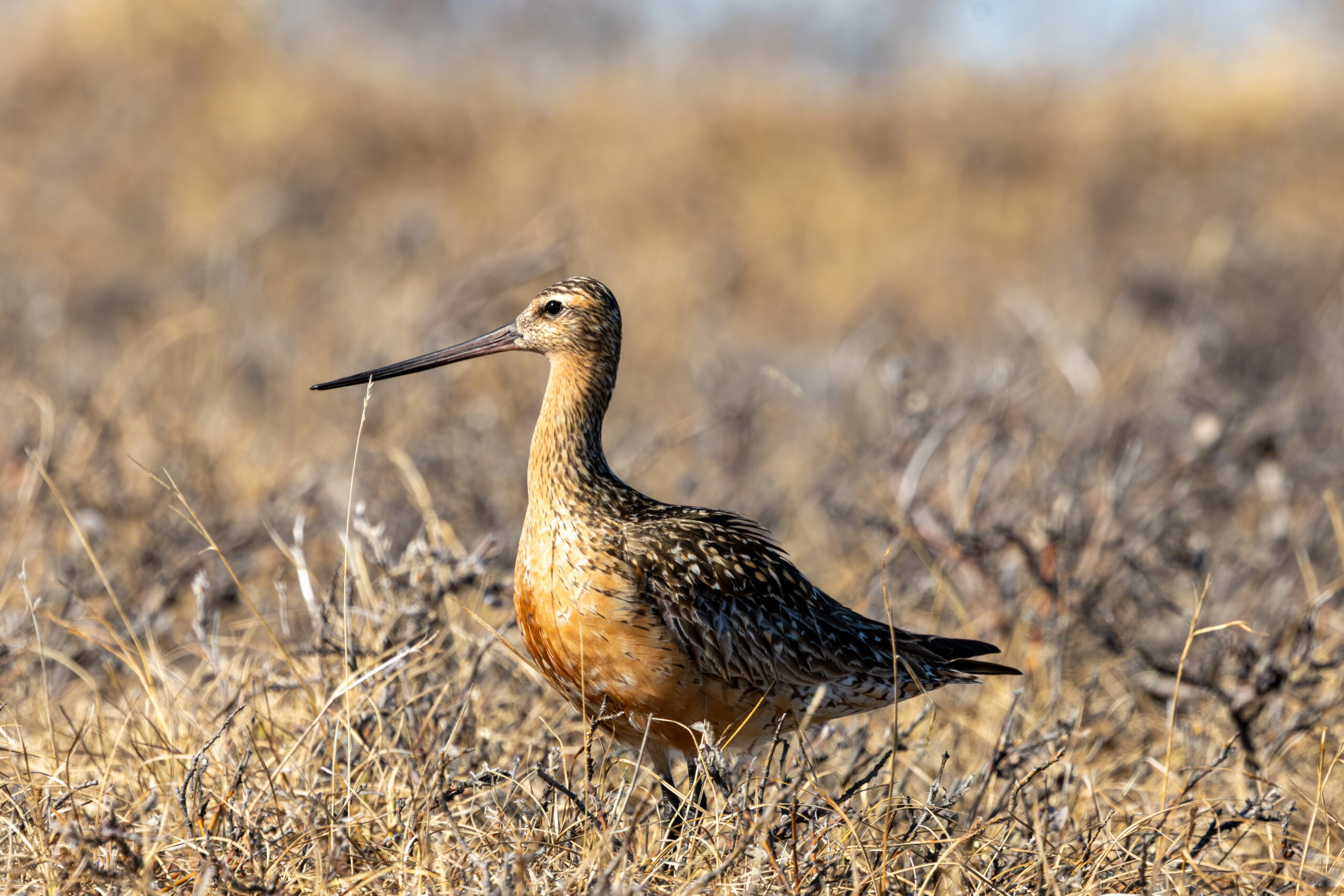
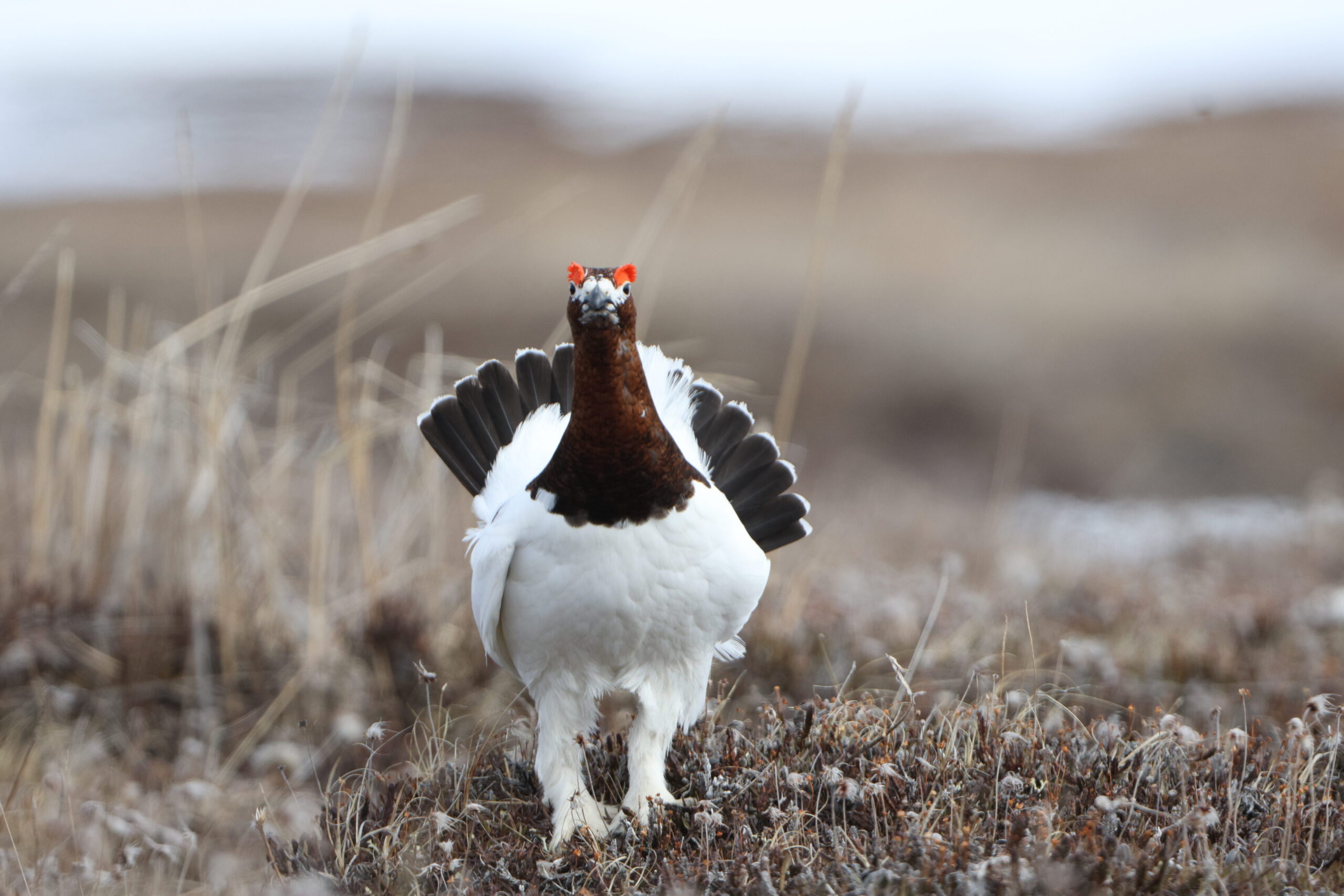
Once the tundra did begin opening up, the air was quickly filled with the sounds of summer Arctic bird life. Though overall densities of shorebirds were not as high as areas to the West such as Utqiagvik or Teshekpuk Lake, species such as Stilt and Least Sandpipers were found at several sites, and would be considered rare finds further West and North. Shrubby areas along the Sag (Sagavanirktok) River corridor hosted assemblages of songbirds such as American Tree Sparrow, Redpolls, and Bluethroat. At virtually every site we were first met by the raucous cackles of Willow Ptarmigans.
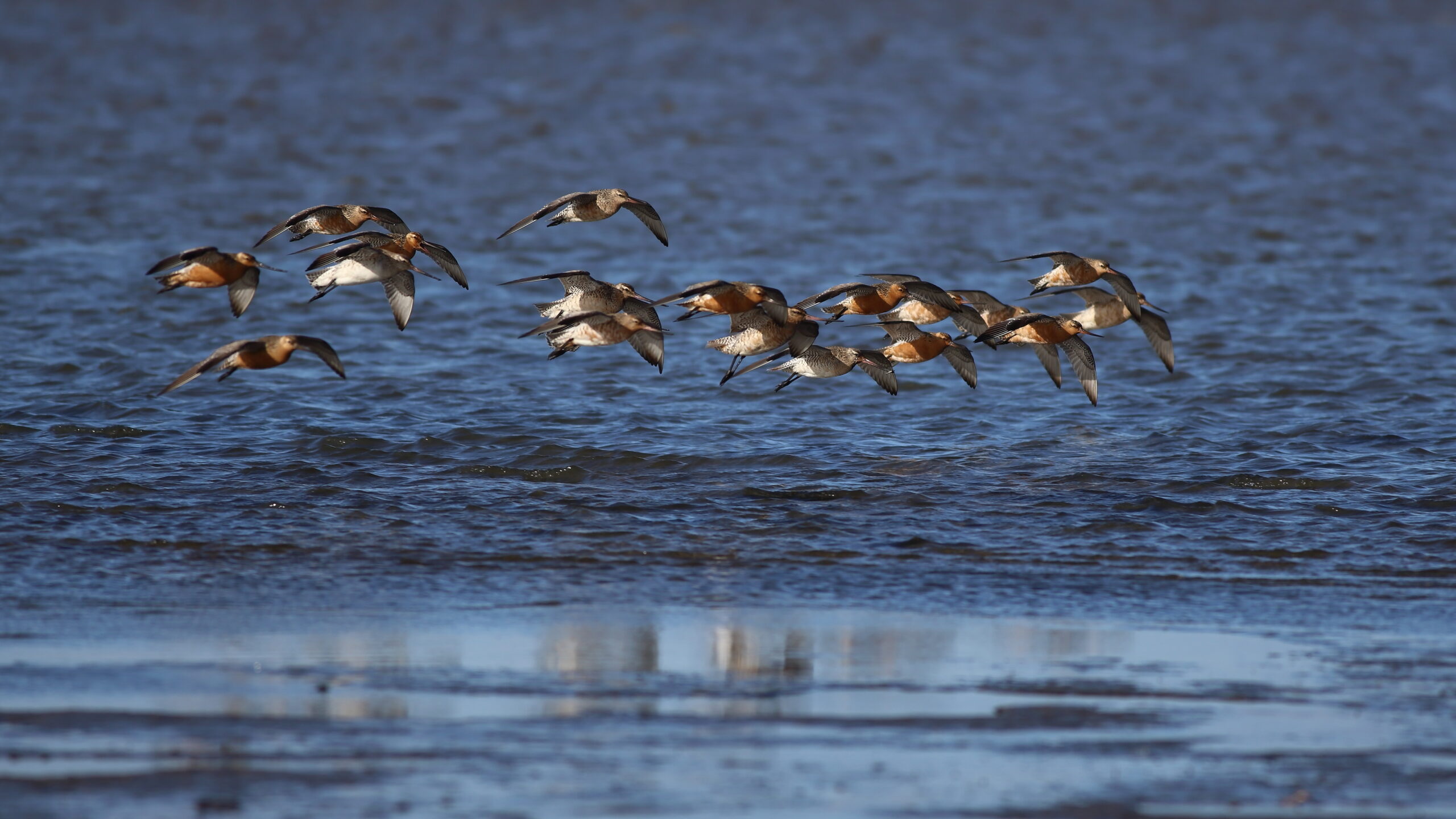
One personal highlight was seeing Bar-tailed Godwits in full breeding display for the first time. It was also encouraging to see this species at many of our survey sites. I think it is impossible not to be awestruck by the indomitable spirit of a displaying Bar-tailed Godwit. It would be easy to despair of the tardy snow melt, especially for a bird that must propel itself tens of thousands of miles annually across the Pacific Ocean. But if those Godwits were perturbed, they didn’t let on. They simply sang their hearts out in the Arctic sun.
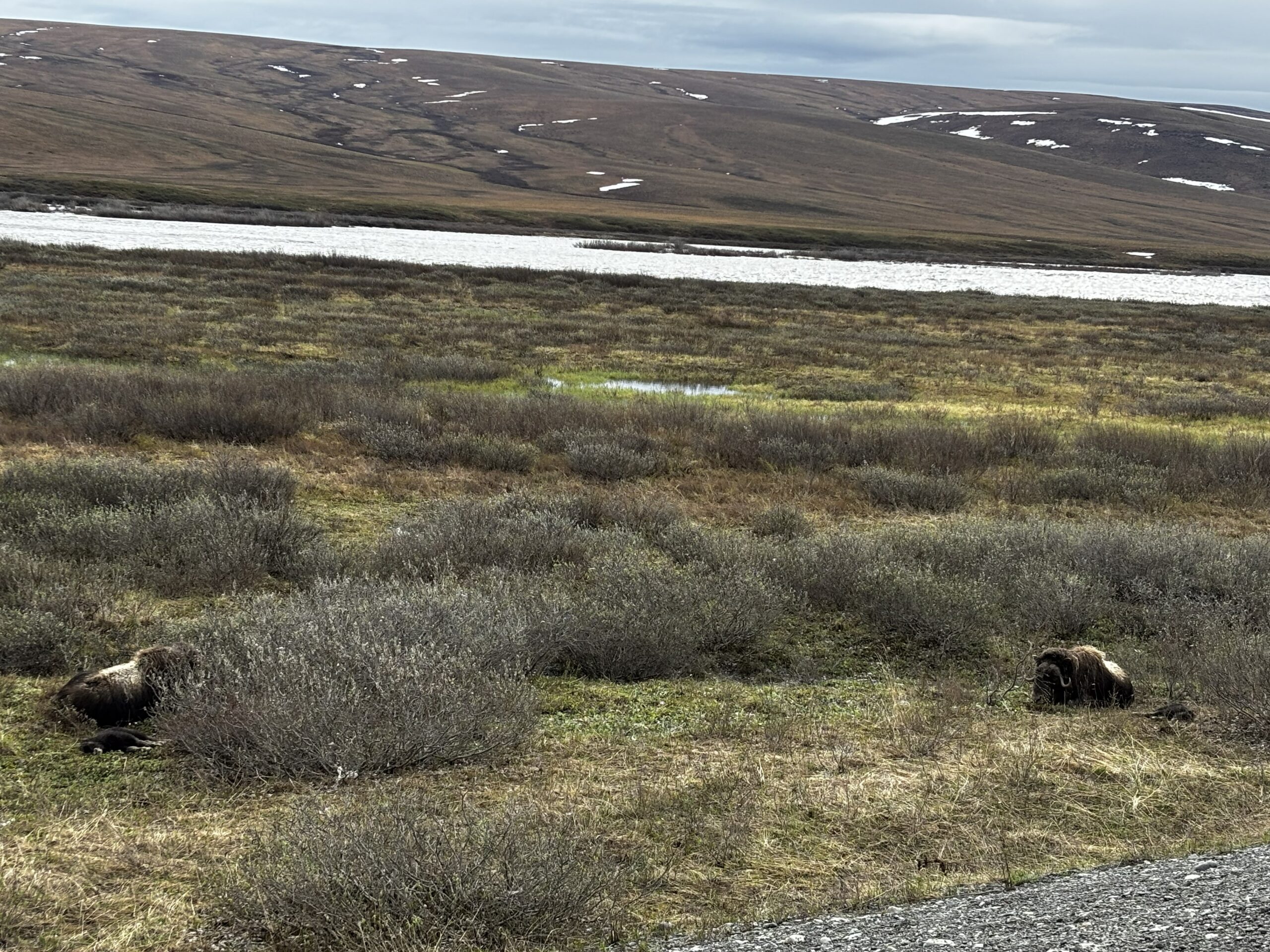
Mammals also put on a show. A lone Gray Wolf was seen by the crew loping along the far shore of Galbraith Lake. The herd of Musk Ox that frequent the tundra near Deadhorse and Pump Station 3 were seen several times, including calves. Dall’s Sheep were seen on the imposing cliff faces of the Brooks Range from the Galbraith Lake Airport. The few Brown Bears we were lucky enough to encounter were all seen from a comfortable distance.
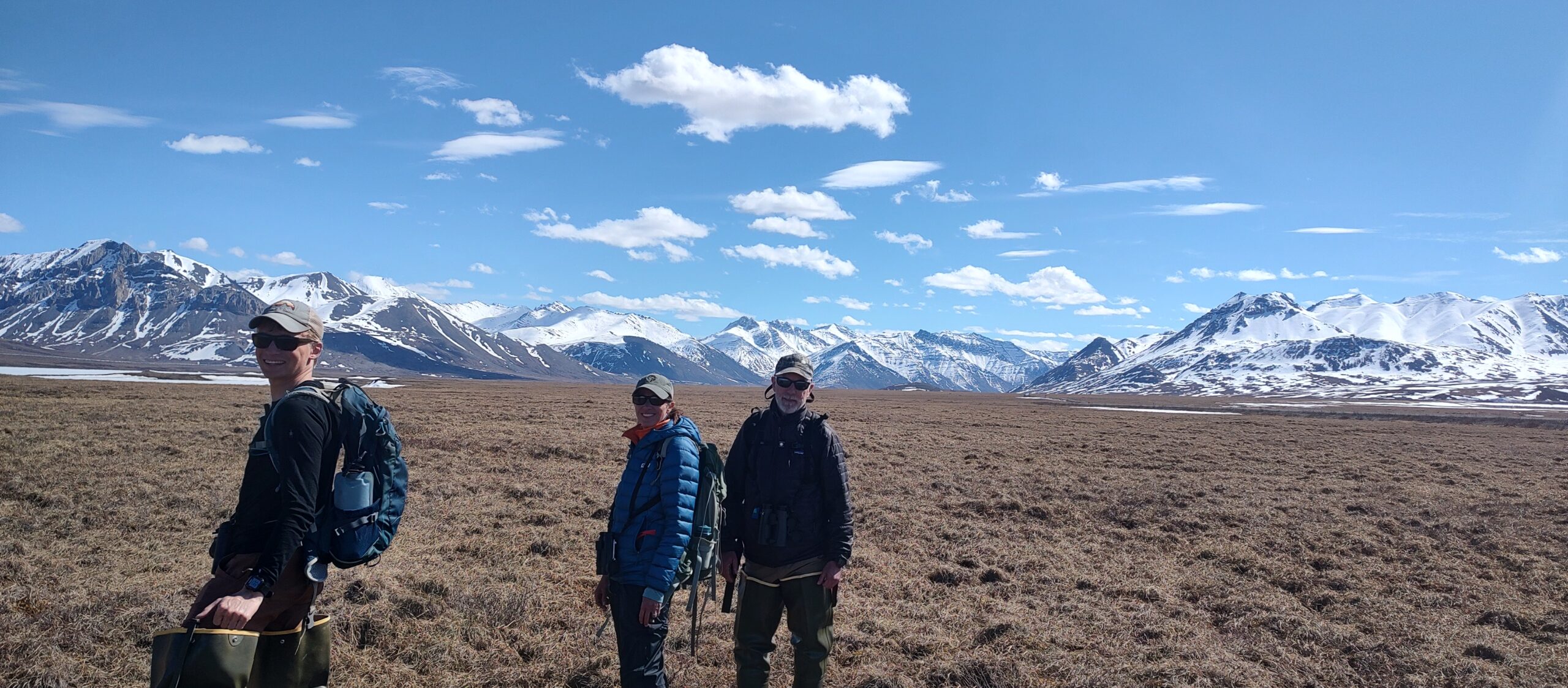
Evan Griffis:
Snow-covered peaks reflected golden in the water of Galbraith Lake as I scanned for shorebirds in the late evening. The constant summer sunlight north of the Arctic Circle quickly throws off my circadian rhythm and makes nighttime forays inevitable. Across an inlet, a group of over fifty Long-billed Dowitchers are joined by numerous Semipalmated Plovers, Stilt Sandpipers, and Dunlin. Their rapid feeding and extended stopover reveals that they, too, are slowed in their return to the North Slope by lingering snowpack, and likely just as earnest as I to venture north.
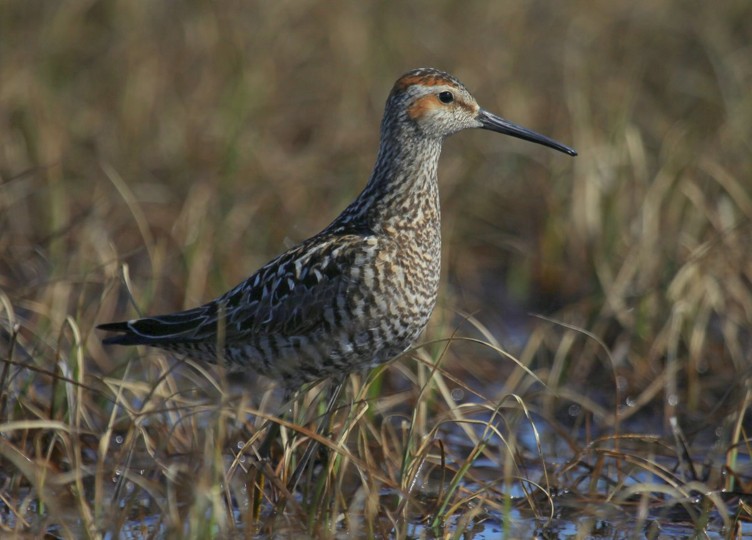
After several days, the snow had receded and it was all hands on deck to complete as many surveys as possible in our limited time frame. On the tundra, we found that the shorebirds were busy establishing territories and pursuing mates. I was captivated by the song of the Stilt Sandpiper, an unusual gurgling, grating song given in a flight display.
Despite surveying for shorebirds, it was impossible to miss the guttural clucks of Willow Ptarmigan at nearly every plot I surveyed. My highlight came after being dropped off at a new plot, and as the helicopter lifted away, I turned to find the faces of two Arctic Fox curiously looking at me! I was impressed by the diversity of mammals sighted throughout the season, from Caribou, Musk Ox, and Moose, to Gray Wolf and Brown Bear. I felt fortunate to experience this tundra landscape while gathering data that will advance bird conservation.
Thanks to all our partners and funders!
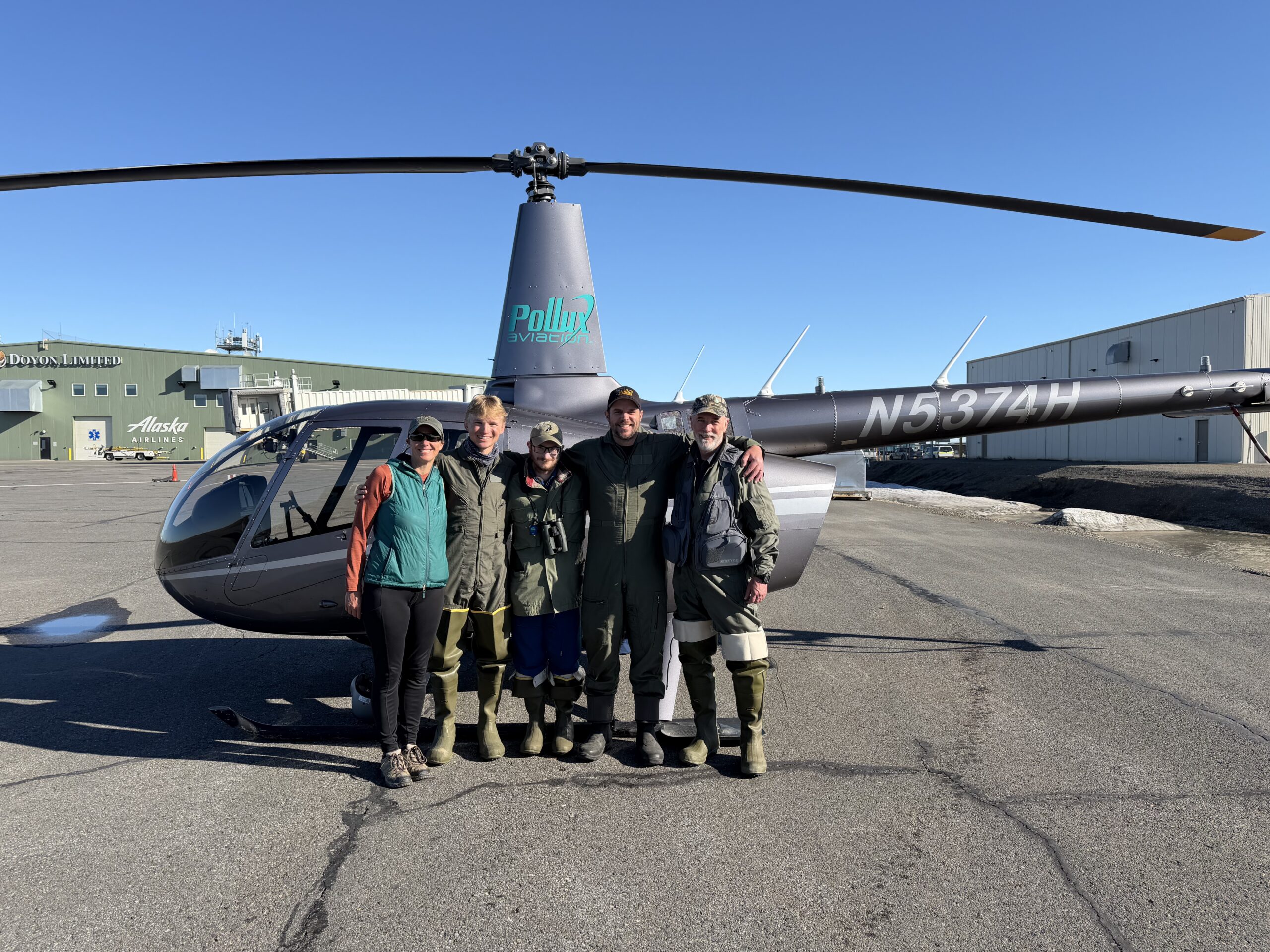
Behind every week of work in the Arctic are many months of planning, fundraising, and logistics for running these projects in remote, challenging locations, followed by months of financial management, reporting, and data analyses. It takes an incredible team and I wanted to close by thanking our four crews and our supporters for 2026.
This year we give special thanks to the Alaska Dept. of Fish & Game for PRISM surveys and our Audio Moth studies, BLM and the National Fish and Wildlife Foundation for their support of our work in NPRA, and the Knobloch Family Foundation for our Whimbrel work in the Arctic Refuge. We also thank our many individual donors to our Arctic Shorebird Program including major support from key donors including Russ Schipper & Ilse Gephard, Molly Cornell, and other anonymous donors, as well as our colleagues with the US Fish & Wildlife Service.