
img

Senior Shorebird Scientist Daniel Ruthrauff, Ph.D.

Senior Shorebird Scientist

I sit this morning, June 13, in our large cook tent, sipping coffee and gently licking my wounds after an eventful first week in the field. Our crew—myself, Manomet colleagues Sam Wolfe and Zoey Chapman, writer Caroline Van Hemert, and photographer Nathaniel Wilder—arrived at our study site on the Katakturuk River in Arctic National Wildlife Refuge on June 6. Sam and I were on the first helicopter flight to camp, and we were a bit shocked as we departed the Prudhoe Bay airport: heading east, the horizon was white with 100% snow. Although we love winter, we were hoping for the open tundra of spring and the birds that this would attract. It has been a late spring in northern Alaska, but we had arranged this charter flight months in advance and had to make our move. We crossed frozen rivers and indecipherable landscapes buried beneath wind-blown snow, fearing a cold camping adventure. Thankfully, our 45-minute flight provided time for the landscape to change, and to our relief a brown smudge on the horizon soon turned into the blessed snow-free drainage of the Katakturuk River. As we descended towards our campsite, a whimbrel flushed from the tundra: our apprehension eased, and we knew we were in the right spot.
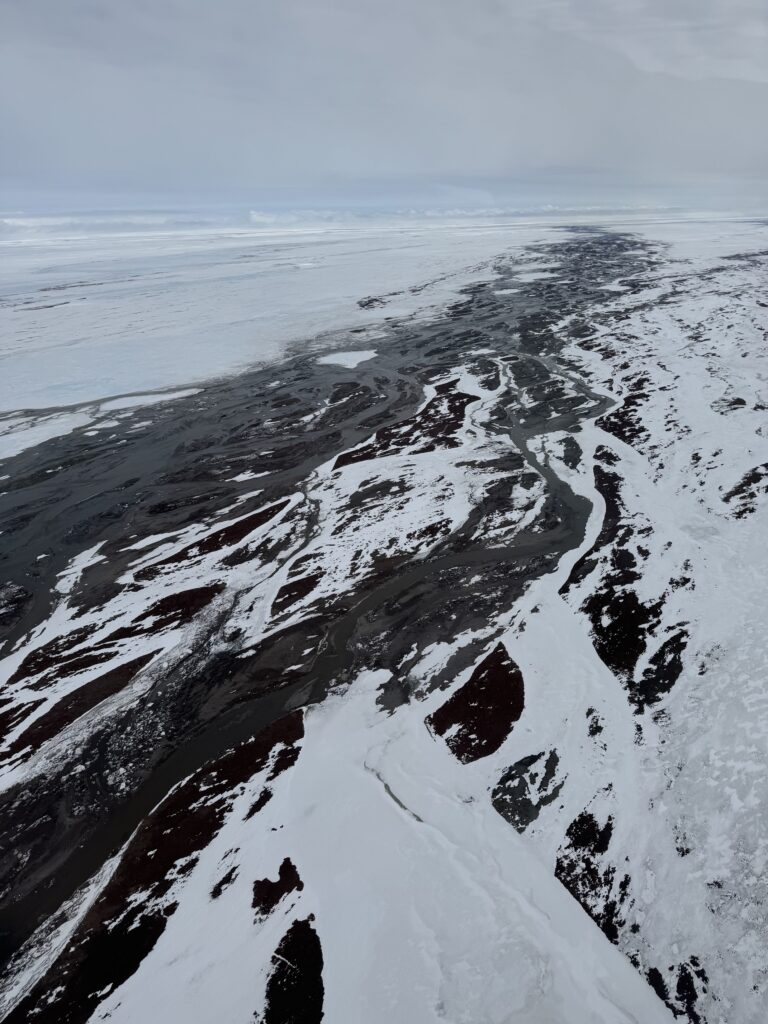
The mostly frozen Canning River bisects the snow-covered tundra of Arctic National Wildlife Refuge, 6 June 2026.

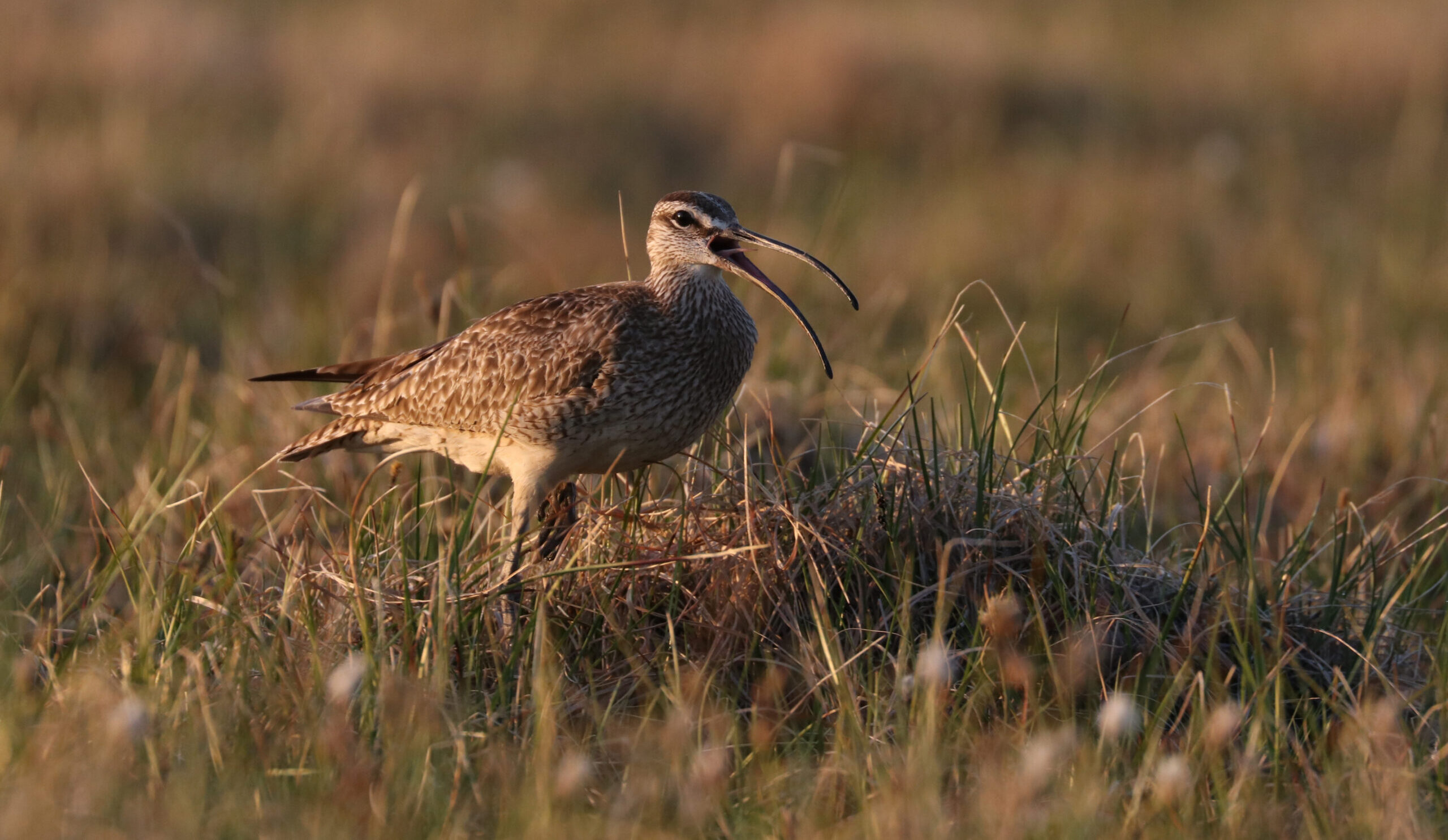
As nice as the weather was on the first day, the next few days gave us a taste of winter. Snow and strong winds gave us a small insight into the toughness and resilience of the birds of the Arctic Refuge. We took long walks to stay warm and assess the conditions, and we were happy to find that despite the cold, all the birds that we expected to see were already here: American Golden-Plovers languidly displaying over the tundra like large butterflies; Long-tailed, Parasitic, and Pomarine Jaegers perching imperiously atop tussocks; tiny Lapland Longspurs bravely proclaiming their patch of tundra to the world. Most importantly, we found Hudsonian Whimbrels nonchalantly strolling through the tundra. We’re here in perhaps North America’s most northerly breeding site for Whimbrels to better understand the species’ reproductive ecology. It’s a logistically challenging and financially daunting endeavor, but little is known about the breeding biology of whimbrels in North America. The species breeds in low densities across vast, remote landscapes, so we’re trying to make the most of our time here on Alaska’s tundra to learn what we can and apply this knowledge to the conservation of the species.
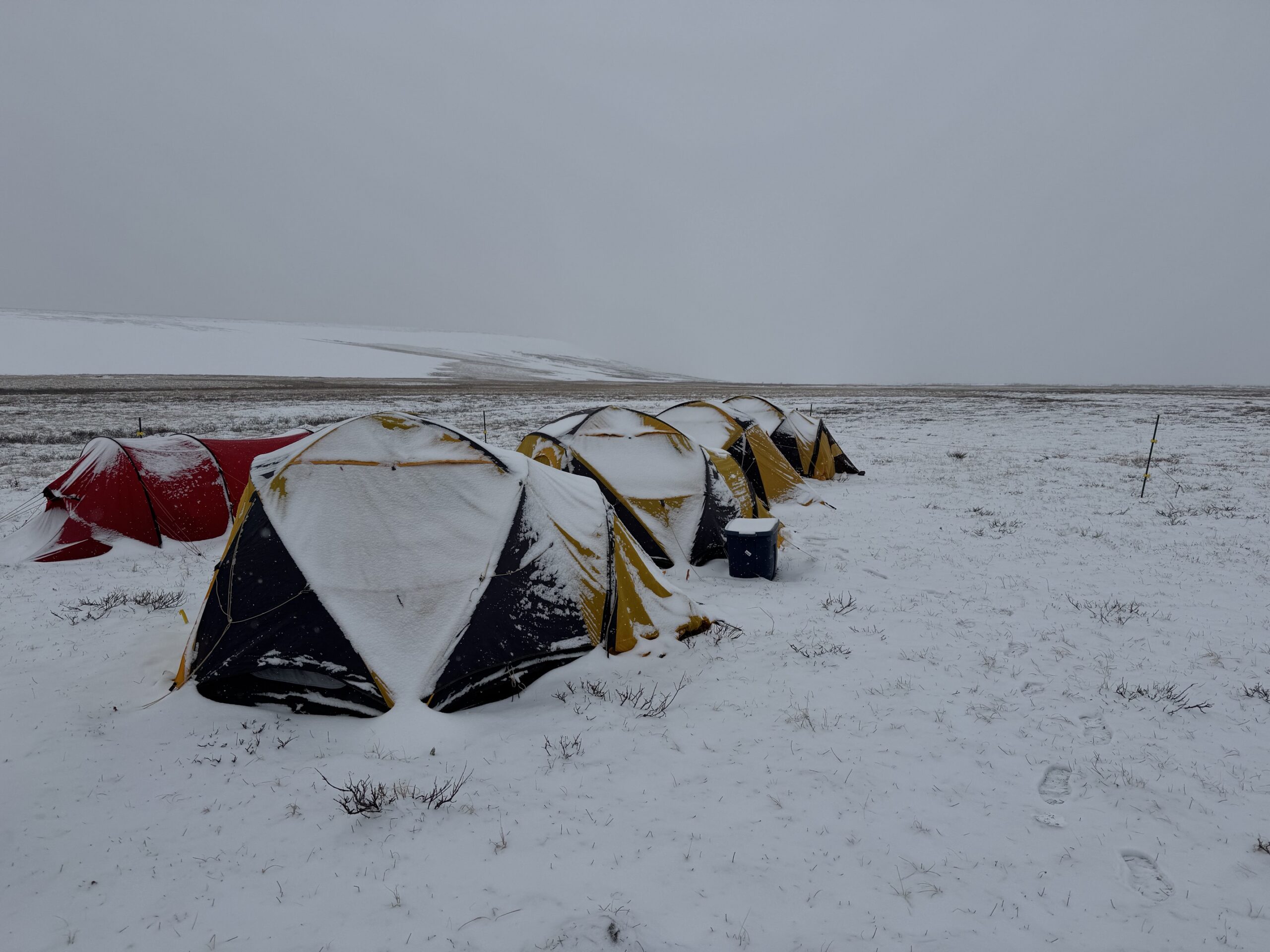
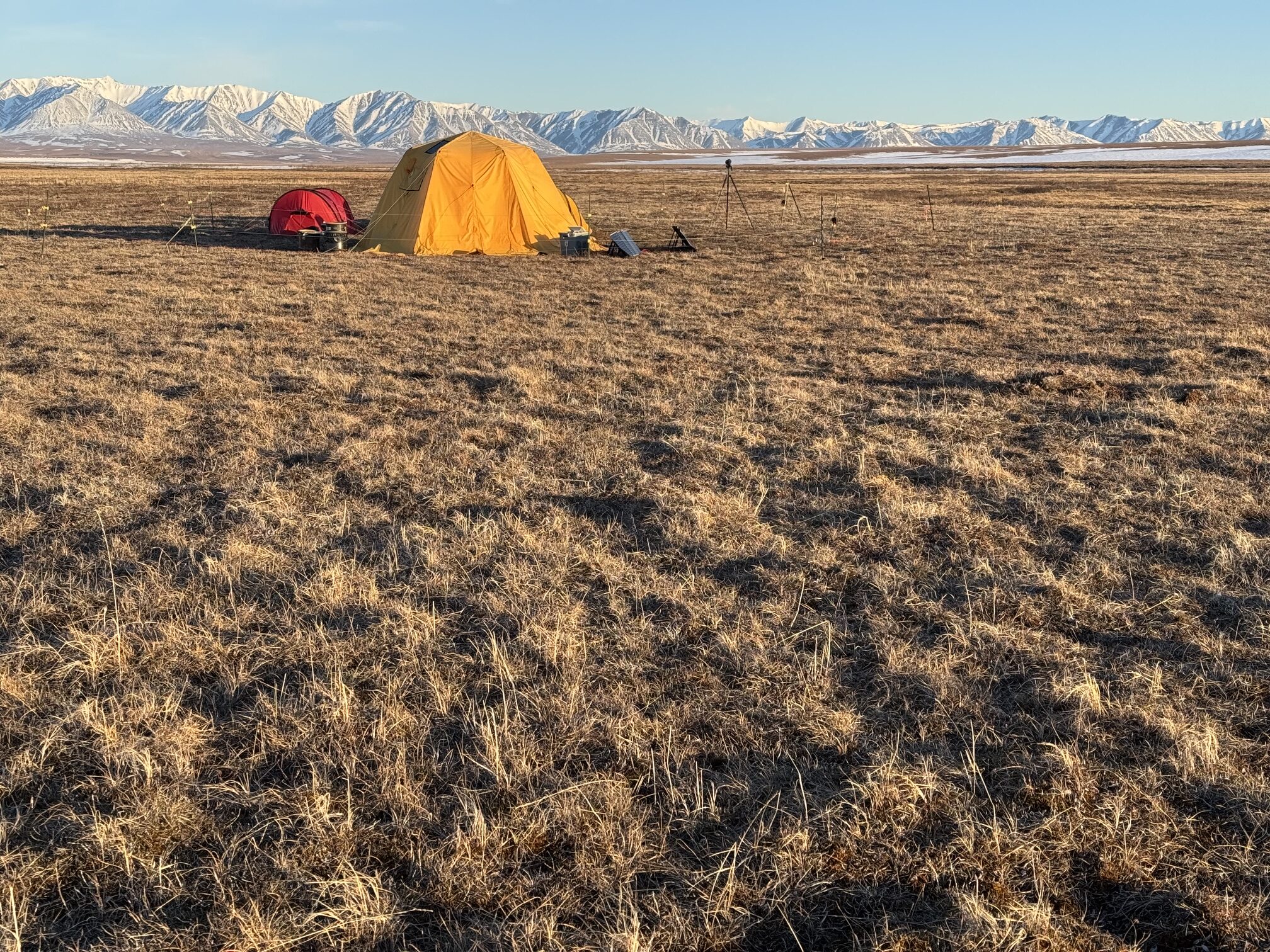
Fresh snow was an unpleasant wake-up on 8 June.
Camp on the Katakturuk River. The Sadelerochit Mountains form the backdrop to the south.

We’re here for two and a half weeks—not enough time to observe the full ~23-day incubation period of a Whimbrel nest. But with recent advances in tracking technology, our plan is to deploy tiny transmitters on Hudsonian Whimbrels to collect highly accurate locations every four hours from the birds. With this high-resolution information, we can determine if birds attend their nests long enough to hatch successfully. If they hatch, we then use this tracking information to assess if their movement patterns indicate movements with their chicks—local-scale movements over a ~35-day period until a chick fledges—versus larger-scale movements indicative of a failed brood. Our time at the Katakturuk is short, but after we depart, the transmitters will collect the information we need to better understand the reproductive ecology of Whimbrels. Once the birds depart Alaska, the transmitters will then allow us to follow birds as they stream down both the Pacific and Atlantic coasts of North America, a bi-hemispheric migration pattern that is unique to Whimbrels breeding in the Arctic National Wildlife Refuge.

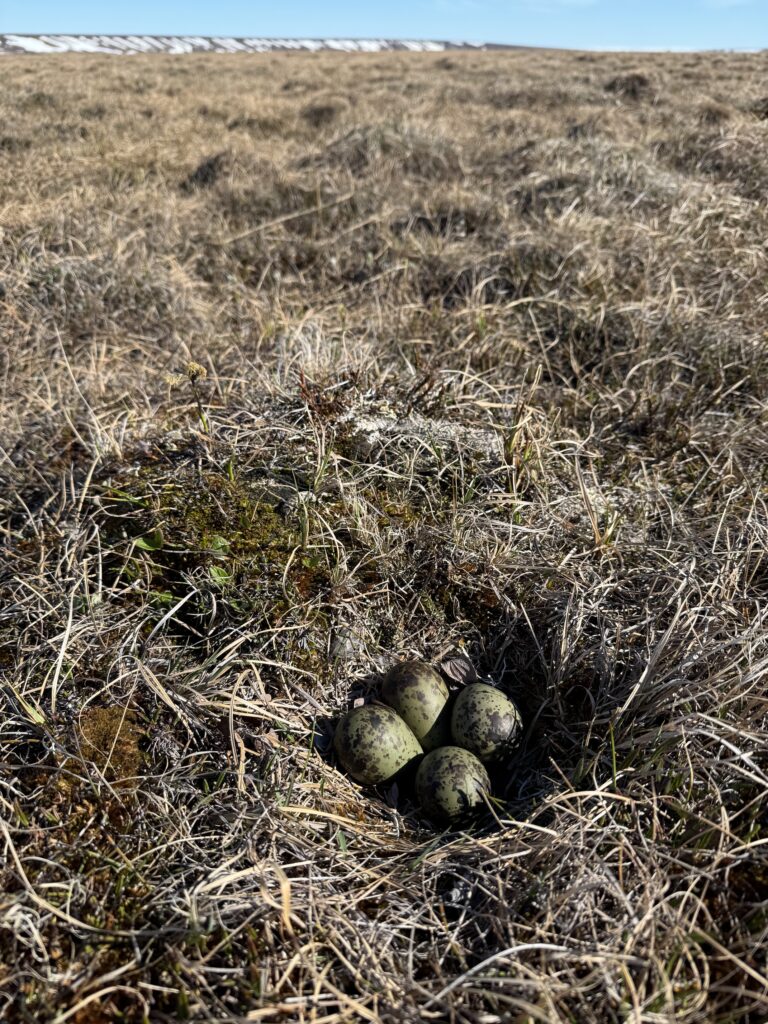
Hudsonian Whimbrel nest located along the Katakturuk River valley, Arctic National Wildlife Refuge, Alaska. 19 June 2026.

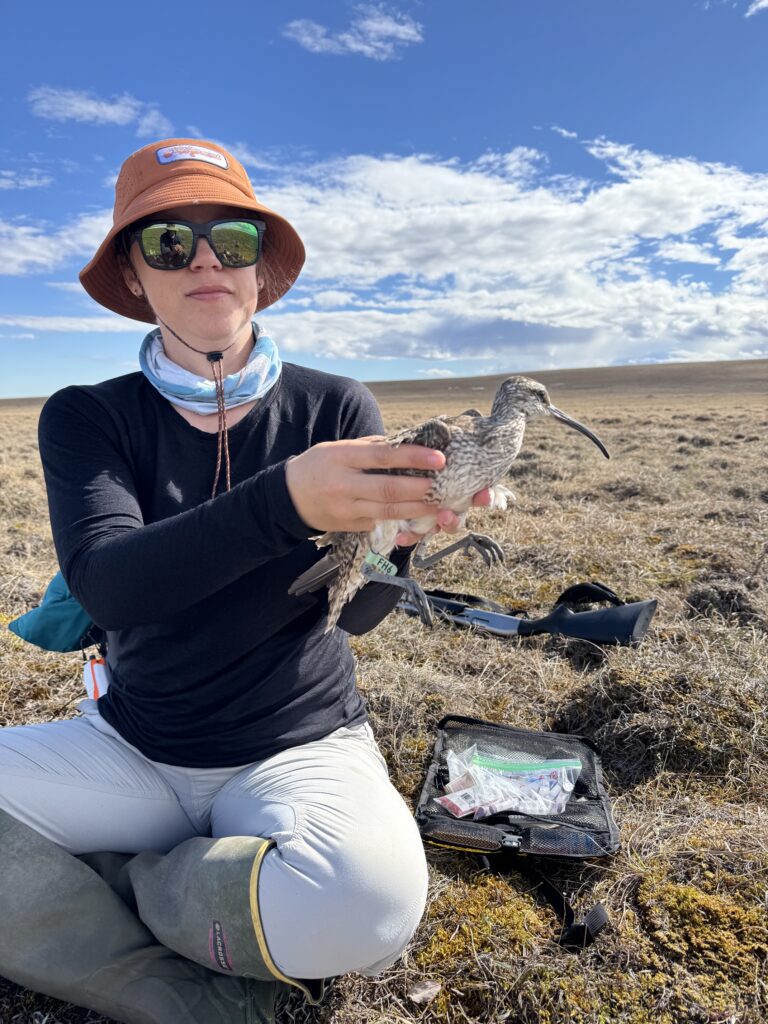
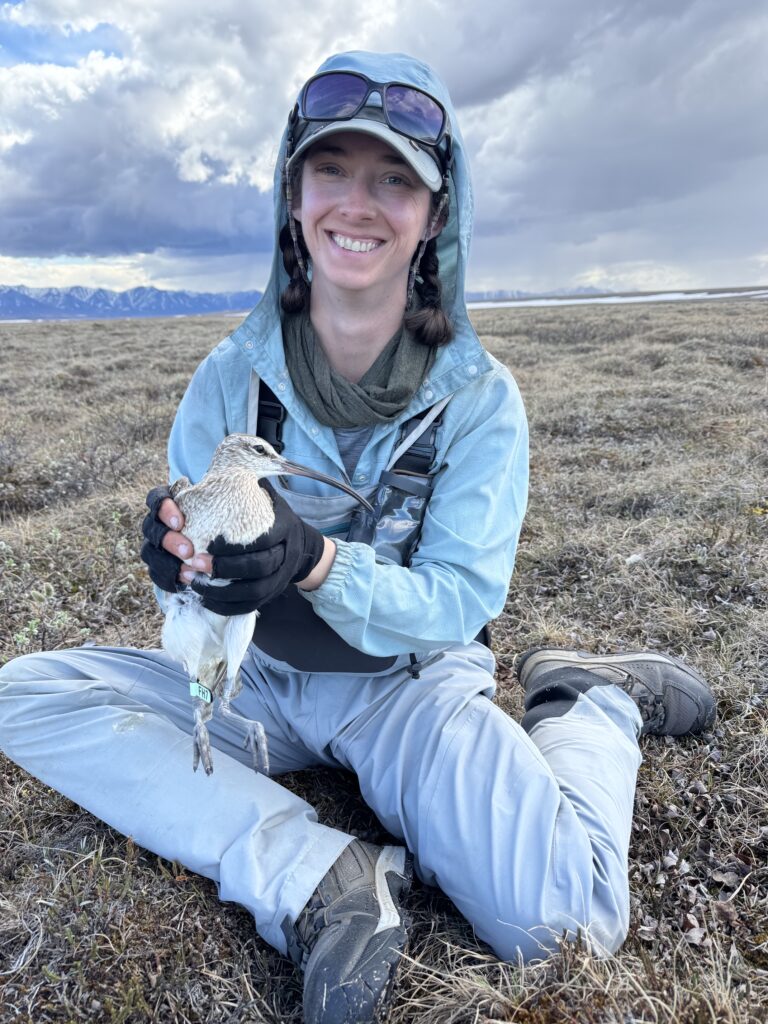
The trick, of course, is to first find a nest so that we can capture the breeding pair. Given the late spring conditions, we have been fortunate to observe many pre-breeding behaviors: graceful territorial displays, furtive copulations, and males sneakily leading females to nest scrapes. Observing these behaviors has been awe-inspiring—the male’s flight display traces a wide arc across the tundra as he flies in a large circle with intermittent exaggerated wing flutters, periodically singing the species’ distinctive piping song, for instance—but after nearly two weeks of walking the tundra, we’re more than ready to find a nest. Thankfully, on the 19th of June, our patience is rewarded. We observe a Whimbrel flush from the ground, flying low over the tundra and landing with drooping wings while gently scolding us: a nest! It’s a privilege to find these beautiful nests, and they are also the key to capturing adults. Because whimbrels are eager to return to their nests and incubate their eggs, they can usually be trapped quickly and efficiently.  We quickly set our bow net over the nest and soon capture the male. Amazingly, this bird was already banded: this male was a bird that Shiloh Schulte and Kirsti Carr first captured at this site in 2022. The metal leg band on this bird is a tangible legacy of Shiloh’s devotion to Whimbrels, and we all felt grateful and humble to ‘share’ this bird with Shiloh. Later that same night, we capture and band the female at the nest. Both birds are now equipped with solar-powered transmitters, and with this our opportunity to discreetly and unobtrusively observe the pair’s important time in Alaska is assured. We gratefully acknowledge the steady support of the Knobloch Family Foundation in funding this important work; this work is challenging to conduct but provides critical information to help guide conservation efforts for this enigmatic species.

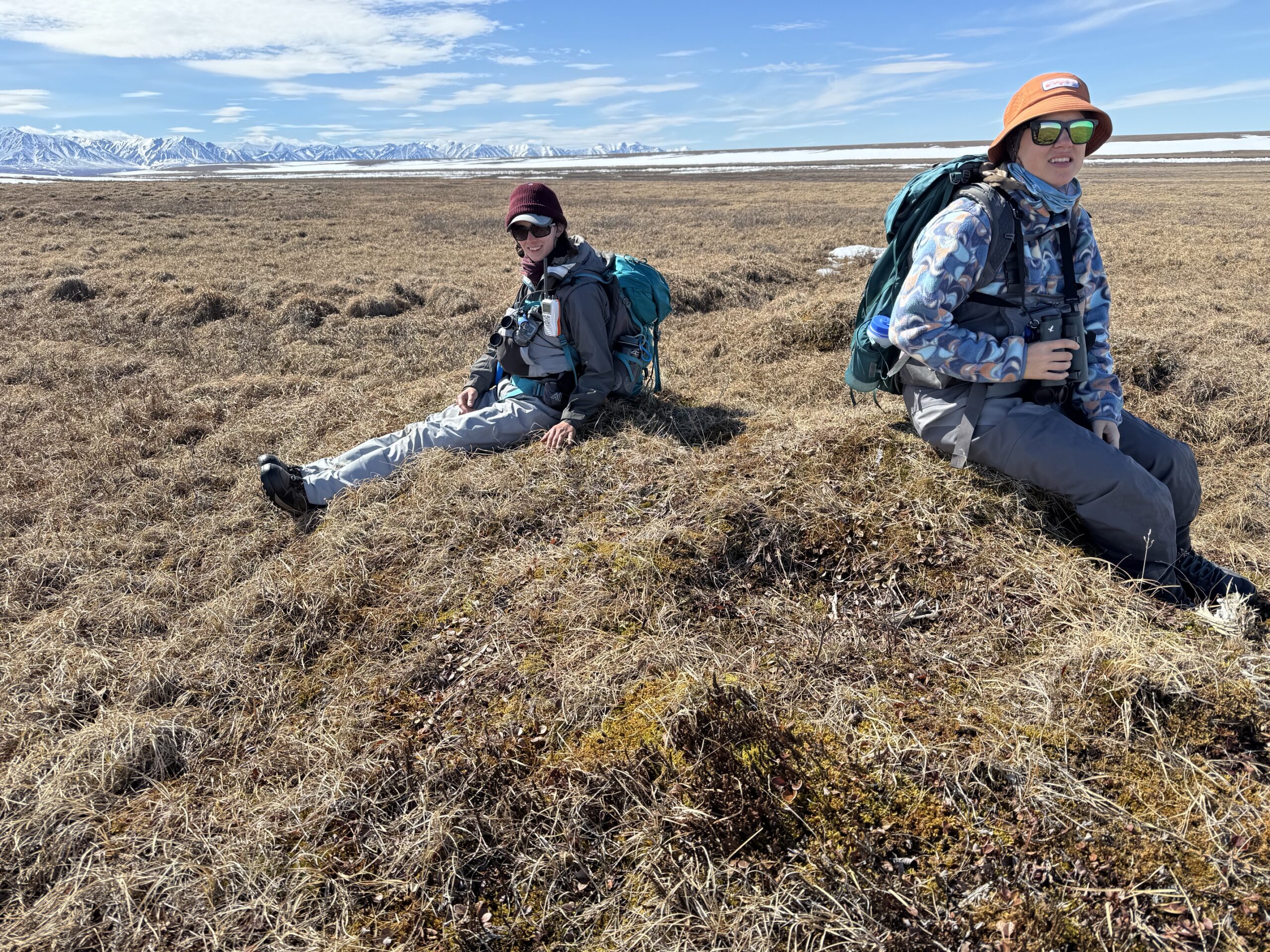
Zoey Chapman (left) and Sam Wolfe take a break from nest searching on 10 June.
Sam Wolfe holds a male whimbrel ‘FH6’, 19 June 2026.
Zoey Chapman holds female whimbrel ‘FH7’, 19 June 2026.