


Manomet uses science and collaboration to strengthen bird migration routes, coastal ecosystems, and working lands and seas across the Western Hemisphere. For over 55 years, we have formed vital partnerships with businesses, producers, and educators, to help nature and local communities thrive.
We use individual birds or species to better explain the threats to shorebirds and show you the wider impact of our work. But our work doesn’t stop there. We have always believed that education is a big part of creating long-term change. This is why we strive to inspire, mentor and guide educators and students, especially within underrepresented communities, to create the next generation of conservationists.
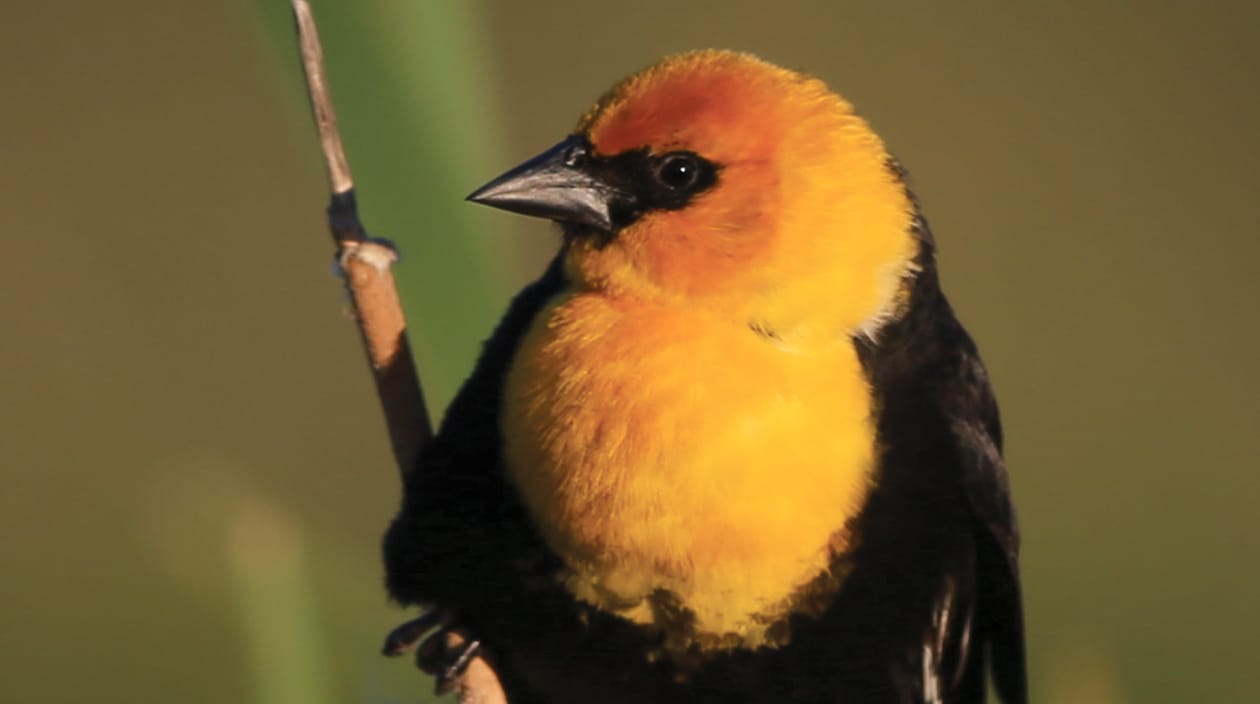
From the north slope of Alaska to the southern tip of Argentina, our staff and scientists look for high-impact opportunities to make our world a more resilient place. (Header image: Yellow Warbler singing. Credit: Jared Keyes.)
55 years of Science
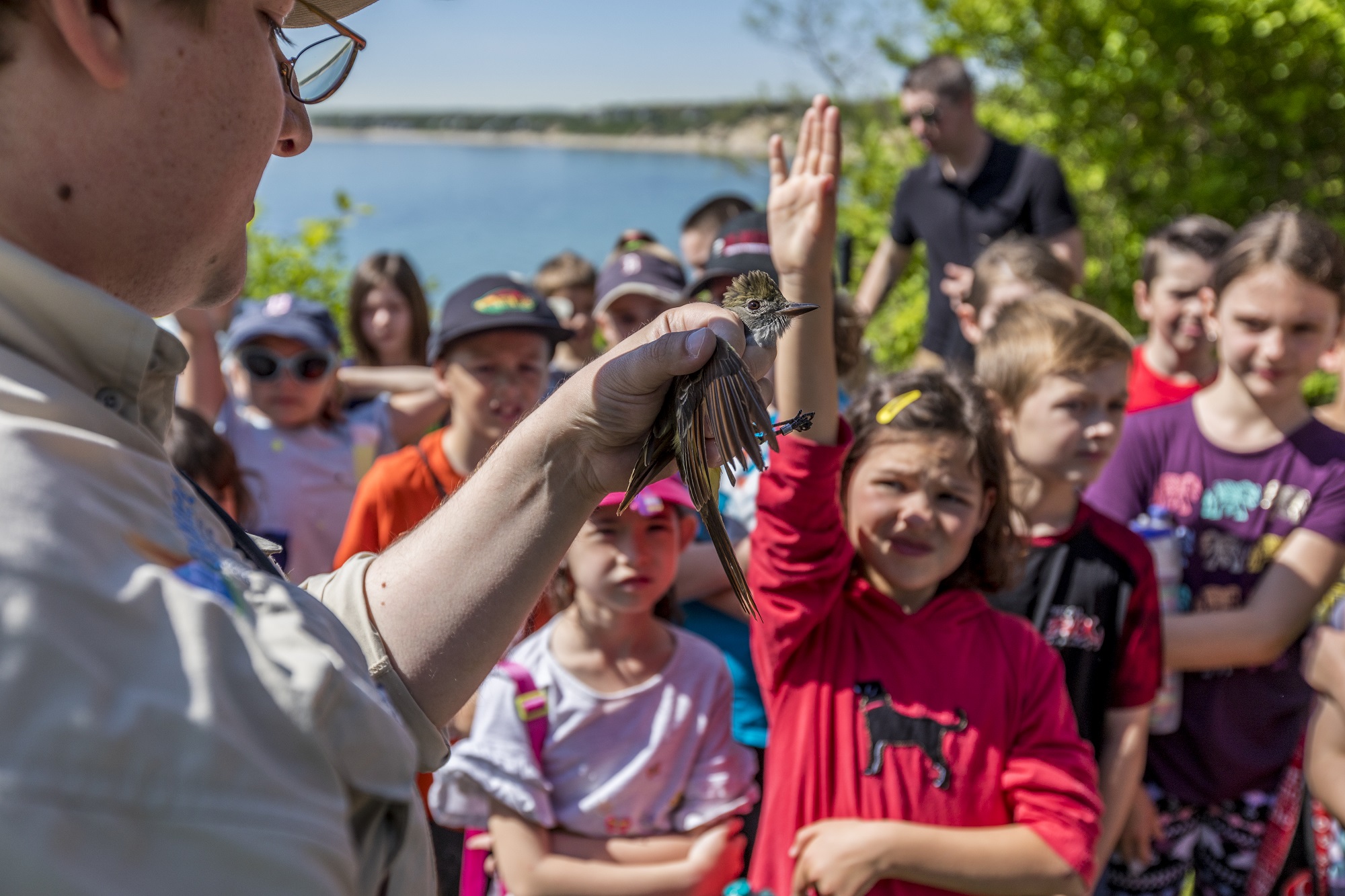
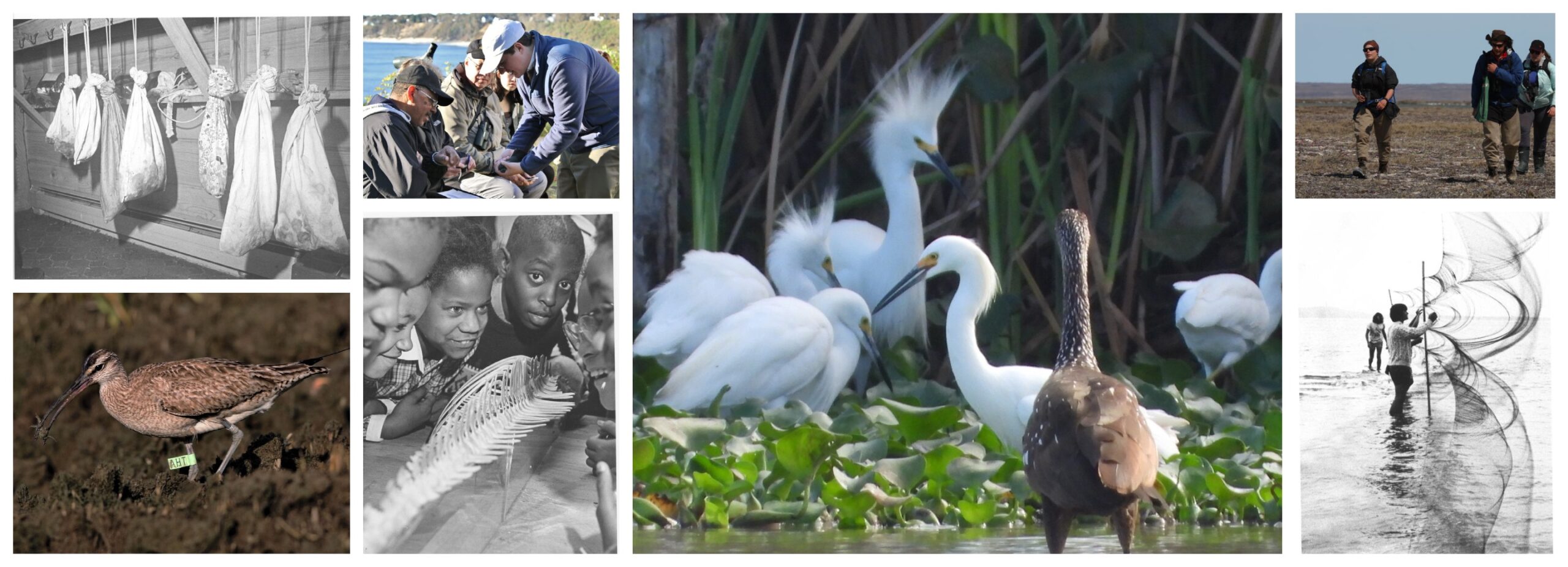
In August 1969, Kathleen “Betty” Anderson was named as the first director of the Manomet Bird Observatory. Manomet’s founders’ goal was to provide a site for long-term studies of birds and other aspects of southeastern Massachusetts’ natural history and ecology. Manomet’s Banding Lab, the first of its kind on the East Coast of North America, continues its research on migratory birds today.
Over the decades, Manomet’s vision for a world where ecosystems and human communities thrive together has led to expertise in shorebird recovery and habitat management, forestry and climate science, fisheries restoration, education, and more.

Using science to create positive change.
For over five decades, Manomet has earned a reputation for being laser-focused on quality science and applying our science collaboratively to address real-world challenges.
Mission
Manomet uses science and collaboration to improve the health of flyways, coastal ecosystems, and working lands and seas.
Vision
Manomet envisions a world where ecosystems and human communities thrive together.
Our Values
Lead with excellence.
We pursue excellence in everything we do and commit to continuous improvement. We will lead by example and hold ourselves to the highest quality of work.
Uphold scientific rigor.
We conduct and apply scientific research with integrity, making our research available to all to promote informed decisions.
Create equity.
We pledge that Manomet and our programs will take action to become more open and embody unique views, experiences, and backgrounds for the success of our team, our partners, and the communities in which we work.
Work boldly.
We relentlessly seek solutions to reach our shared goals and use creativity, curiosity, and passion to pursue our mission.
Commit to accountability.
We commit to open communication and transparency to each other and our partners worldwide, and assume responsibility for the actions and decisions we make.
Collaborate with all.
We thrive by working as a team, recognizing all perspectives, dedicating support to each other and our partners, and leading with trust and mutual respect.
Stay focused.
We commit to staying focused on our goals to achieve our mission while ensuring that we adapt to changes in our working environment.
Nurture wholeness.
We value each team member for their whole self, encouraging their emotional and physical wellness, and supporting balance in all we do.
Liderar con excelencia.
Buscamos la excelencia en todo lo que hacemos y nos comprometemos a mejorar continuamente. Lideraremos con el ejemplo y nos comprometemos a trabajar con la más alta calidad.
Mantener el rigor científico.
Realizamos y aplicamos investigación científica con integridad, poniendo nuestra investigación a disposición de todos para promover decisiones informadas.
Crear equidad.
Nos comprometemos a que Manomet y nuestros programas tomen medidas para ser más abiertos y encarnar diversos puntos de vista, experiencias y orígenes únicos para el éxito de nuestro equipo, nuestros socios y las comunidades en las que trabajamos.
Trabajar decididamente.
Buscamos incansablemente soluciones para alcanzar nuestros objetivos compartidos y usamos la creatividad, la curiosidad y la pasión para cumplir nuestra misión.
Asumir las responsabilidades.
Nos comprometemos con la comunicación abierta y la transparencia entre nosotros y con nuestros socios en todo el mundo, y asumimos la responsabilidad de las acciones y decisiones que tomamos.
Colaborar con todos y todas.
Crecemos al trabajar en equipo, reconociendo todas las perspectivas, apoyándonos mutuamente y a nuestros socios, y liderando con confianza y respeto mutuo.
Trabajar enfocadamente.
Nos comprometemos a mantenernos enfocados en nuestros objetivos para lograr nuestra misión, mientras nos aseguramos de adaptarnos a los cambios en nuestro entorno de trabajo.
Fomentar la integridad.
Valoramos a cada miembro del equipo por sí mismo, fomentando su bienestar emocional y físico y apoyando el equilibrio en todo lo que hacemos.
Our History
Manomet celebrated its 55th anniversary on August 4, 2024. A lot has changed from those early days when volunteers hoisted the first mist nets on our property, but one thing surely has not—the support and dedication of the staff, volunteers, and supporters who believe in Manomet’s work and share our commitment to creating a sustainable future.
Manomet’s work over its first 25 years expanded organically from landbirds, shorebirds, and forests and opened the door to a broader understanding of the world around us. This understanding of how the many facets of our world are connected—and a belief that we cannot solve the complex challenges that we are facing by ourselves—is integral to understanding our most recent past and how we are preparing to lead in our next half-century.
1969-Present Day
In the fall of 1966, at the oceanfront property that would eventually become Manomet, a crew of volunteer birders began banding birds as part of a project to study migration along the East Coast. Based on their visits to other bird observatories, Kathleen “Betty” Anderson, Rosalie Fiske and her husband John approached Ruth Ernst, the property owner at the time, to bequeath her house and land to establish their own environmental research non-profit. The goal of Manomet’s founders was to provide a site and opportunity for long-term studies of birds and other aspects of the natural history and ecology of southeastern Massachusetts. Anderson was asked to be the first director and in August 1969, the Manomet Bird Observatory was created.
Manomet Bird Observatory has become a reality, the first of its kind on the Atlantic Coast of North America…The response of the volunteer workers and of the public to the membership drive has enthusiastically ratified the decision to open permanently on August, 4, 1969.
-
Since Manomet’s beginnings, its science programs have branched out far beyond the Plymouth-based banding operation. With shorebird recovery and habitat management, forestry and climate science, fisheries, and more, Manomet has its foundation in science, but seeks diverse viewpoints from its many partners to work towards solving the problems we’re facing today.
Bird populations are in trouble; the causes are many and complex…today, Manomet is focused on building science-based solutions to environmental problems. To reach this goal, we actively catalyze many partners in using science generated by ourselves and others to create long-term solutions that meet both human and ecological needs.
-