


 Back to all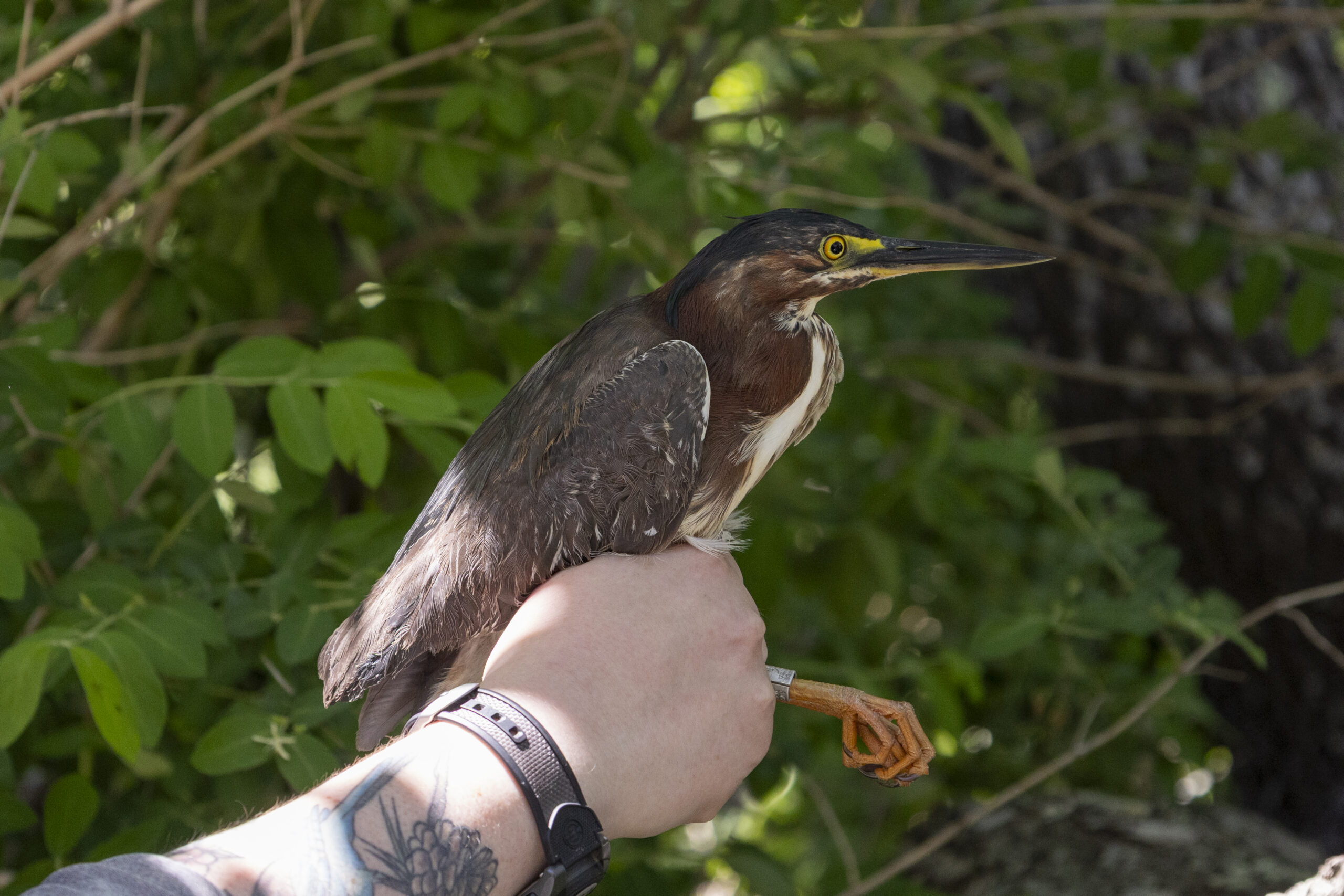
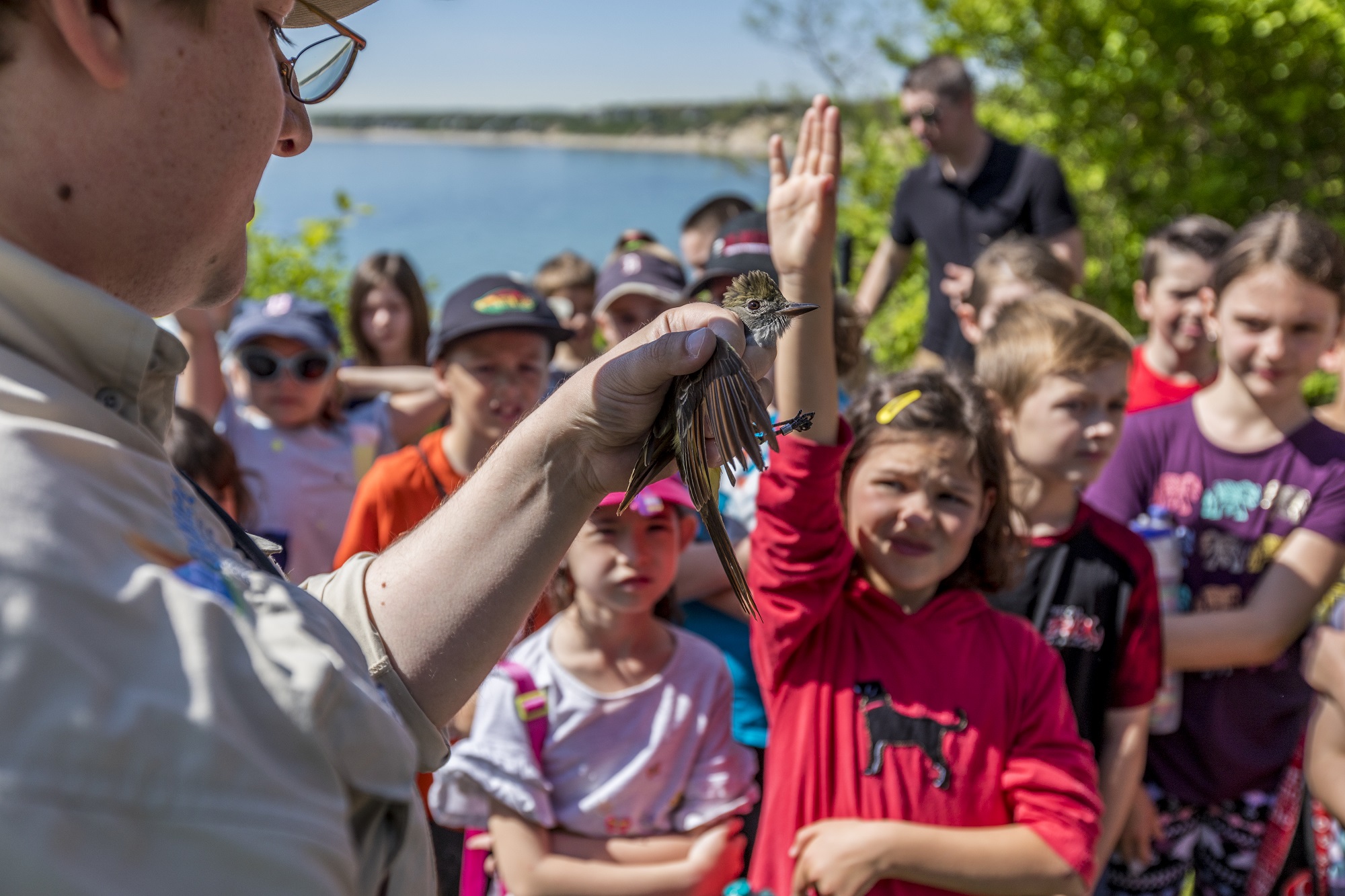
Spring migration brought thousands of birds and a new generation of banders to Manomet’s Trevor Lloyd-Evans Banding Lab. This season, we welcomed back Amy Hogan and Camille Beckwith as lead banders, joined by spring interns Chantal Schamber and Alexa Gioia. Together, they spent the season learning and applying bird-banding skills while contributing to one of North America’s longest-running migration-monitoring programs.
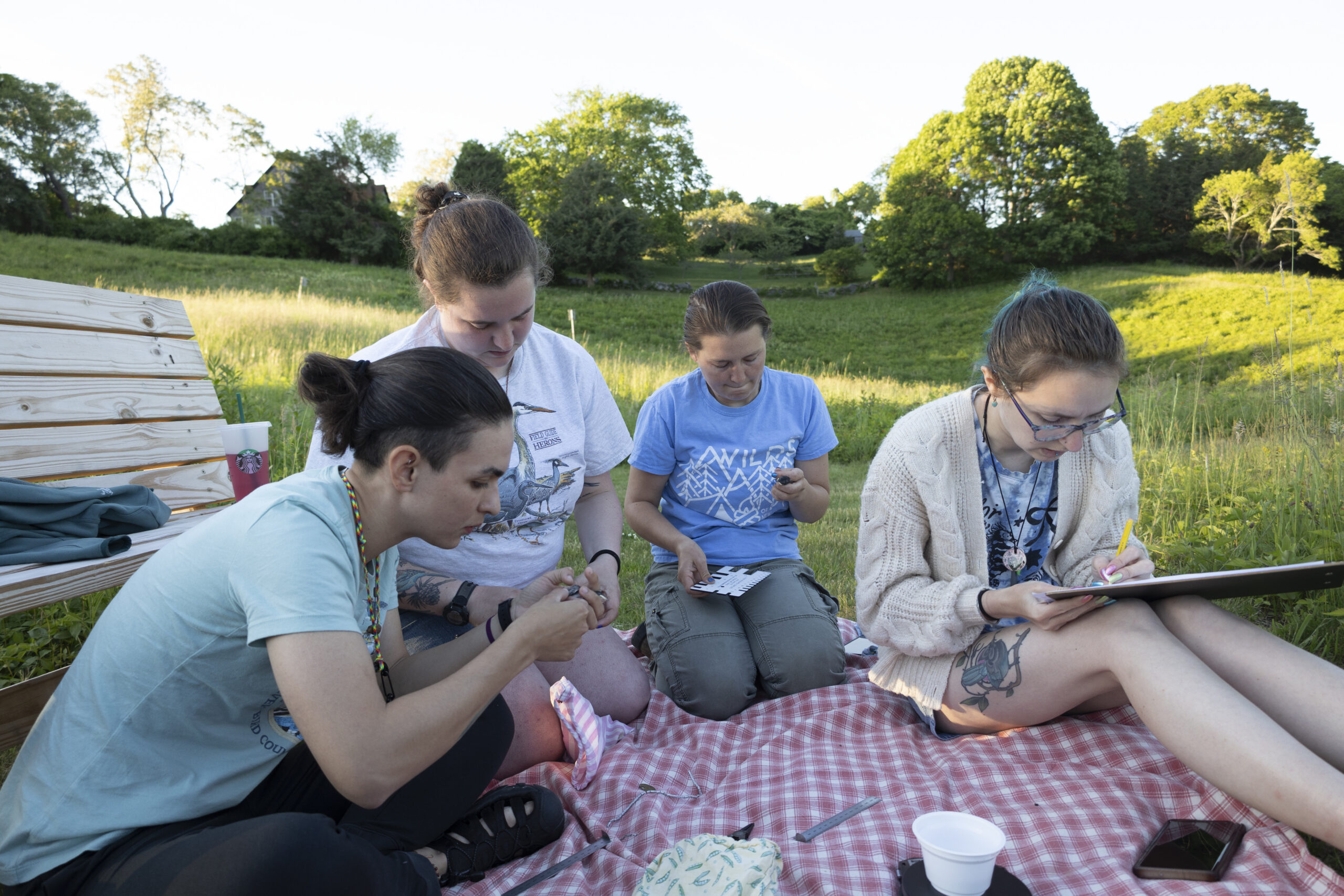
Over the course of the season, the team processed 1,639 birds representing 76 species, including 1,295 birds receiving bands for the first time. The remaining birds were recaptures—individuals that had already been banded, either at Manomet or at other banding stations. Long before tracking devices were available, recaptures have provided valuable insights into the remarkable life stories of migratory birds.
The Banding Lab comes alive Monday through Friday, with nets opening before dawn as birds fill the morning air with their songs. Each of the lab’s 50 mist nets has remained in the same location for more than half a century, creating an unparalleled record of bird migration through southeastern Massachusetts. Generations of banders have learned their craft here, and many have gone on to become influential scientists, conservationists, and educators. For interns and volunteers, a season at Manomet is an opportunity to join a remarkable tradition of bird conservation.
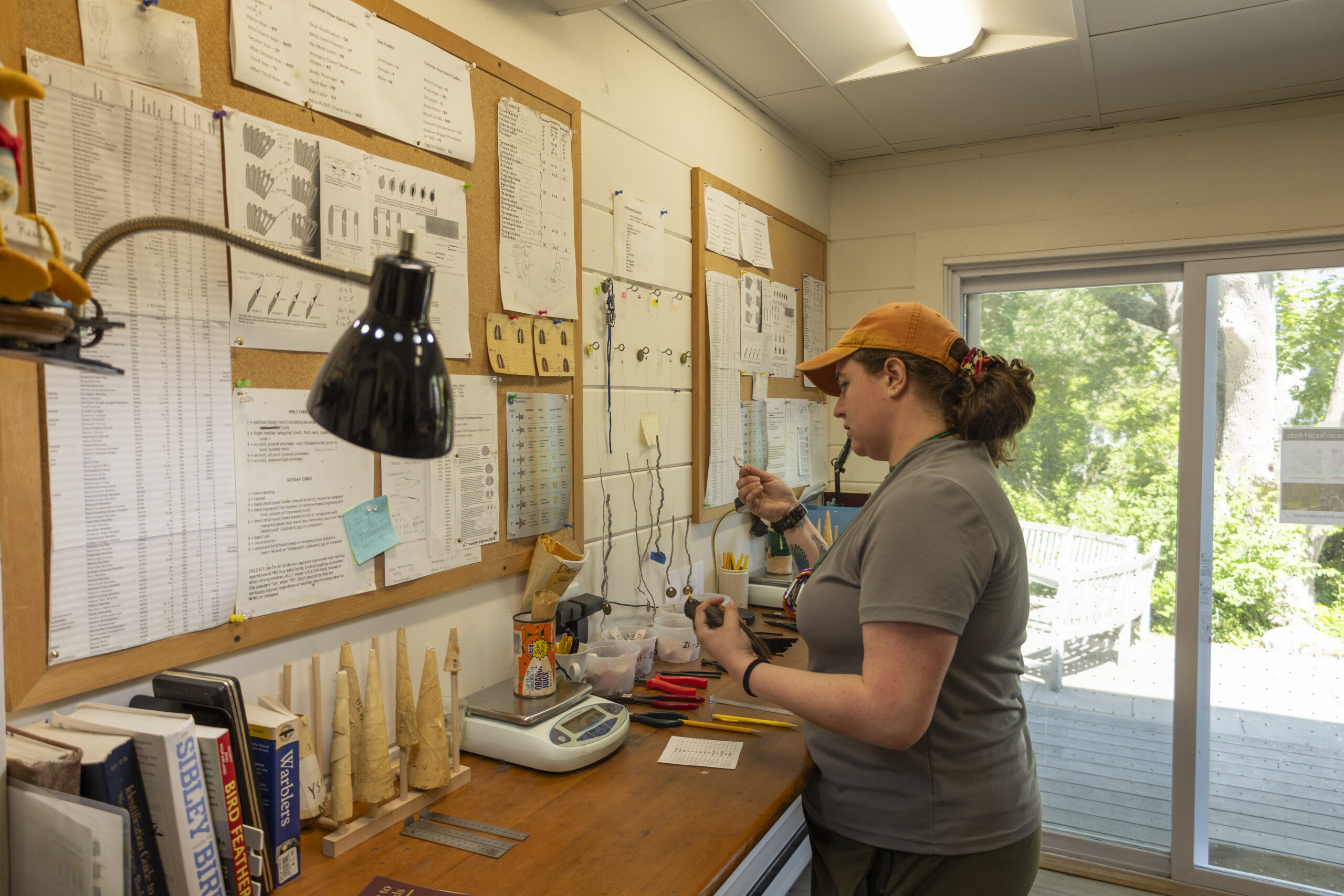
The busiest day of the season came on May 13, when the team processed an impressive 201 birds from 30 different species, including 187 new captures. Other standout days brought 111, 107, 93, and 86 birds, with the fifth-largest day occurring unusually early, on just the fourth day of spring banding.
Recaptures also provided a glimpse into the longevity and site fidelity of many birds passing through Manomet. The oldest returning visitor was an eight-year-old Gray Catbird originally banded in 2019. Since receiving its band, it has returned to the lab nearly every year, and sometimes more than once in a season. Another notable return was a male Baltimore Oriole originally banded in 2022 and estimated to be six years old this year. Both species are Neotropical migrants that travel thousands of miles between breeding and wintering grounds each year.
Near the end of the season, the banders (and many bird enthusiasts among the Manomet staff) were delighted by an unexpected visitor: a Green Heron caught in the net near the bog. The last Green Heron banded at Manomet was captured in 1984. With only five Green Herons ever banded on the property, this bird created a truly memorable moment for the team. It was also the first time any of the current banders, including Banding Lab Director Evan Dalton, had ever held a Green Heron in hand.
Other notable captures included an Orchard Oriole, a species not banded during spring migration at Manomet since 2022; a Wood Thrush, whose last spring capture occurred in 2023; and a Savannah Sparrow, also not captured during the spring season since 2023. These uncommon encounters highlight the excitement and unpredictability of migration monitoring.
The team also recaptured an Eastern Screech-Owl believed to have nested on the property, which had visited the banding lab at least once a year for the past three years.
So which species topped the charts this spring? Unsurprisingly, Gray Catbirds led the way with 463 captures, accounting for more than a quarter of all birds processed during the season. They were followed by White-throated Sparrows (122), American Redstarts (119), Magnolia Warblers (113), and Black-and-white Warblers (71).
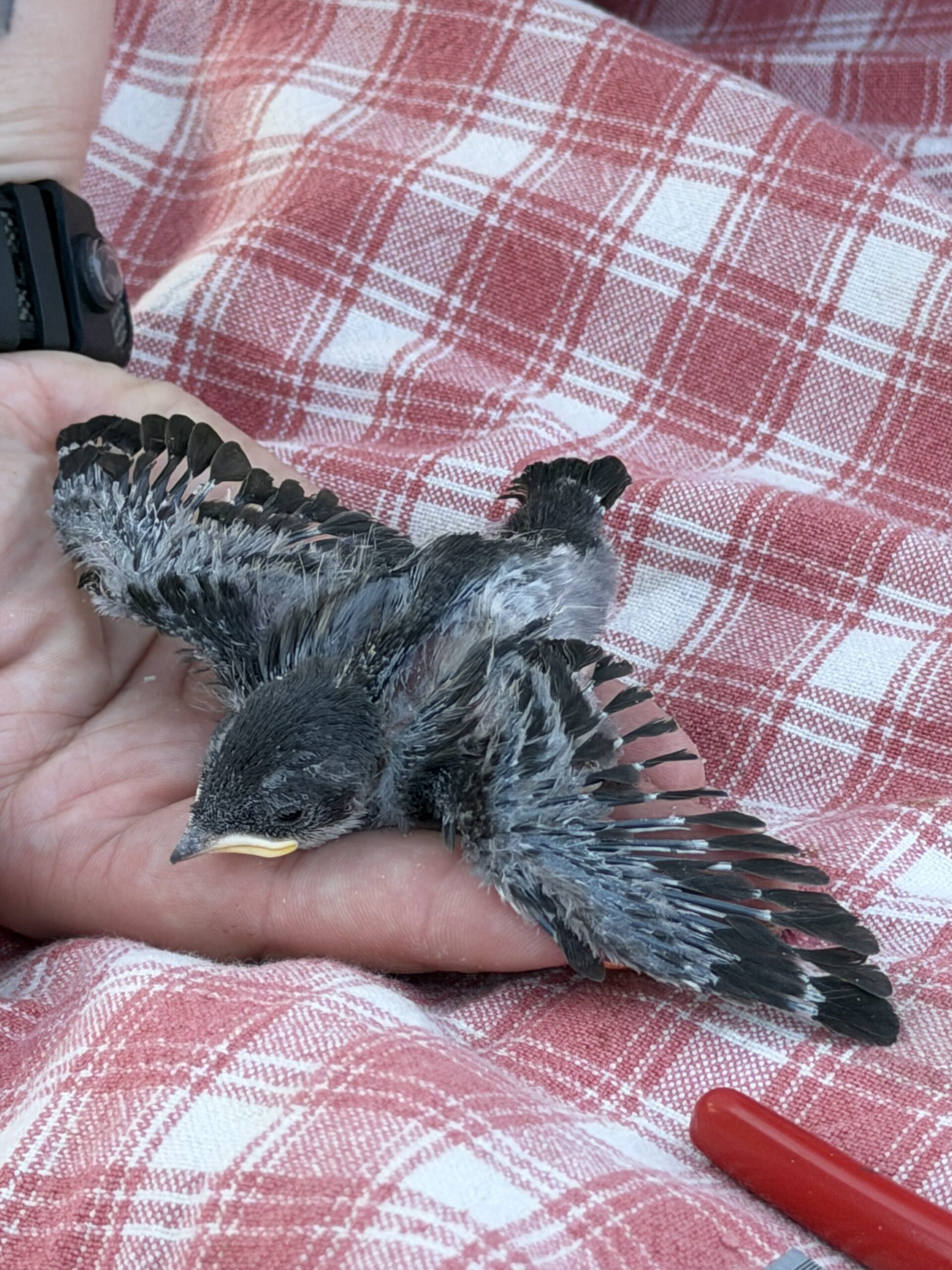
The team also documented two foreign recaptures—birds originally banded elsewhere—including a Gray Catbird captured in the mist nets and a Tree Swallow nesting in one of the property’s nest boxes. Information about their origins is still pending. Foreign recaptures are especially exciting because they reveal connections between banding stations and provide a glimpse into the broader journeys of migratory birds.
We want to thank the volunteers Pat Randall, Mace Mayor, Charlie Darmstadt, and Tracy Butler, who dedicated early morning hours to help process some of the birds passing through the lab this season.
Every bird handled at the Trevor Lloyd-Evans Banding Lab contributes to a growing body of knowledge that helps researchers track population trends, understand migration patterns, and inform conservation efforts across the hemisphere. As this remarkable season comes to a close, we look forward to the return of migration in the fall and the surprises it will bring.