



 Back to all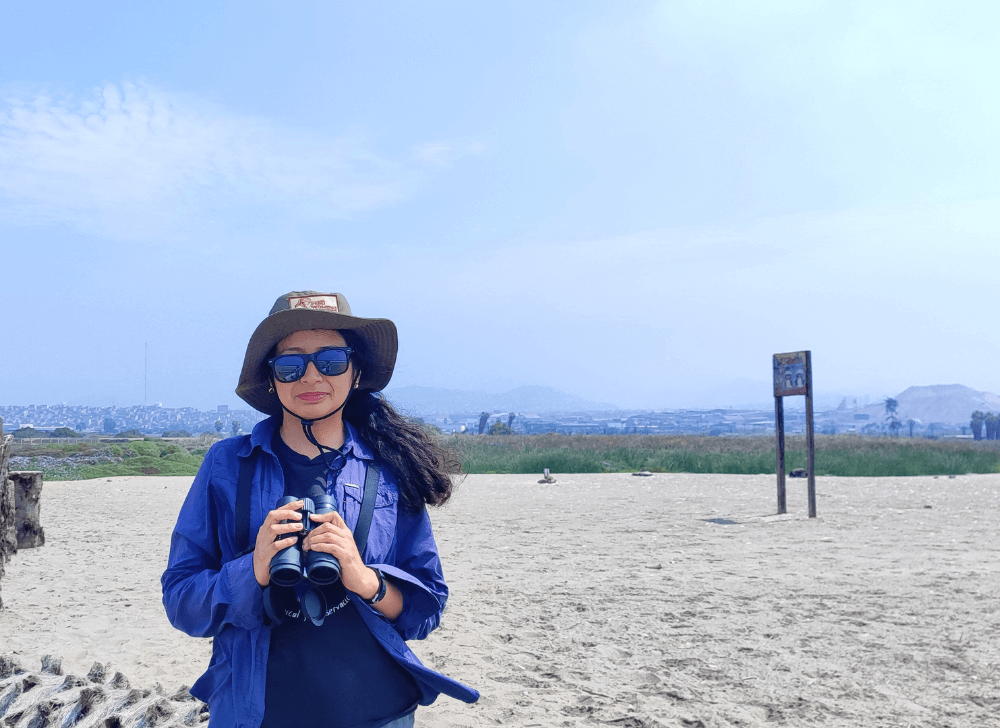
Applications are now open for Manomet’s 2026 Small Grants Program, which supports early-career conservationists working to protect shorebirds across Latin America and the Caribbean. Since its launch in 2023, the program has funded projects that bring science, community engagement, and conservation action together—often in places where the challenges are most urgent.
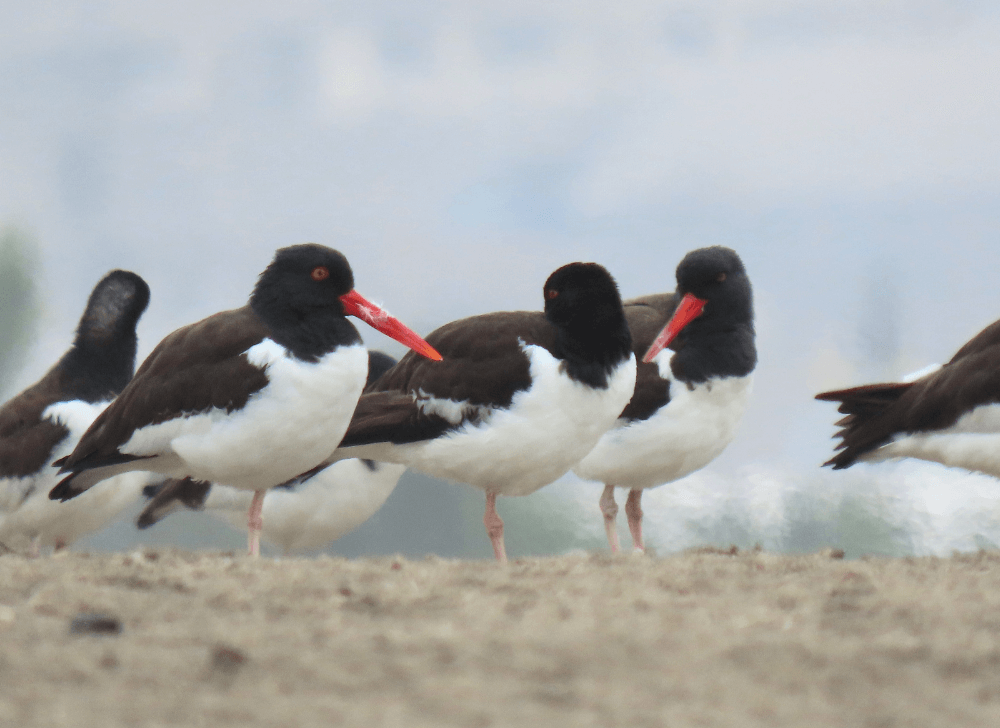
One of these projects is led by Lisset Carito Gómez Martínez, a 2023 awardee from Peru. Her work focuses on the American Oystercatcher (Haematopus palliatus nesting along Lima’s urban beaches, where increasing human pressure is putting breeding success at risk.
We spoke with Lisset about her findings, the challenges of conserving shorebirds in urban environments, and how the Small Grants Program helped turn her ideas into action. Her project was titled: Nesting of the American Oystercatcher (Haematopus palliatus) on Marvilla and Las Brisas Beaches, Lima, Peru: Marking and Evaluation of Reproductive Behavior as a Monitoring and Conservation Approach.
How does your project contribute to shorebird conservation in your country or region?
Our project focuses on understanding the breeding ecology of the American Oystercatcher in the urban beaches of Lima—areas often underestimated as critical habitat where human pressure is high.
Through this work, we identified key threats affecting reproductive success, including disturbance from dogs, human activity, and coastal dynamics such as high tides. The findings highlight how urban coastal ecosystems, even those adjacent to protected areas like Pantanos de Villa, can play an important role in shorebird conservation but still require targeted management.
By documenting nesting activity and breeding outcomes, the project provides essential data to guide conservation actions and improve coexistence in these shared spaces between people and shorebirds.
What were the main findings of your project?
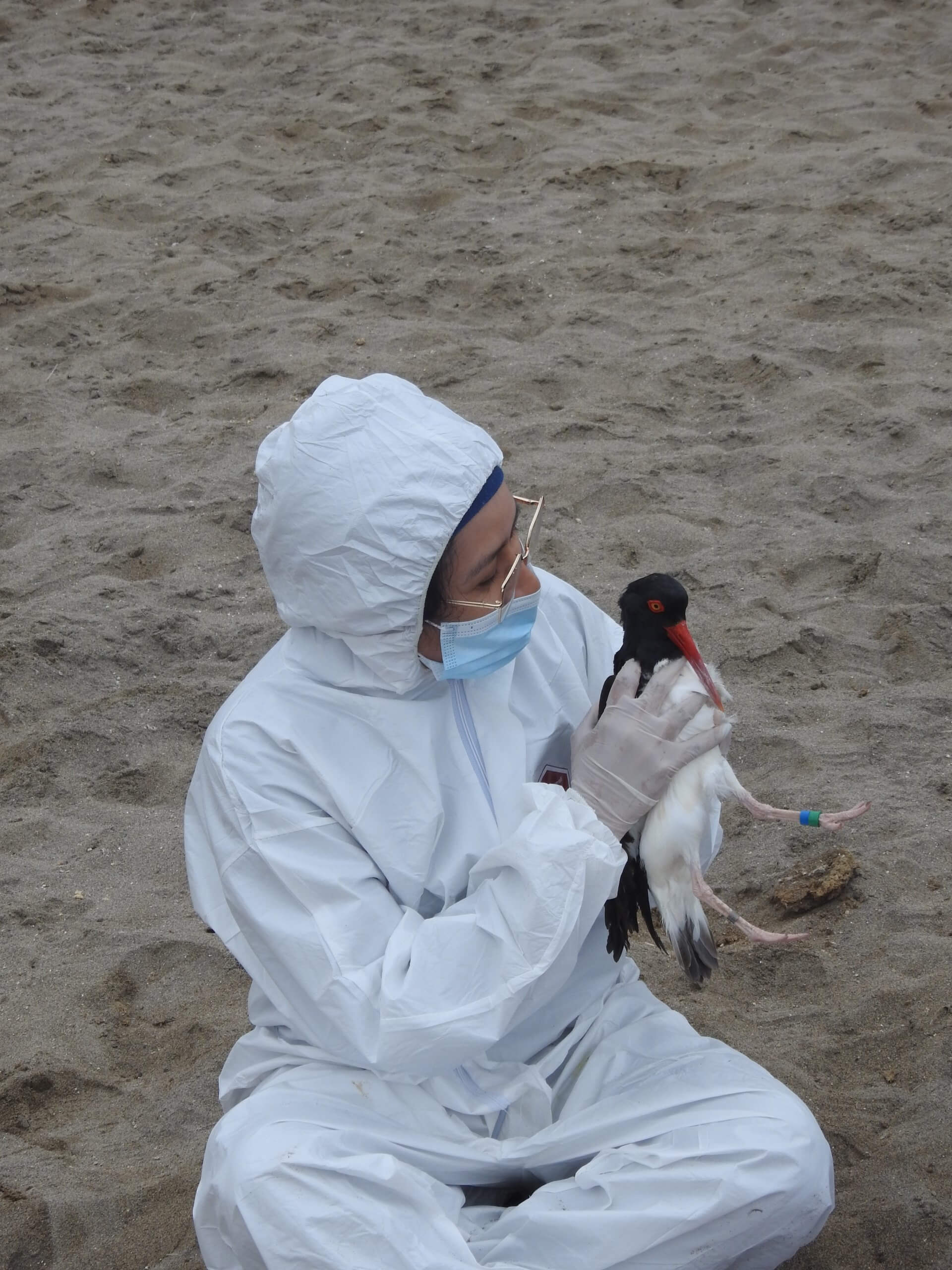
Between September 2024 and April 2025, we monitored two beaches in Lima – Marvilla and Las Brisas. We banded 24 resident American Oystercatchers and recorded 77 nests from 22 breeding pairs.
Out of 152 eggs, only 15.1% hatched. At Las Brisas, hatching success was significantly lower, at just 3.03%. Of all the chicks that hatched, only two survived to fledging, both at Marvilla Beach.
The main causes of nesting failure included disturbance by dogs (both stray and owned), human activities such as walking, running, fishing, and recreational use of the beach, as well as egg collection, high tides, and other factors. Dogs were responsible for a significant proportion of nest failures at both sites.
Our results suggest that reproductive success on these urban beaches is lower than previously reported in Peru, likely due to high levels of disturbance.
What key actions were supported by the Small Grants funding?
The Small Grants Program made it possible to carry out both field research and community engagement. Funding supported nest monitoring, bird banding, and outreach activities aimed at reducing threats.
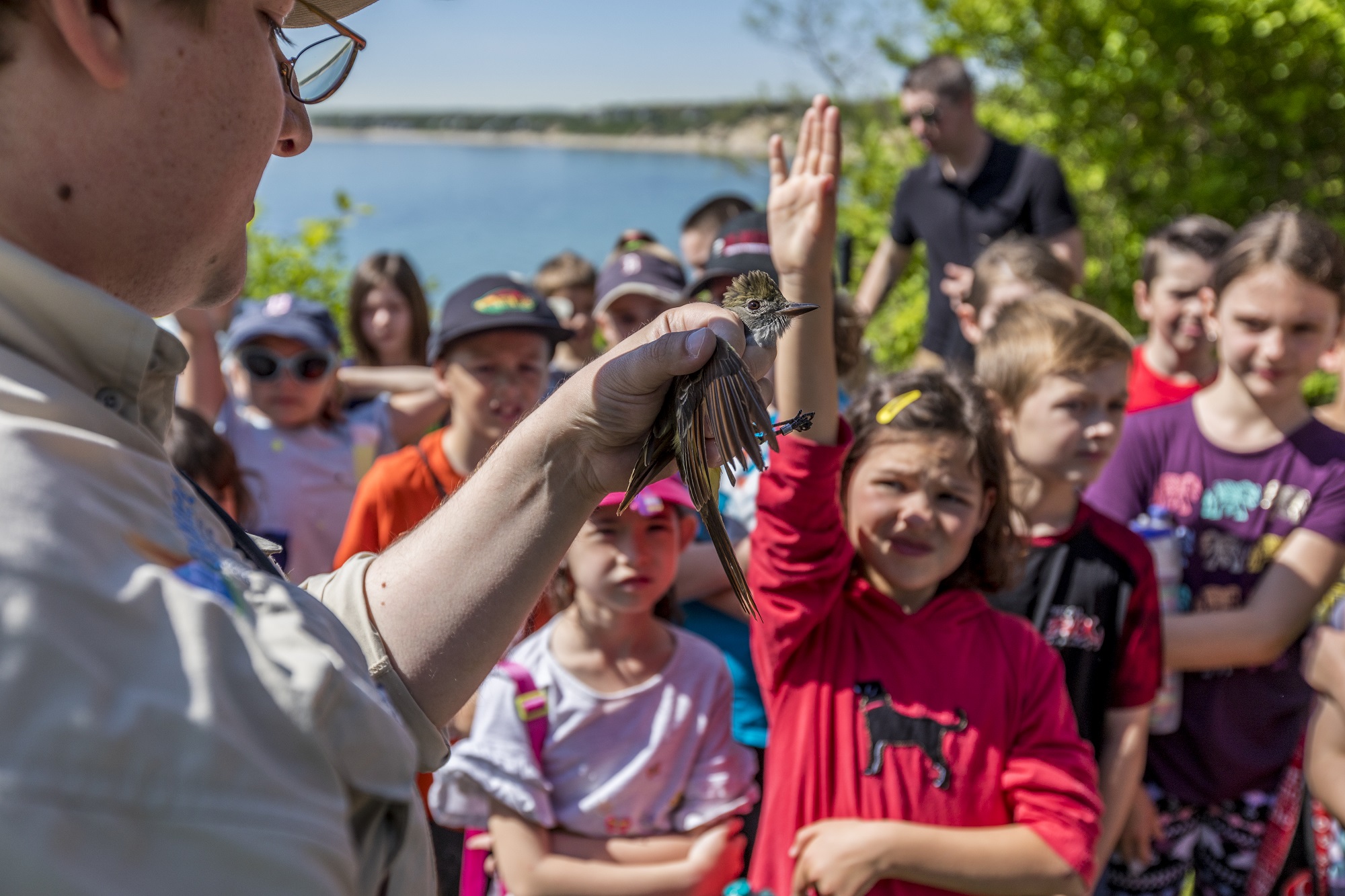
We conducted environmental education efforts, including workshops, talks, and citizen science events. One of the most impactful activities was raising awareness among 338 secondary school students and local community members about the conservation challenges facing shorebirds.
We also worked with children to design signs and protective barriers for nesting areas, promoting coexistence with shorebirds. In addition, we engaged local stakeholders, including authorities, park rangers, and community members, to identify practical actions to reduce threats, particularly in Marvilla.
What conservation outcomes came from this project?
Based on our findings, we developed a Monitoring and Conservation Proposal for the American Oystercatcher in Marvilla. This proposal includes:
- Installing educational signage and temporarily protecting sensitive nesting areas
- Strengthening community involvement and coordination with local stakeholders
- Establishing ongoing monitoring of nests and banded individuals
- Promoting a municipal ordinance to ensure the continuity of conservation actions
The project also contributed to increased awareness, reaching 338 people and fostering local participation in identifying solutions.
What are the main challenges moving forward?
The conservation of the American Oystercatcher in Lima faces ongoing challenges, particularly due to rapid urban growth and increasing pressure on coastal habitats.
Addressing these challenges will require sustained efforts to implement and scale the proposed actions, strengthen community engagement, and incorporate conservation into urban planning.
What role did the Small Grants Program play in making this work possible?
This project was made possible through funding from Manomet’s Small Grants Program for Neotropical Shorebird Conservation, in partnership with the Western Hemisphere Shorebird Reserve Network (WHSRN).
Lisset’s work highlights both the challenges and opportunities of conserving shorebirds in rapidly changing landscapes. With the right support, early-career conservationists are leading efforts that connect science, communities, and practical solutions on the ground.
If you have an idea that can make a difference for shorebirds in Latin America or the Caribbean, this is your opportunity to take it forward. Applications for Manomet’s Small Grants Program are now open. Apply by May 15, 2026.
More information on the Manomet Small Grants Program can be found here.