

 Back to all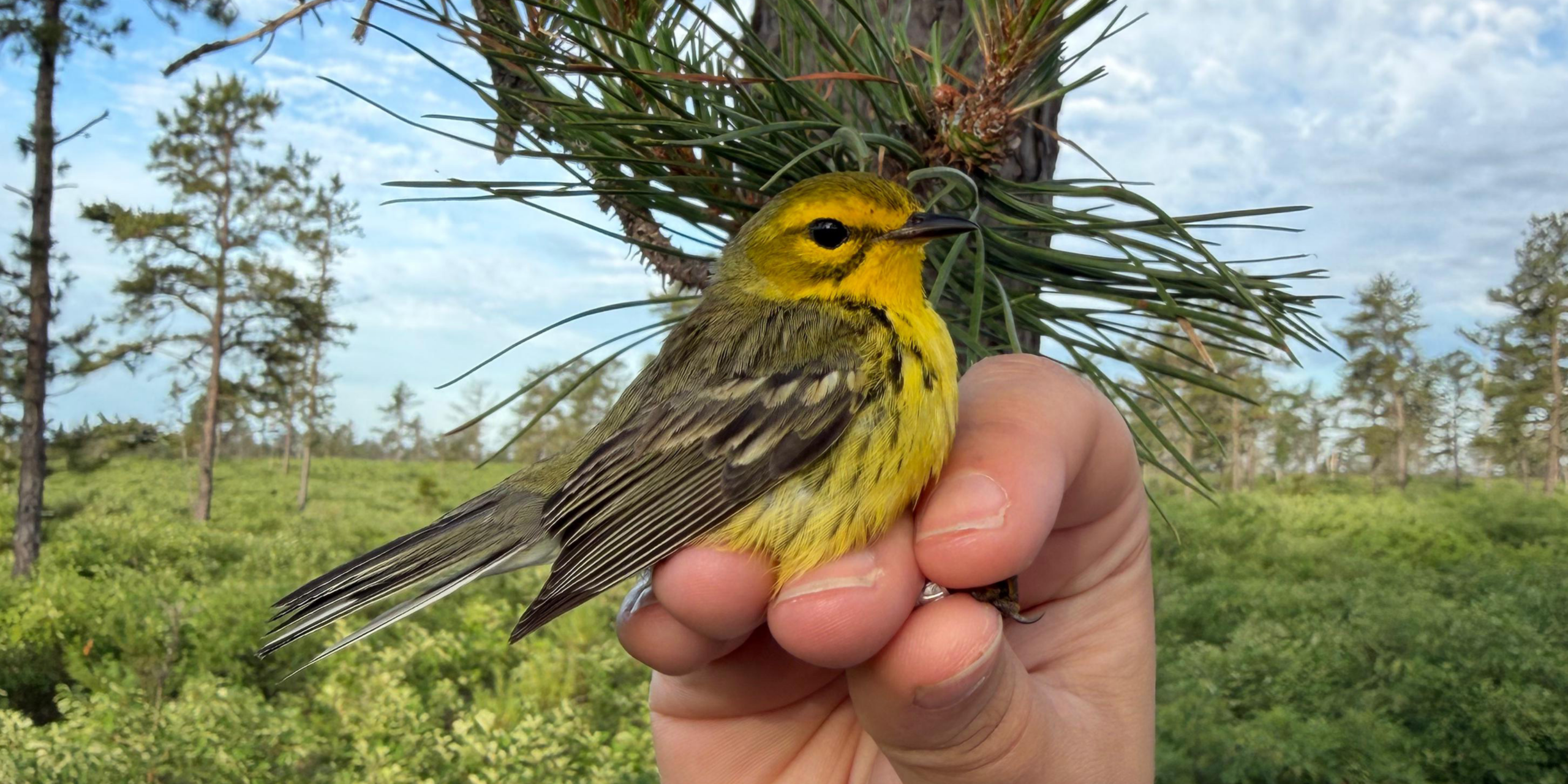
As one season winds down, another takes flight. Over the past few weeks, the Landbird Conservation Team has transitioned from spring migration banding into the summer breeding season, kicking off our ongoing research at Myles Standish State Forest, very close to the Manomet Headquarters in Plymouth, Massachusetts.
Studying How Birds Respond to Active Habitat Management
At Myles Standish, we’re investigating how breeding birds within pine barrens respond to active management over different time intervals following that management. Pine barrens are a globally rare and regionally declining habitat throughout the Northeast, and Myles Standish is home to one of the largest remaining examples. To help restore and maintain this habitat, our partners at MassWildlife have implemented brush thinning and controlled burns in the southeastern portion of the forest.
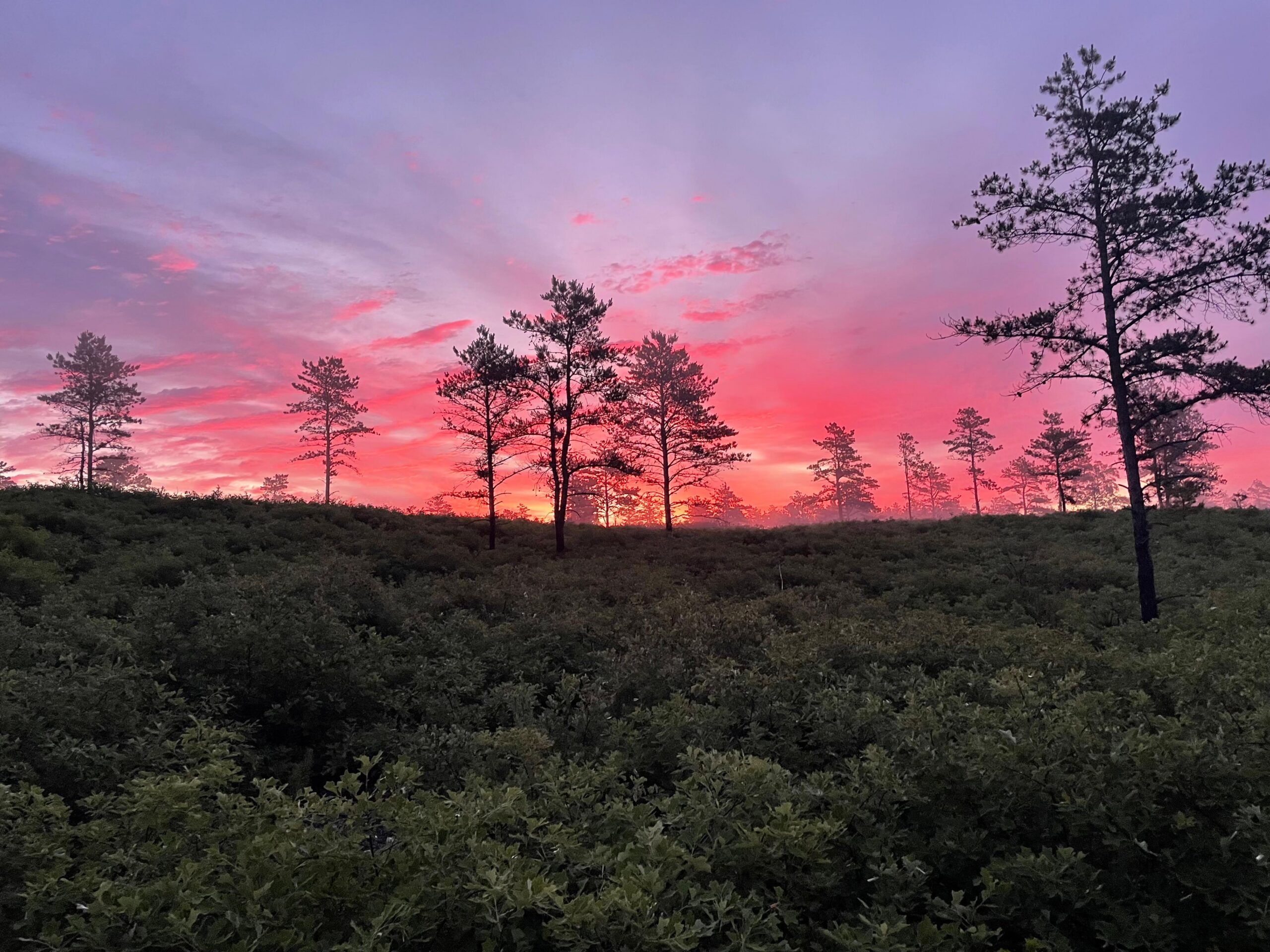
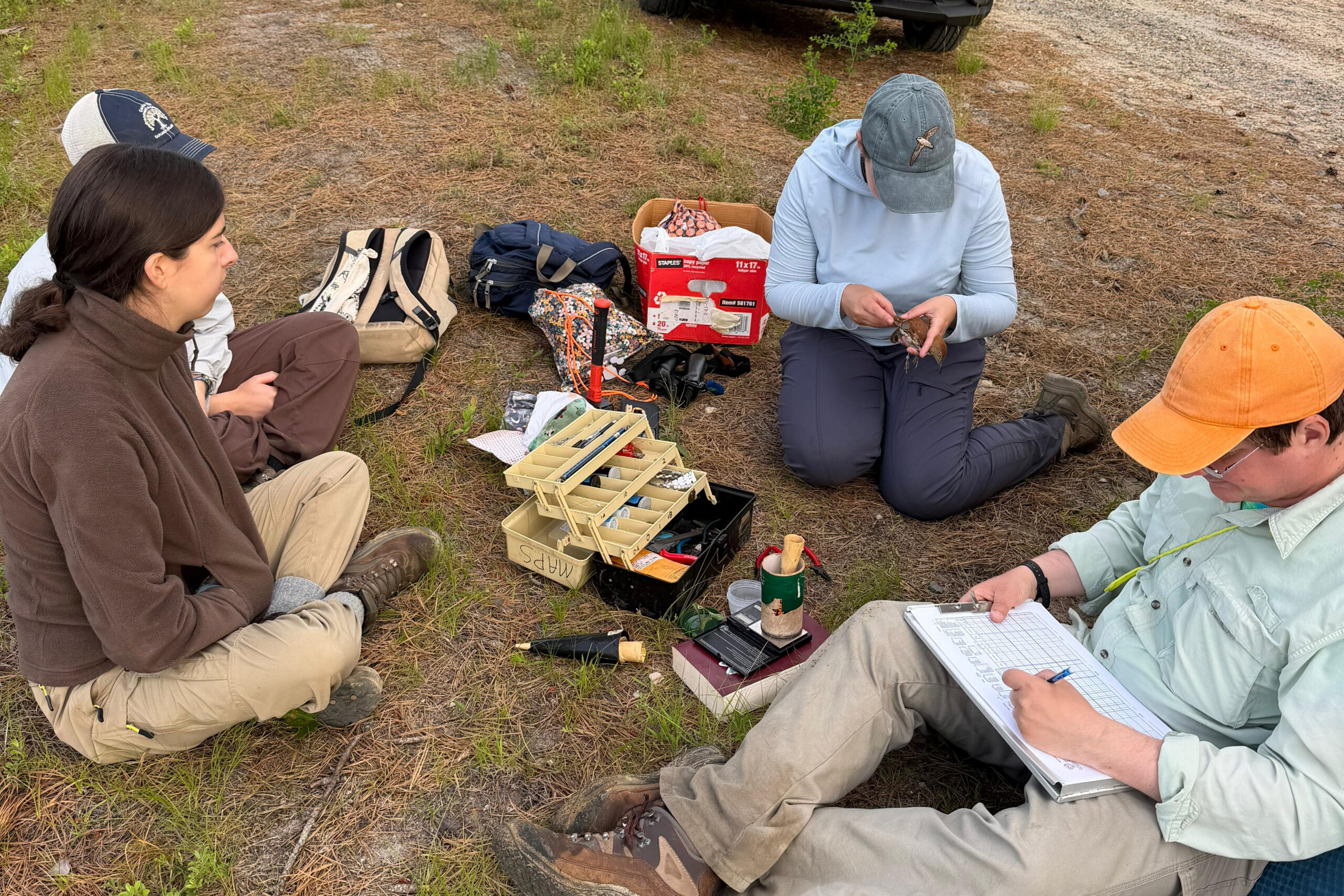
To evaluate how birds are responding to these efforts, we’re conducting bird banding at two locations within the state forest, following the Institute for Bird Populations’ MAPS protocol (Monitoring Avian Productivity and Survivorship). MAPS is a continent-wide, standardized mist-netting and banding program comprising roughly 500 stations that operate during the breeding season. By following this protocol, we can capture breeding birds and their young in the pine barrens and track survival and responses to management actions occurring around them.
What We’ve Caught So Far
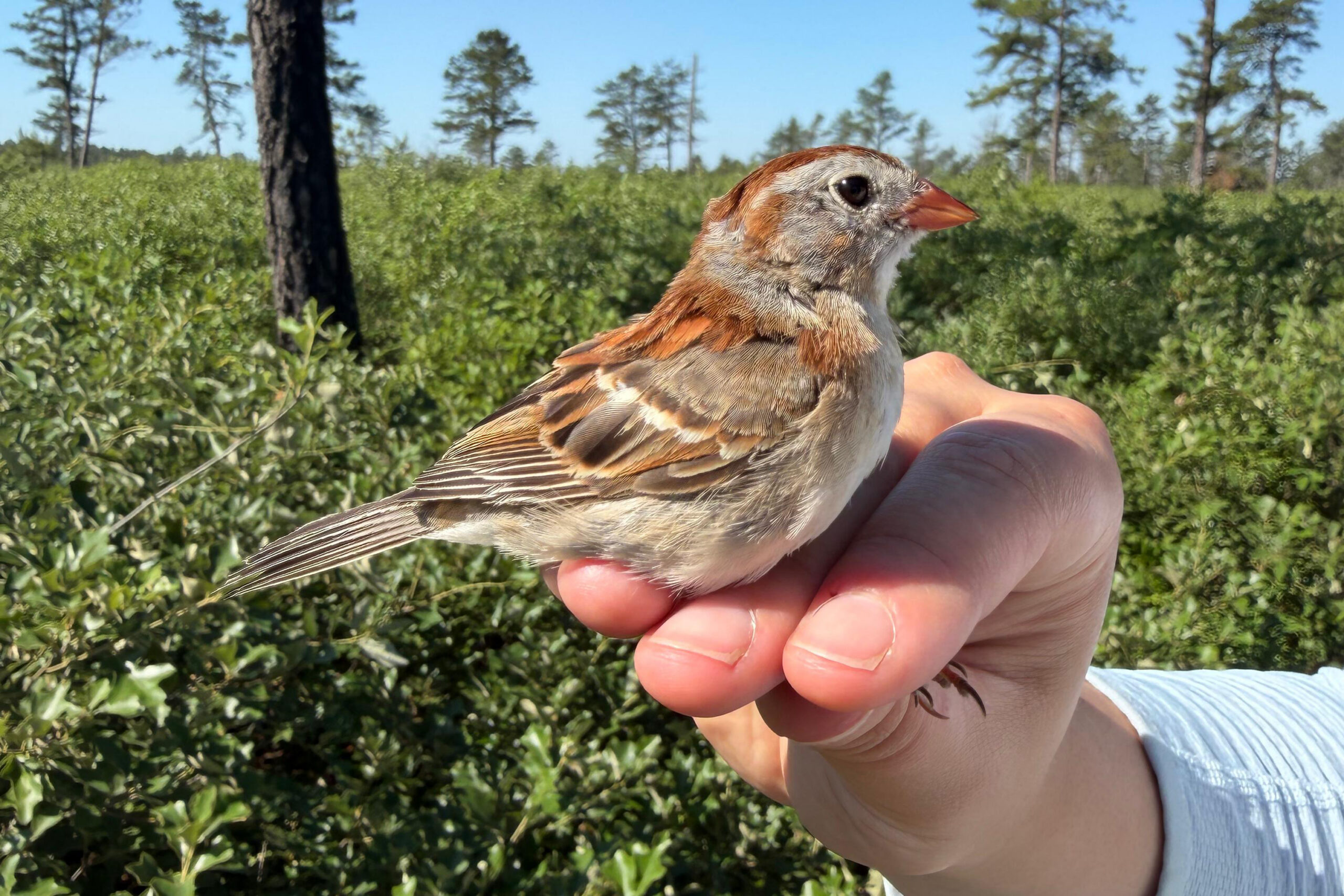
In just the first few weeks of the season, we’ve banded a wonderful diversity of species, including Gray Catbird, American Goldfinch, Cedar Waxwing, Field Sparrow, and American Robin.
We’ve also had success capturing our four focal species for this project:
- Common Yellowthroat
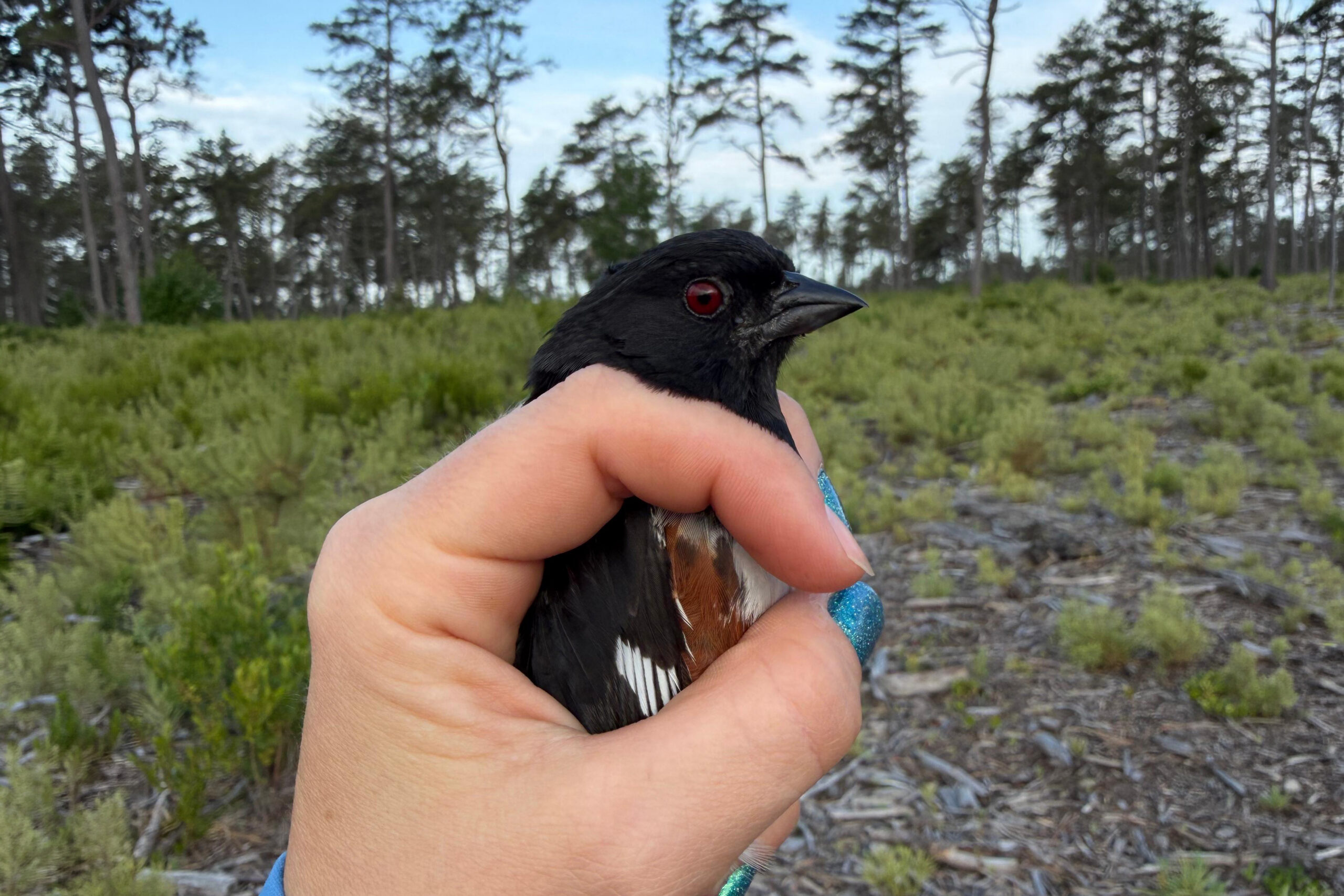
- Eastern Towhee
- Prairie Warbler
- Pine Warbler
The Common Yellowthroat, Eastern Towhee, and Prairie Warbler are all species experiencing regional population declines, and each has historically depended on pine barren habitat to breed. The Pine Warbler rounds out our focal species list because of its close association with white pines — the very trees that, left unchecked, encroach on and shade out pine barrens in the absence of active management.
This ongoing research is led by Manomet’s Director of Landbird Conservation, Evan Dalton, with Megan Gray, a Banding Lab alum, serving as field coordinator. This season’s fieldwork is being carried out by Chantal Schamber, Sarah Osburn, and Lena Bill. Chantal returns from our Spring Banding Internship, while Sarah and Lena join as Earlham College undergraduate students.
Stay tuned for more updates as the breeding season continues!