


 Back to all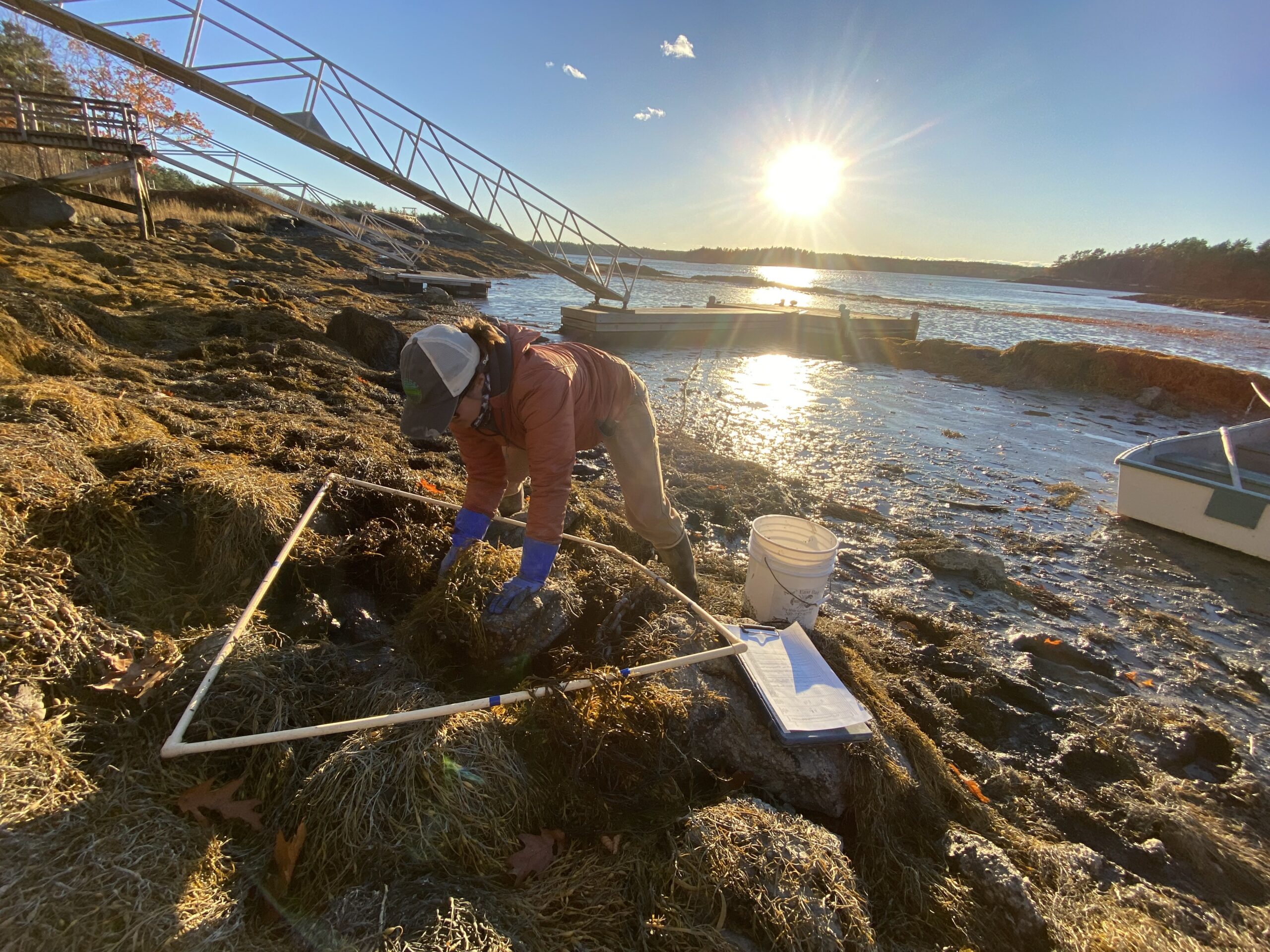

Andrea Ferreira
Science Communications Manager
Managing an invasive species starts with a simple question: how many are out there? Unlike invasive plants or animals on land, marine species move easily and often remain hidden. Without consistent monitoring, their impacts are easy to underestimate. They can spread for years before we clearly see what they’re doing to people’s livelihoods and ecosystems.
The European Green Crab is a clear example. It arrived in North America in the 1800s in the ballast water of trading ships and is considered one of the world’s 100 worst invaders by the IUCN (International Union for Conservation of Nature). Since then, it has established thriving populations along the Northwest Atlantic coast, where it preys on clams, mussels, and other shellfish, and can damage habitats like eelgrass beds that support fisheries and coastal resilience.
Tracking how green crab populations change over time and across locations is key to predicting and managing their ecological and economic impacts. The newly released dataset, Intertidal Crab Data in Midcoast Maine: 2018–2025, provides researchers, managers, and coastal communities with a clearer picture of where green crabs are thriving and how their populations are changing. Produced by Marissa McMahan, Senior Director of Fisheries at Manomet, and Fisheries Project Manager Jessie Batchelder, the dataset is part of the Environmental Data Initiative.
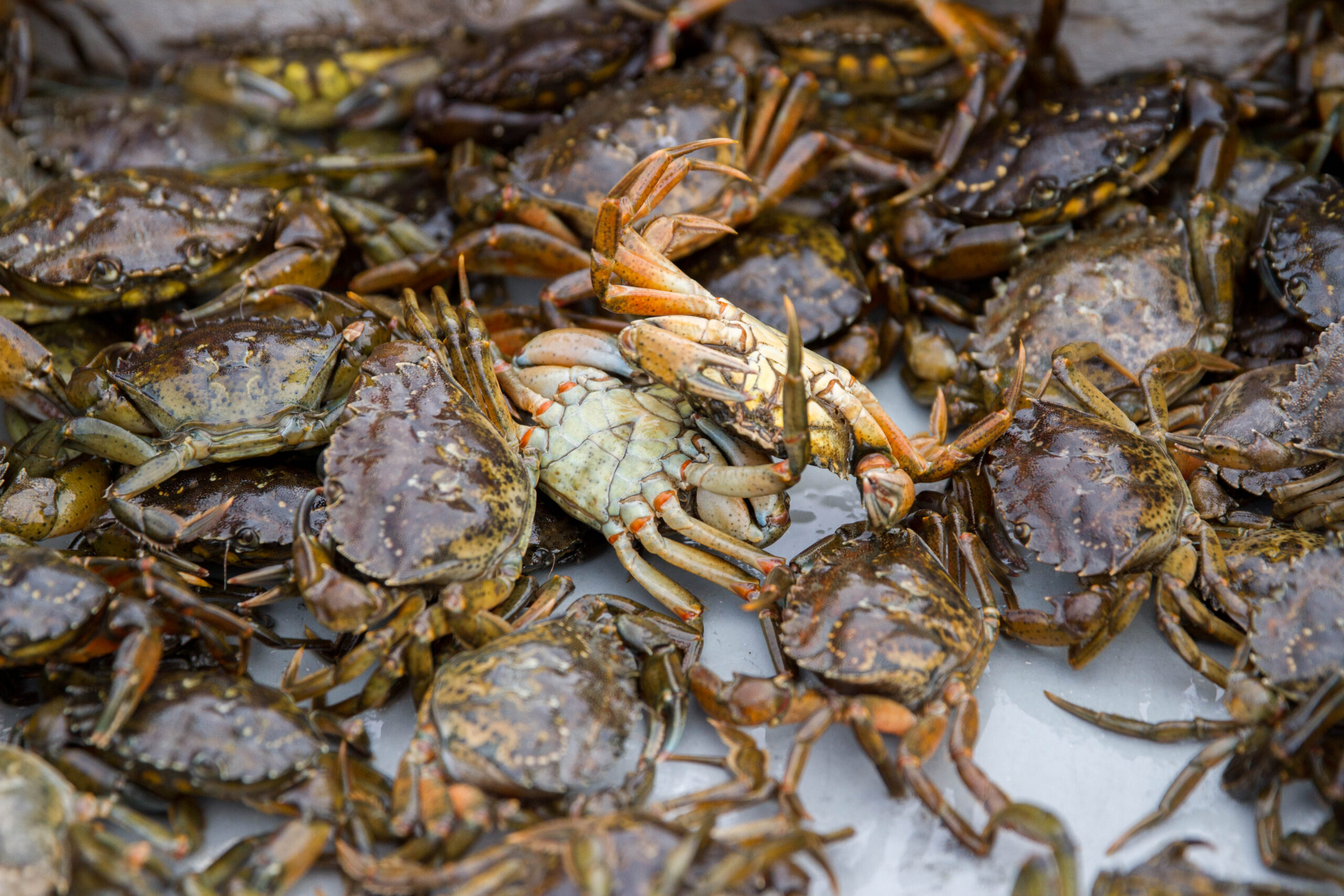
The dataset is grounded in a standardized monitoring protocol developed by McMahan in 2020 to assess green crab populations in rocky intertidal zones across New England and Atlantic Canada. Surveys are conducted primarily between May and November when green crabs are most active. By returning to the same sites with the same method year after year, the team tracked abundance along with key details like size, sex, shell condition, and reproductive status. That consistency turns scattered observations into real trends that can inform decisions.
The protocol was designed to be accessible so that researchers, students, educators, and trained community scientists can use the same approach. While focused on green crabs, it also targets other native and invasive crabs and can be adapted to monitor other intertidal species.
Since 2018, Manomet has led one of the most consistent green crab monitoring efforts along the Maine coast. By pairing long-term data with practical solutions, from improved monitoring to emerging markets for soft-shell and value-added products, this work is helping coastal communities turn information into action.
The open-access data package is available through the EDI Data Portal. Metadata can be downloaded and analyzed using common tools, including Python, MATLAB, R, SAS, SPSS, and tidyr workflows.