



 Back to all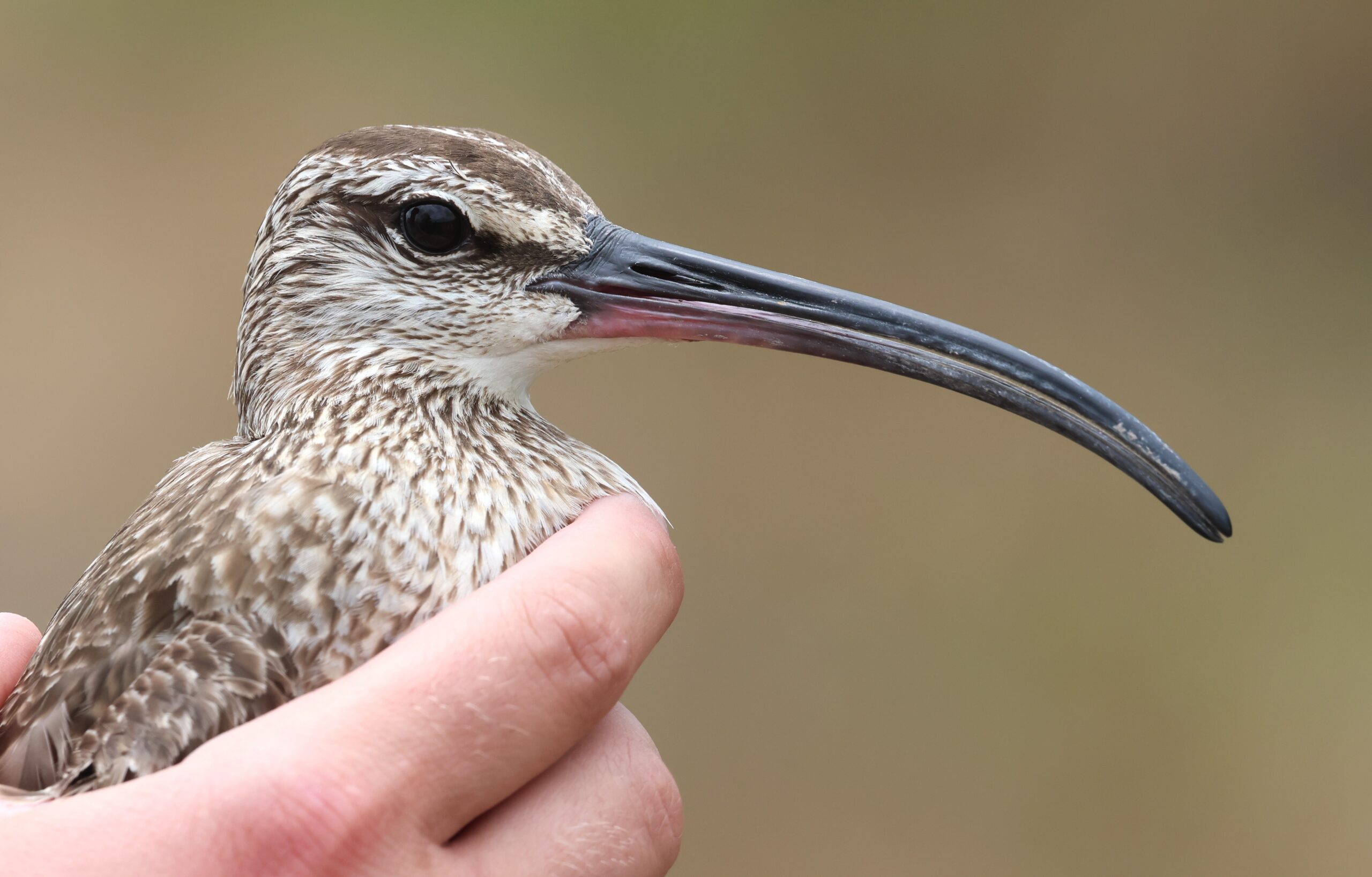

Andrea Ferreira
Science Communications Manager
Hudsonian Whimbrels fitted with satellite tags are keeping shorebird scientists glued to their screens and coordinating ground search efforts to find them. This year alone, tracking data has upended some long-held assumptions about how these birds move across the hemisphere, raising a simple but important question: Are the birds behaving in new ways, or are scientists just seeing, for the first time, what their journeys have looked like all along?
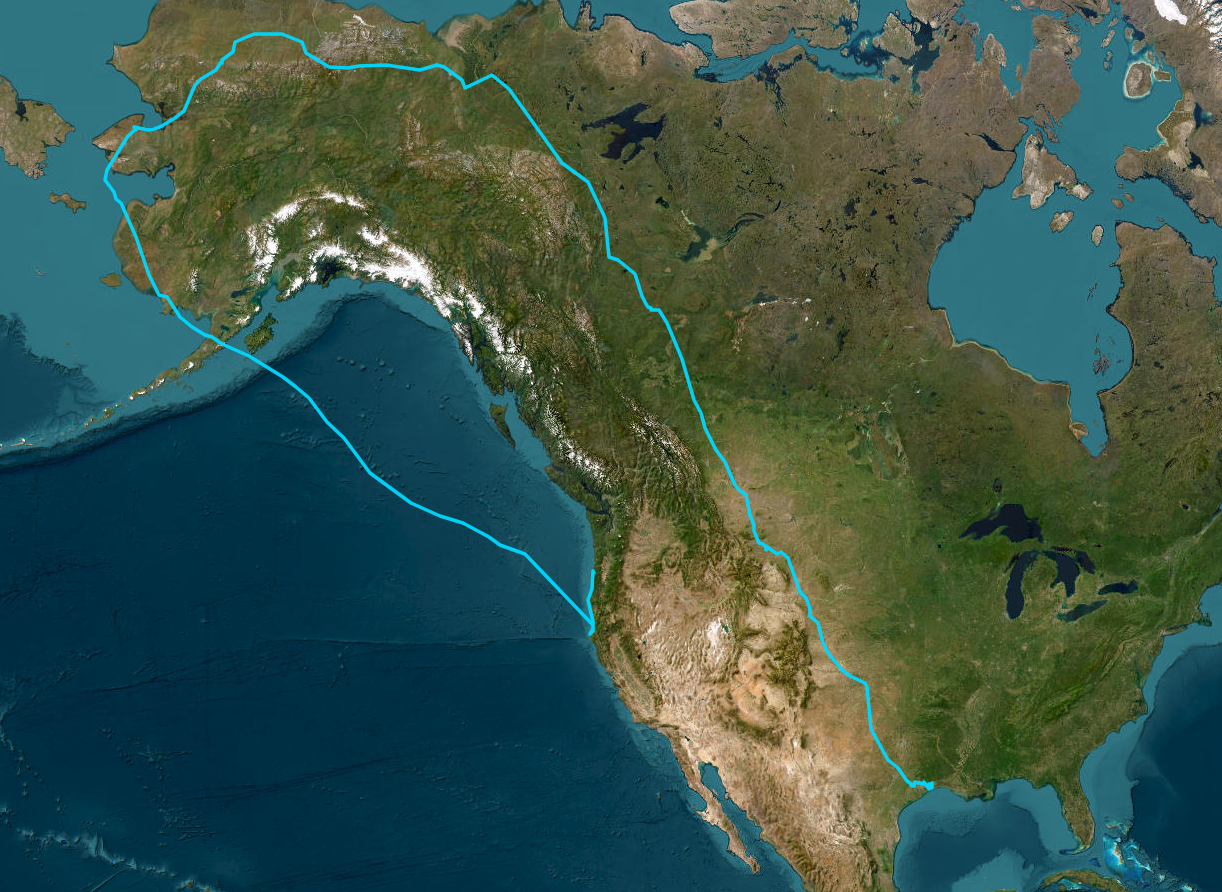
We’ve already seen many standout cases in 2026. Most recently, a Hudsonian Whimbrel, known as FM3 for the identification tag on its upper right leg, has become a standout case. After being banded near Winnie, Texas, on April 25, 2026, by Manomet Conservation Sciences, FM3 followed the expected route north to the Arctic breeding grounds — up the Central Flyway to breeding areas in the Mackenzie Delta/northeast Alaska region. Then came a surprise: instead of heading back east toward the Atlantic Flyway, the bird turned south along the Pacific Coast.
Flyways are the broad north-south routes that migratory birds follow between their breeding and wintering grounds. Hudsonian Whimbrels have long been described as having two distinct populations, western and eastern, each believed to stick to its own route — the Pacific Flyway or the Atlantic Flyway. FM3 crossing over was exactly the kind of detour that keeps the shorebird scientists captivated.
“This is an example of how our assumptions of flyways and populations for shorebirds can change the more we learn,” said Alan Kneidel, Manomet’s Senior Conservation Biologist. “When we started, an assumption I made personally was that if we find a big roost and monitor populations in Texas and Louisiana, we’re only monitoring the Atlantic Flyway population of Whimbrels.”
Why tracking technology matters
Discoveries like this are only possible because of how far bird tracking has come. For a long time, scientists tracked migration in the old-fashioned way: catching a bird in one place, marking it with a band or a colored leg flag, and hoping someone would spot it again somewhere else. This taught researchers a lot about migration timing and how weather shapes birds’ journeys, and colored flags made birds easier to spot from a distance than tiny metal bands alone. But the method has real limits. It can’t show the actual route a bird takes or where it stops along the way, especially in remote areas. It’s also especially hard with birds that are secretive or that migrate at night and high in the sky.
Electronic tracking devices that record and transmit a bird’s location have advanced quickly in recent years, closing many of these gaps. A single tagged bird can now guide researchers straight to key sites on the ground,often by mobilizing a whole network of local partners and volunteers, which is one of Manomet’s strengths.
Manomet has studied Whimbrels for years, mostly through scheduled fieldwork, trips planned around known sites, and specific research questions. The difference this year is what’s happening between those trips. With birds now transmitting their locations in real time, staff and partners have found themselves stepping outside the field calendar entirely: checking in on a bird’s position between other tasks and texting a contact who happens to live near where it’s landed.
A record season on the Gulf Coast
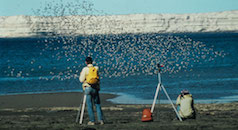
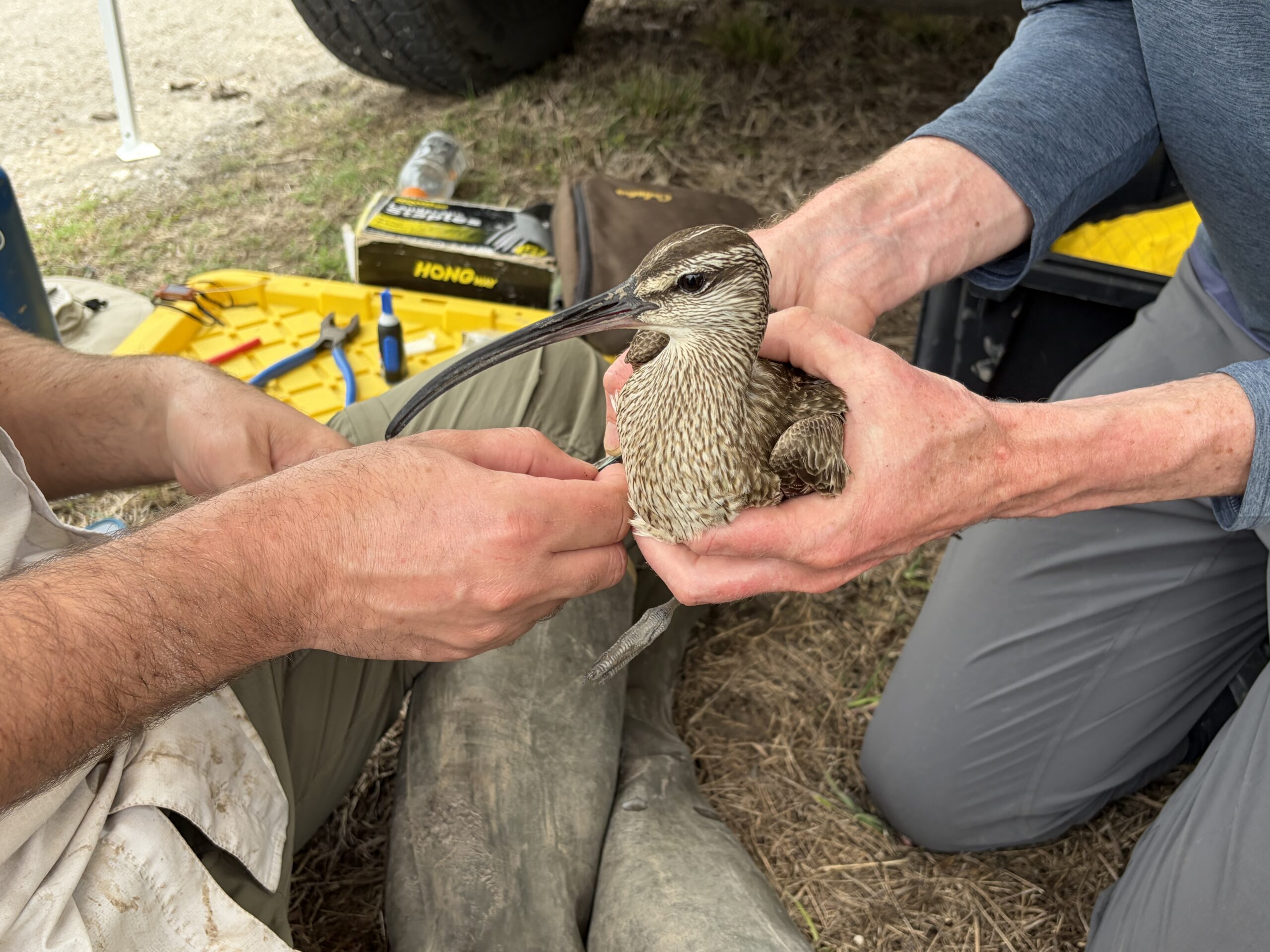
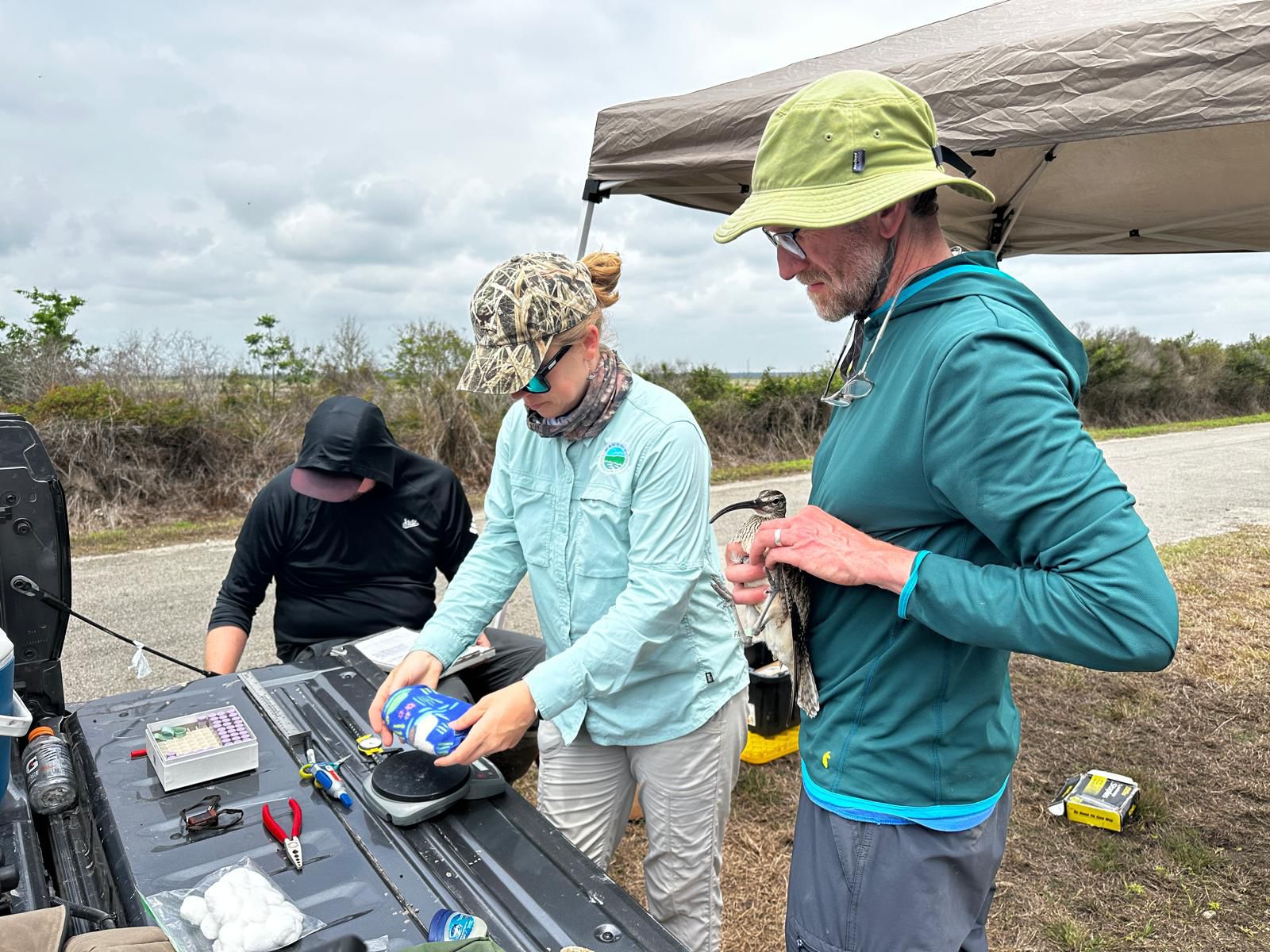
FM3 is one of many birds now wearing such a tag. This April, Manomet scientists spent two weeks along the Gulf Coast studying Hudsonian Whimbrels at key spring staging sites in Louisiana and Texas. They conducted evening roost counts and captured birds to fit them with GPS trackers. The effort paid off: roost counts reached a record of 13,200 Whimbrels across three Texas sites, plus another 4,200 in Louisiana. Together, the four sites hosted 17,600 Whimbrels, the highest single-season total in six years of surveys. This total represents approximately 40% of the estimated population of Whimbrels using these flyways. One bird was found using two of the Texas roost sites, about 100 miles apart, helping researchers understand how the two locations connect.

In total, the team placed satellite tags on 17 Whimbrels as part of a multi-year study tracking their journeys north and south. FM3 isn’t the first bird to cross flyways. Another Whimbrel, EC3 (also tagged in Texas in April 2024), took the Midcontinent route north to breed in Alaska, then flew the Pacific Flyway south, cut across Central America near Nicaragua’s Volcán Cosigüina, and landed in Venezuela — a site typically associated with the Atlantic population.
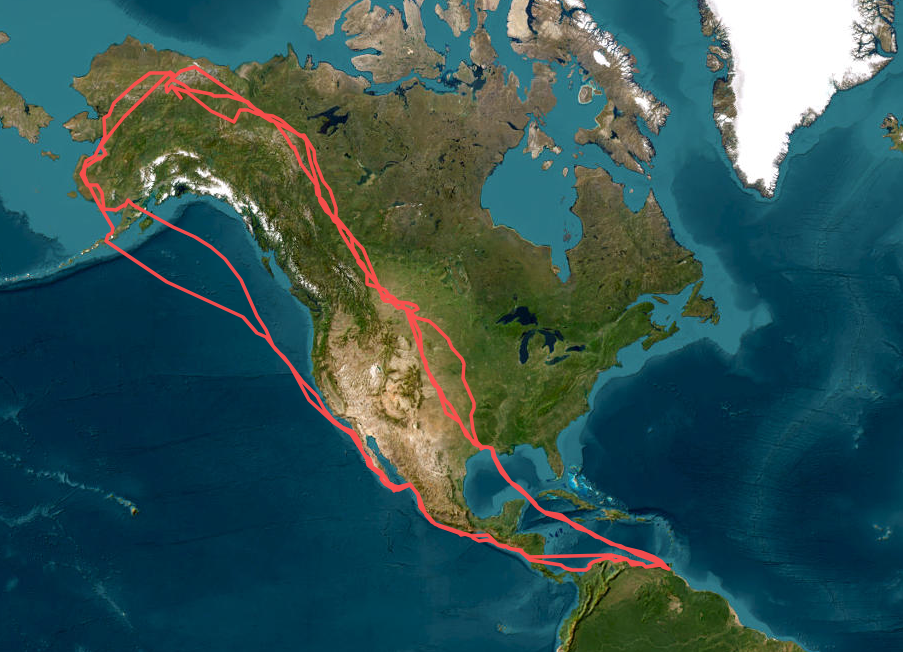
Dan Ruthrauff, Manomet’s Senior Shorebird Scientist, has spent decades studying shorebirds in the Pacific Flyway. While the vast majority of Whimbrels tracked on southern migration stay wholly within either the Pacific or Atlantic basin during their annual movements, Ruthrauff notes that a few have been detected linking these two vast regions, moving south along the Pacific but spending their ‘winter’ in the Atlantic. This mixing is notable because, until these recent observations, we believed that Whimbrels from these two regions didn’t mix during the nonbreeding season.
Open questions
The tracking data is raising many exciting questions: Are populations that scientists once considered separate in fact overlapping? Do Whimbrels behave differently depending on which coast they use? Or more interestingly, are they exposed to different threats? On the Atlantic Coast, large numbers of Hudsonian Whimbrels are known to gather at big communal night roosts. Researchers don’t yet know whether the Pacific Coast has similar gathering spots. It may be that they’ve gone undiscovered so far because the birds tend to roost in hard-to-reach places. Recent observations from agricultural regions of Oregon and Baja California, Mexico, suggest that such concentrations do in fact exist along the Pacific, hidden in plain sight due to a lack of dedicated study. Manomet is planning surveys at both sites next spring to explore these exciting discoveries and better understand the movement dynamics of these amazing migrants.
There’s also a question hanging over FM3 itself: tracking data suggests the bird may not have stayed in the Arctic long enough to breed successfully this year. Researchers are seeing similar signs in other tracked shorebirds this season, suggesting it may have been a tough breeding year across the board. Such insight is otherwise impossible to gather, underscoring the wealth of information that having cohorts of banded birds can unexpectedly provide.
Finding the bird on the ground
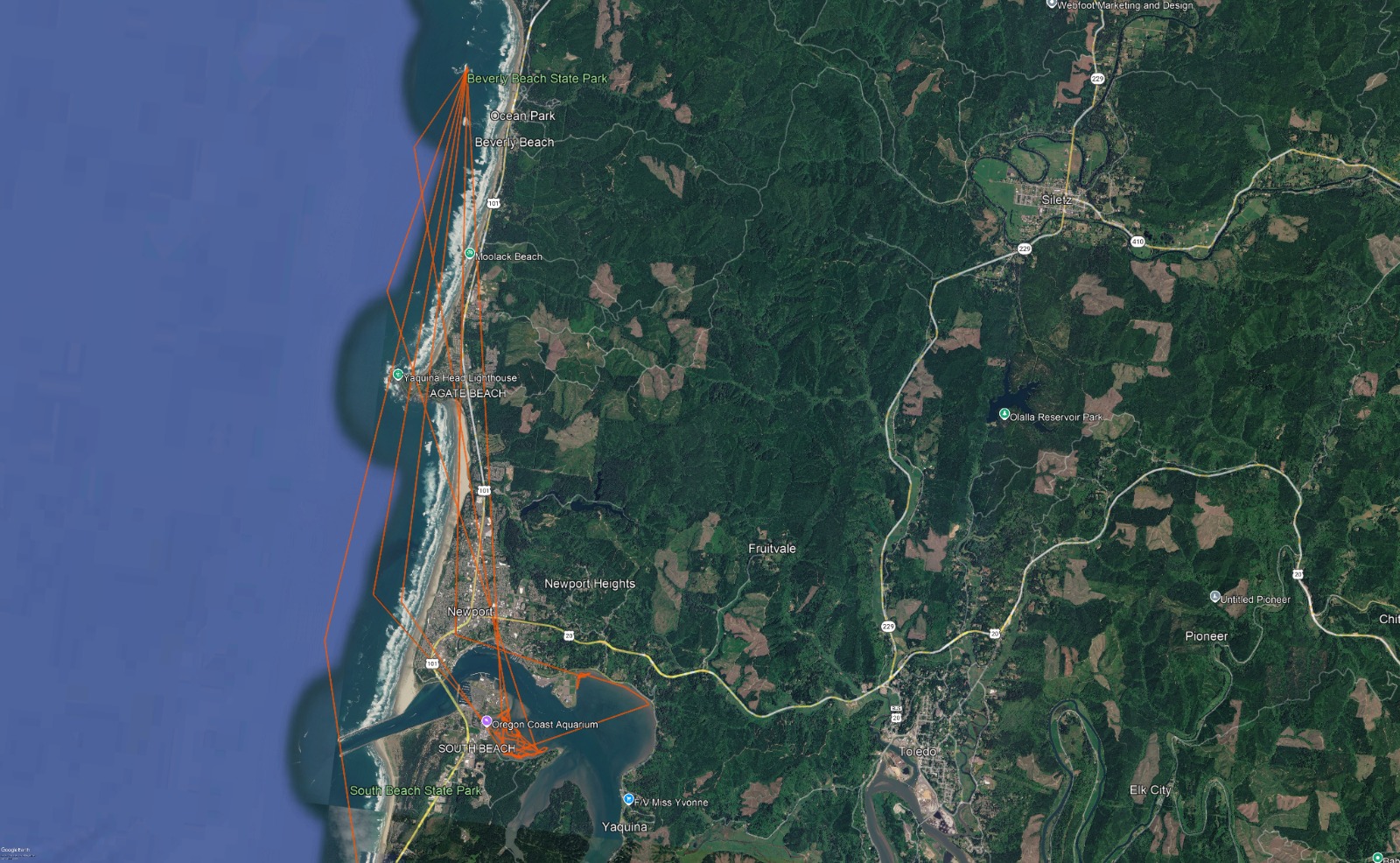
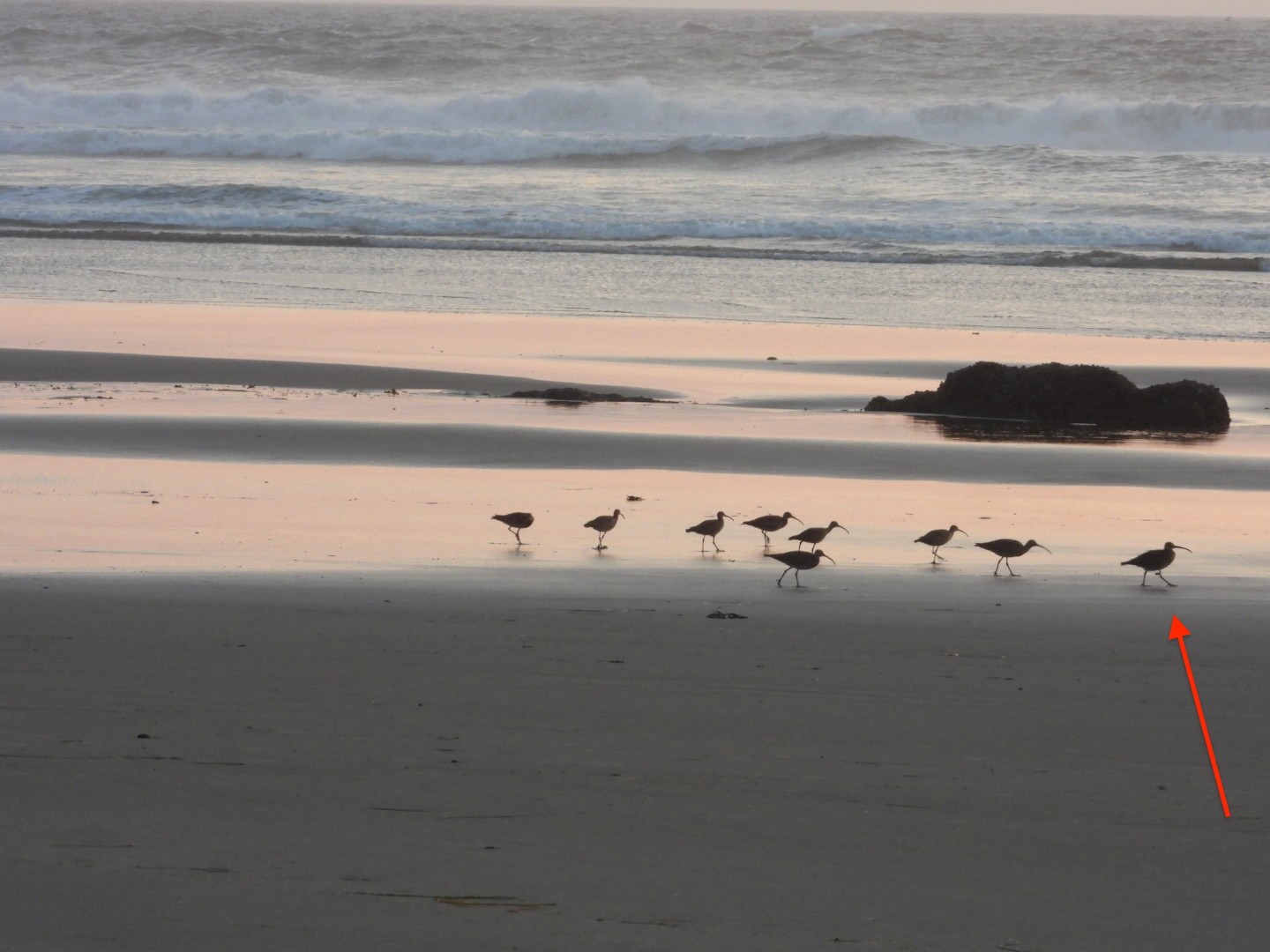
The story doesn’t end with the data. When Kneidel shared FM3’s updated location with colleagues, one of Manomet’s newest staff members, Michelle Stantial, realized she had been camping in that exact area just a week earlier. The bird had flown several hundred miles north after stopping in California, settling into an estuary at the mouth of Oregon’s Yaquina River and commuting from there to a well-known roosting spot called Otter Rock. Stantial reached out to her contacts in the area to see if anyone could get out to survey the area and find the bird. One day later, partners on the ground re-sighted and photographed FM3 there, lit by sunset, with other Whimbrels nearby.
It’s a small but telling example of how Manomet’s network of partners, land managers, and local contacts can turn a single data point into a real discovery — in real time.
The bigger picture
Technology is letting researchers follow these birds from anywhere, and the data is reshaping decades of assumptions about shorebird flyways. There’s no single reason behind their decline; different populations face different threats depending on where their journeys take them.
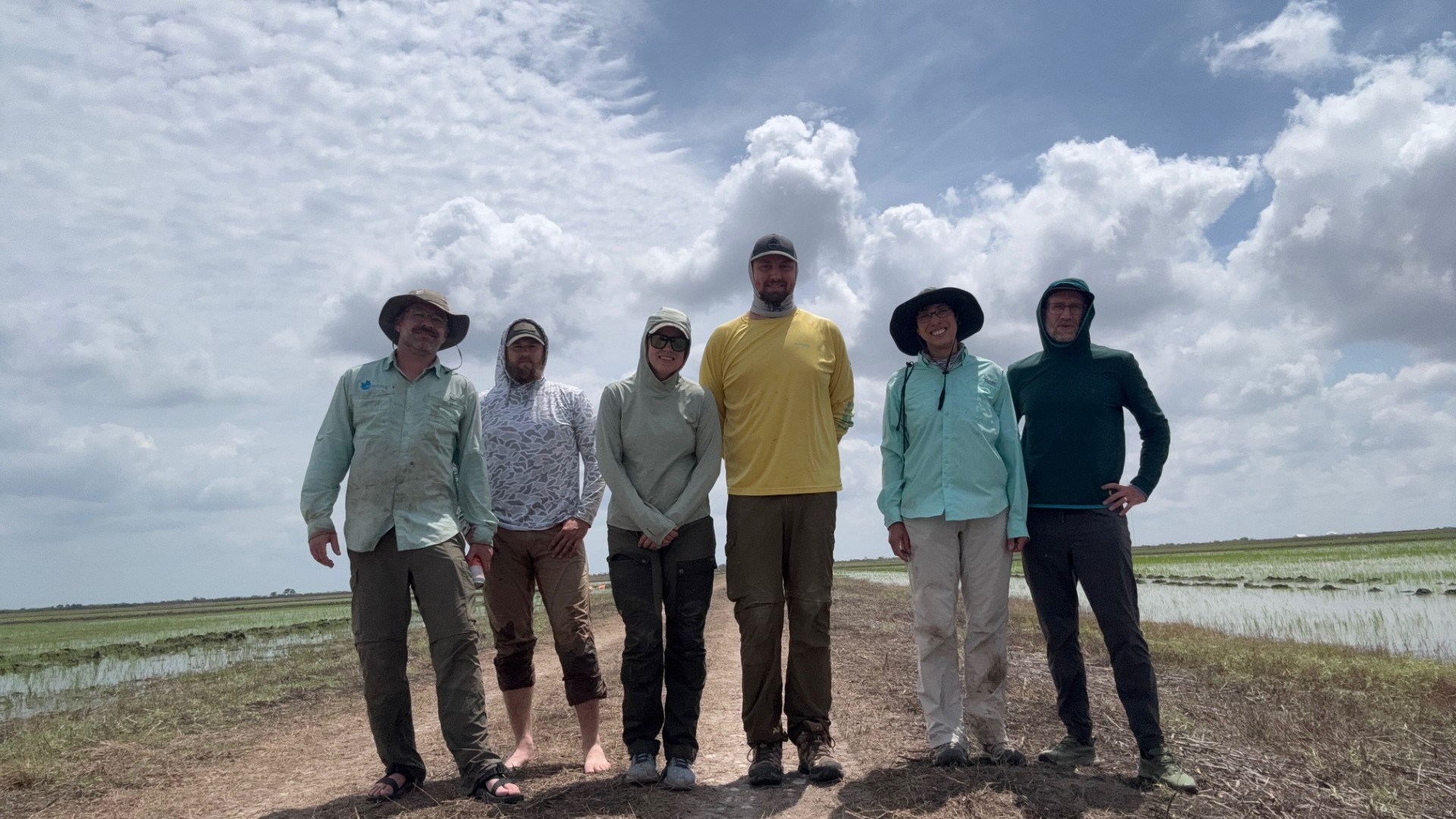
None of this happens without fieldwork. Capturing the birds and fitting them with tags is no small feat: researchers scout miles of land to find where large flocks are spending their time, work out the timing around the tides that will let them set traps and then wait. In most cases, they catch just one bird at a time, and some weeks yield only a single bird. Whimbrels favor muddy salt marshes, agricultural landscapes, mangroves, and mudflats —terrain that makes both reaching the birds and doing the fieldwork much harder.
Manomet is part of the International Whimbrel Working Group, an international coalition of partners working to support research and management efforts that protect Whimbrel populations across the Western Hemisphere. One current priority is building a full life-cycle model of the species to identify potential ‘bottlenecks’ in the bird’s annual cycle. In conjunction with continued tracking, such work can help measure the impact of on-the-ground conservation efforts and continue to identify novel aspects of the species’ behavior, whether it be cryptic use of nocturnal roosts in agricultural landscapes or hemisphere-switching migratory patterns. Ultimately, the human connections that Manomet fosters help preserve the physical connections that link these birds worldwide.
Note: While this story was in progress, FM3 pulled off an unprecedented move during the last week of July, an apparent transcontinental flight, west to east across the middle of the country, landing in Mississippi. According to Alan Kneidel, this kind of movement is unheard of, and Whimbrels are rare in this part of Mississippi to begin with. As of August 3rd, the bird has moved on again, now southeast of New Orleans in the Mississippi Delta.