


 Back to all

Andrea Ferreira
Sciences Communications Manager
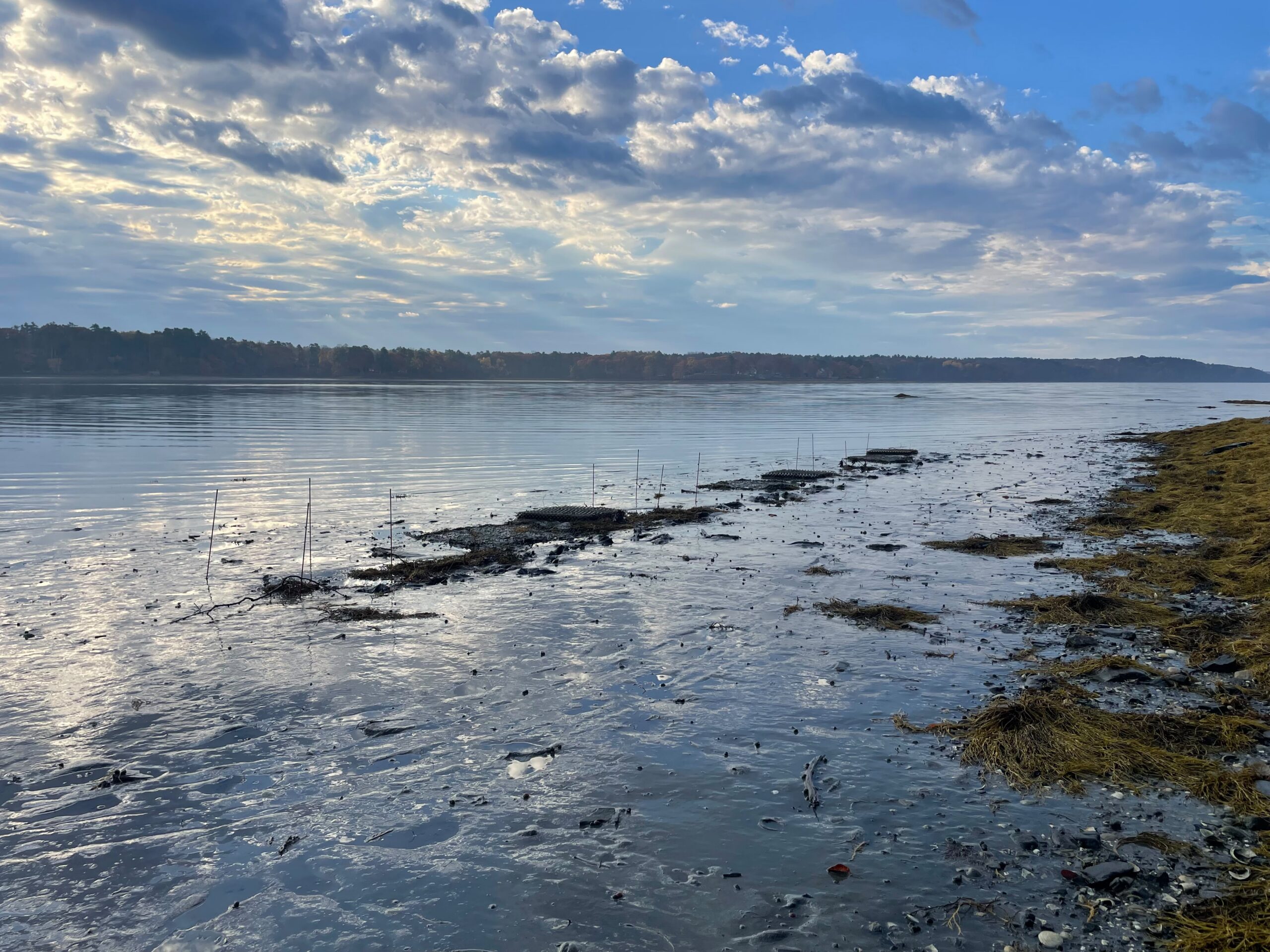
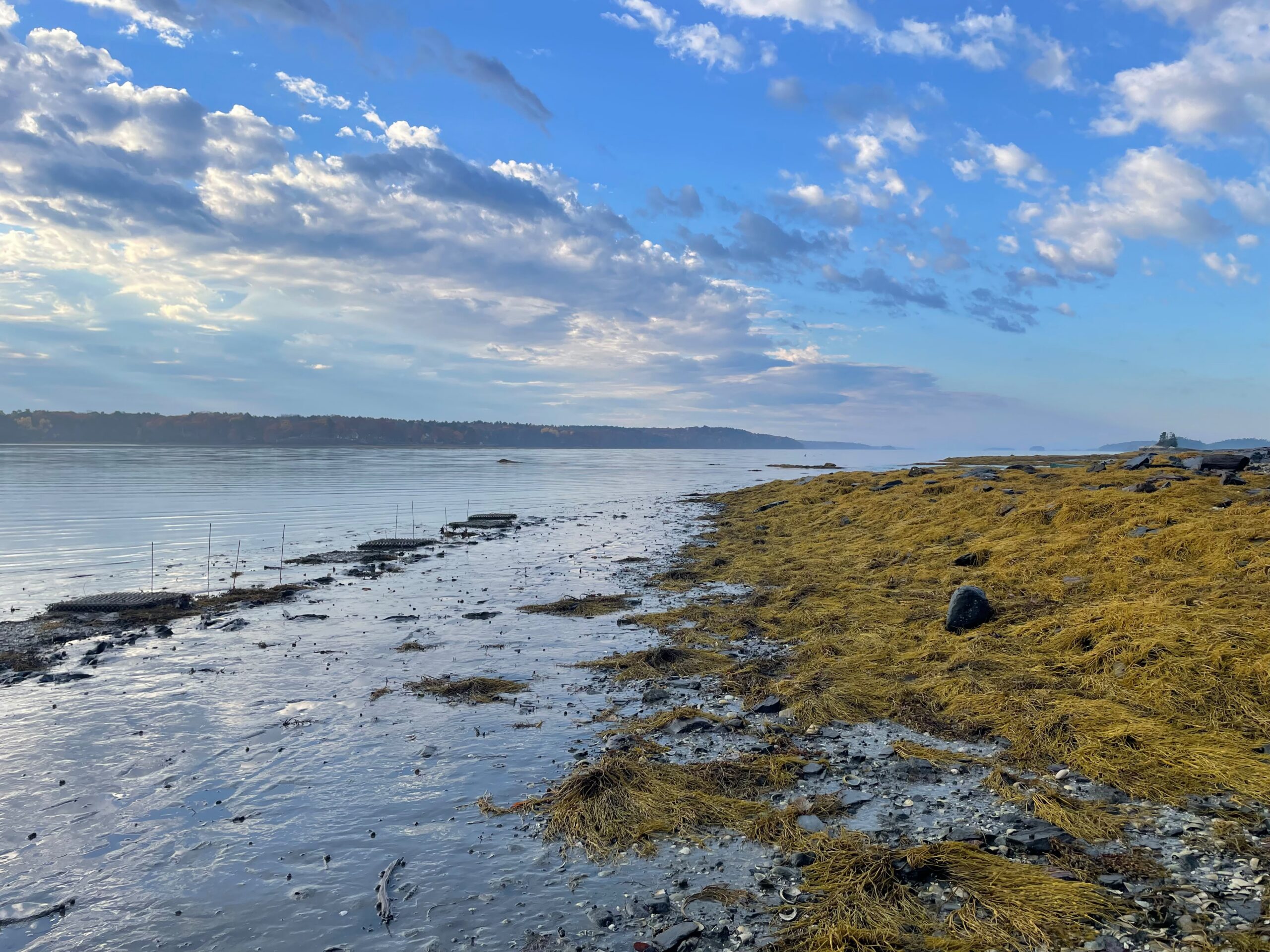
An unseasonably warm low tide at the end of October brought Fisheries Program Manager Jessie Batchelder out to the intertidal flats in Maine to check on an ongoing experiment. Along the shoreline, the team is testing several types of biodegradable materials to explore whether they could offer a more sustainable approach to shellfish restoration and management.
The experiments are part of a Manomet Fisheries team project investigating whether biodegradable netting and structures could help address a long-standing challenge for Maine’s wild shellfish fisheries: protecting young shellfish from predators and improving their chances of survival.
The work involves collaboration with harvesters, municipal staff, and research partners at two sites: one in Brunswick on Casco Bay and another along the Damariscotta River.
Exploring alternatives to plastic netting
Wild populations of soft-shell clams have declined substantially in recent years, and predation by invasive green crabs has contributed to these losses. Green crabs also prey on blue mussels, another important species in Maine’s coastal ecosystems. Once abundant along intertidal and shallow subtidal areas, mussel beds have declined in recent decades, affecting not only fisheries but also the broader coastal environment.
Traditionally, plastic netting has protected young shellfish, known as seed, from predators. However, installing and removing these nets requires considerable time and labor, and the materials can create additional environmental management challenges.
Biodegradable materials have already been used in several coastal restoration applications, including salt marsh, oyster, and mussel restoration. Manomet’s Fisheries team is exploring whether these materials could also be adapted for shellfish conservation in Maine.
Testing materials in real-world conditions
The researchers are testing three different types of biodegradable materials through field experiments at two Casco Bay sites: one in Brunswick, in collaboration with the Brunswick Shellfish Committee, and another in the Damariscotta River, working with partners at the University of Maine’s Darling Marine Center.
The goal is to understand how different environmental conditions affect these materials once deployed in the intertidal zone. While assessing material durability is the primary focus, the team is also monitoring shellfish settlement and recruitment on and beneath the experimental plots. These observations will help researchers understand whether the materials could eventually support shellfish restoration by providing suitable conditions for young shellfish to settle and grow.
Building on community collaboration
This research builds on an earlier Casco Bay Resilient Habitats project that explored patterns of shellfish settlement through conversations with harvesters and shellfish farmers, field observations, experiments, and collaboration with researchers and companies developing biodegradable materials.
The work responds directly to priorities identified by the Casco Bay Regional Shellfish Working Group, bringing together scientific research and the experience of people who depend on these coastal resources.
Over the coming months, the team will continue monitoring the experimental plots to assess how different materials perform through changing seasons and environmental conditions. The project is expected to conclude in December 2027, with findings shared with shellfish harvesters, municipal and state managers, conservation practitioners, and other interested partners.
By testing new materials and exploring alternatives to conventional plastic netting, Manomet’s Fisheries team hopes to identify practical tools that could make future shellfish restoration and management efforts more effective, less labor-intensive, and more sustainable.