


 Back to all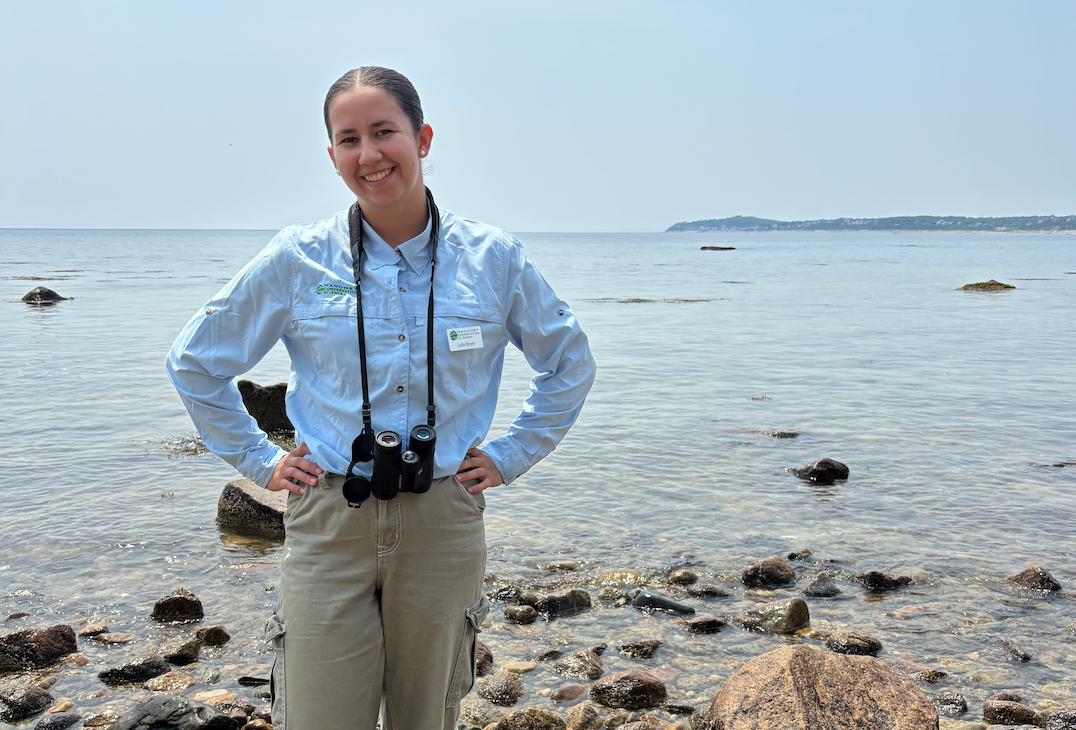
I’ve been incredibly lucky to work as the Education and Outreach intern at Manomet in the summer of 2025 through my Smith College Praxis internship. I’m double majoring in Environmental Science and Policy and Latin American Studies, and I spent nine weeks immersed in conservation outreach, environmental education, and fieldwork.
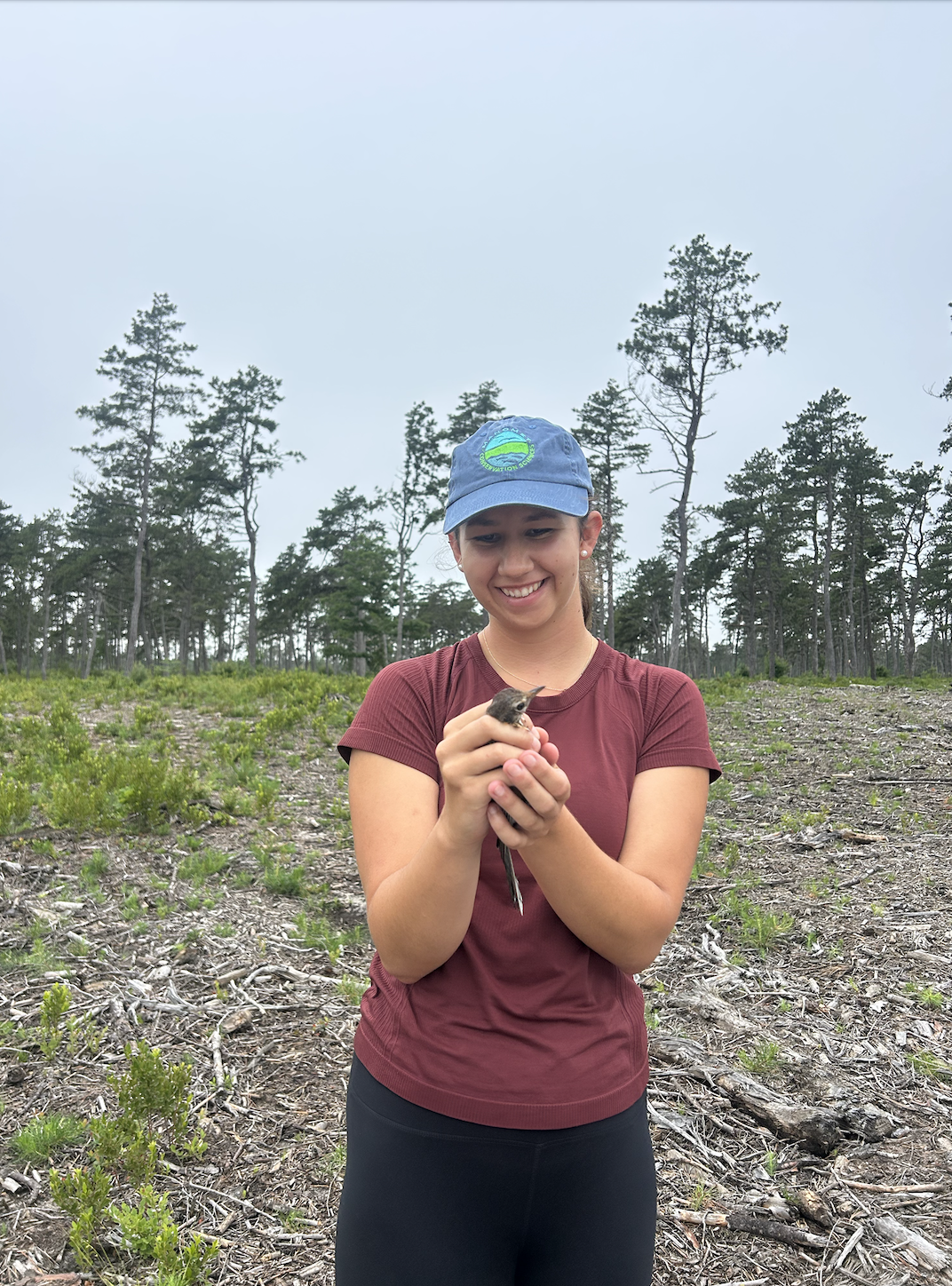
One morning during those nine weeks, I woke up before dawn to accompany banding intern Grace Whitten to MAPS banding at Myles Standish State Forest. We walked the net lanes at precisely timed intervals, moving quietly through the morning, talking with Grace and Andrew Single about banding experiences, plant evolution, and whatever else our slightly foggy brains drifted toward while we waited for the next net run. At the end of the morning, after Andrew and Grace finished banding and taking measurements, Andrew let me hold my first bird: a juvenile American Robin.
As he placed the bird into my hand carefully—its small head nestled between my index and middle finger in bander’s grip—an uncontrollable smile spread across my face, and my eyes filled with emotion unexpectedly. Grace snapped a picture, but I barely noticed. I was completely spellbound by this little life I held in my hands. Even after observing and helping teach Songbird Science with Clare and Lily throughout the summer, prompting kids to notice how light the weighted wooden bird models felt, holding a real robin still stunned me. It was so light. So delicate.
Grace and Andrew pointed out the bird’s speckled breast and explained how those markings help age a robin as “hatch year,” before it molts into the classic solid orange-brown breast. Early in my internship, Michelle Winfield, a banding intern, sat with me one morning after banding had wrapped up and introduced me to molt stages. She showed me Peter Pyle’s bird identification “bible,” and I tried my hand at coloring in molt diagrams. That day, it felt like my eyes had been opened to an entirely new world, and I knew I’d never look at a bird, or its plumage, the same way again.
I was welcomed warmly to the Environmental Education and Outreach team by Clare Cunningham and Lily Green, who are both fantastic educators and people who care deeply about their work and the impact it has. I saw that from the beginning of the summer, when I shadowed elementary school groups visiting Manomet HQ and watched Lily bring humor and excitement to every lesson, even after teaching the material many times. “A bird ice cream cone!” she would exclaim, referring to the paper cones used to weigh birds during the banding process to keep them calm and comfortable.
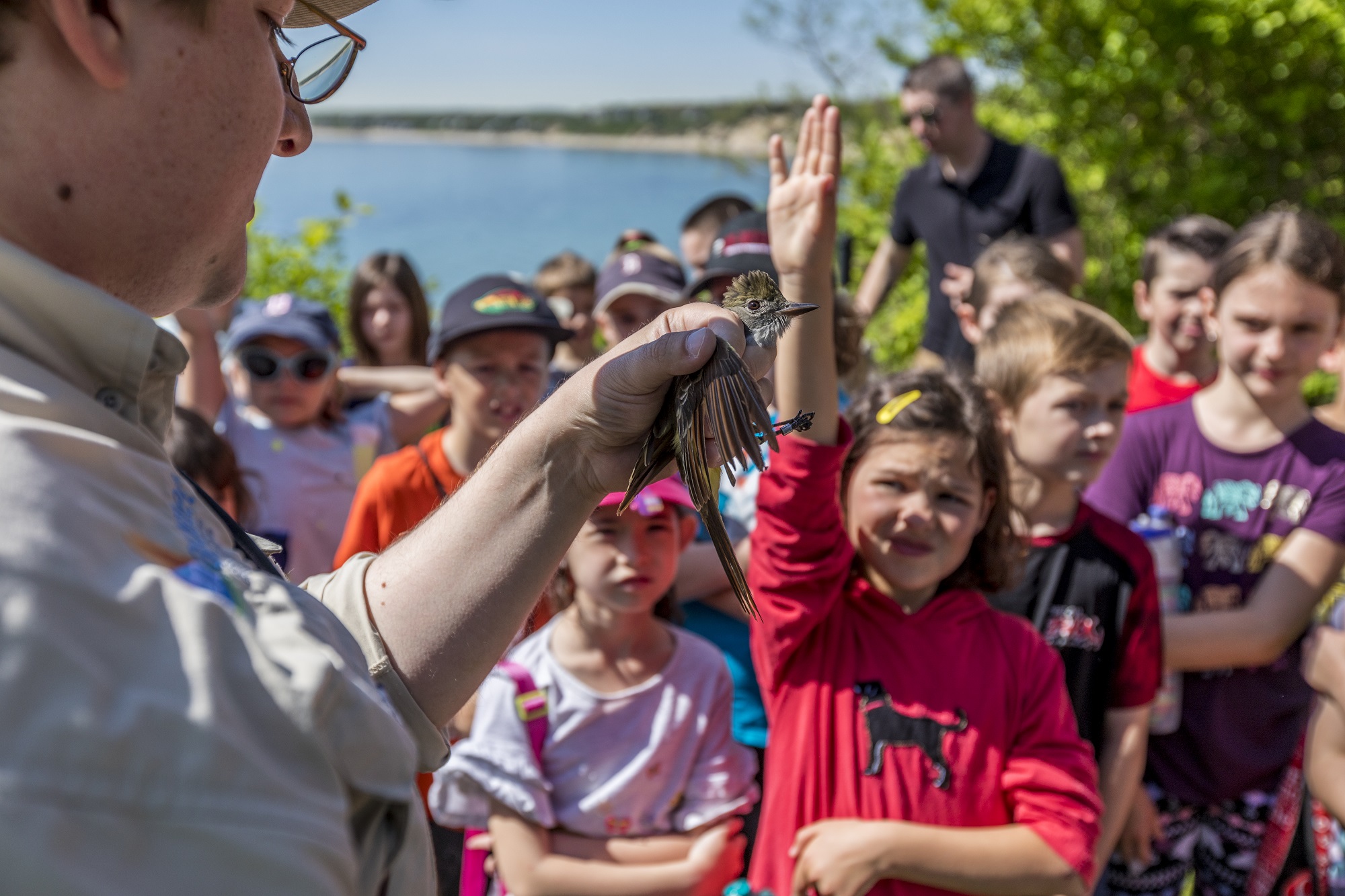
Later, I worked alongside Clare and Lily to develop and lead a week of bird-themed programming for Bay Farm Montessori Academy’s summer camp. I loved encouraging the stream of questions and curiosity the first- through fourth graders brought to our shorebird and songbird science activities. Their Manomet field notebooks filled up fast with drawings of birds, their surroundings, and little reflections on how they felt that day—decorated, of course, with stickers and craft flair (because Clare and Lily agree: rhinestones absolutely belong on field journals). Watching kids lift little eyes up to scope height, then burst out “I see it! I see the bird!”, filled my metaphorical cup to the brim.
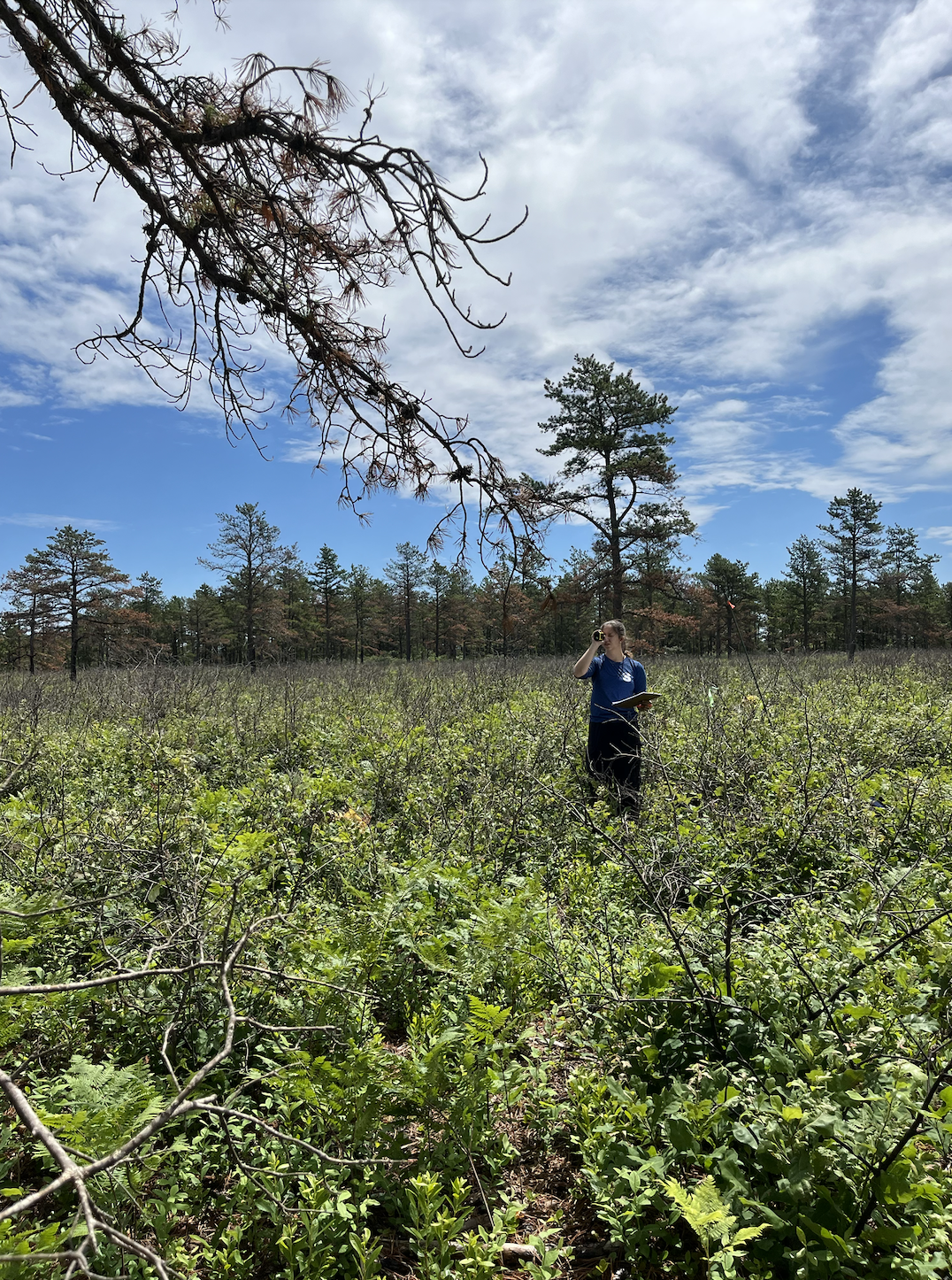
July came and went much quicker than I imagined, and it was full in a different way: fieldwork at Myles Standish State Forest with Camille Beckwith and Grace. We spent long days moving through scrub oak and pitch pines, collecting data as part of a larger ecological monitoring project led by Evan Dalton to assess habitat management efforts in the pine barrens in relation to bird use. Seeing the contrast between areas treated with prescribed burns and those that were hand-cleared was astonishing, like stepping into two different worlds.
Outside of the forest, I also spent time in another valuable green space, this one more urban. Over the course of three weeks, I worked with Clare, Lily, and Amy Burt (the wonderful programming coordinator at Wildlands Trust) as a mentor for the Green Team program at D.W. Field Park in Brockton. Through service projects and hands-on park work, I watched a group of teens grow more comfortable with each other and more connected to the outdoor space around them. It was incredibly rewarding to witness that shift, confidence building day by day.
In the last week of July, I found myself on a boat in the middle of Buzzards Bay, heading toward Penikese Island. As the morning sun grew stronger and terns dove for fish, I couldn’t help thinking, If this is a possibility, who would choose to sit in an office all day? I spent the day birding with middle school girls living on the island for a week-long science camp, and my heart was so happy to help create a learning space where curiosity is celebrated and being outside feels like the most natural classroom in the world. I saw several shorebirds for the first time—birds I’d learned about all summer, suddenly right there in front of me. It felt a little like spotting celebrities.
It feels like each day I spent at Manomet I learned a hundred new things, if not about birds, then about the inner workings of conservation work, nonprofit structures, collaboration, and, most certainly, the importance and urgency of sharing the gift of understanding the world around us with a younger generation.
I returned to Smith for my senior year inspired, excited, and looking forward to what might lie ahead in the environmental conservation world. I left Manomet with immense gratitude to all those who welcomed me, worked with me, and taught me. But I have one last goal still pending: I haven’t seen an American Oystercatcher yet, number one on my shorebird bucket list. If I don’t spot one soon, I suppose that just means I’ll have to keep coming back until I do.