



 Back to all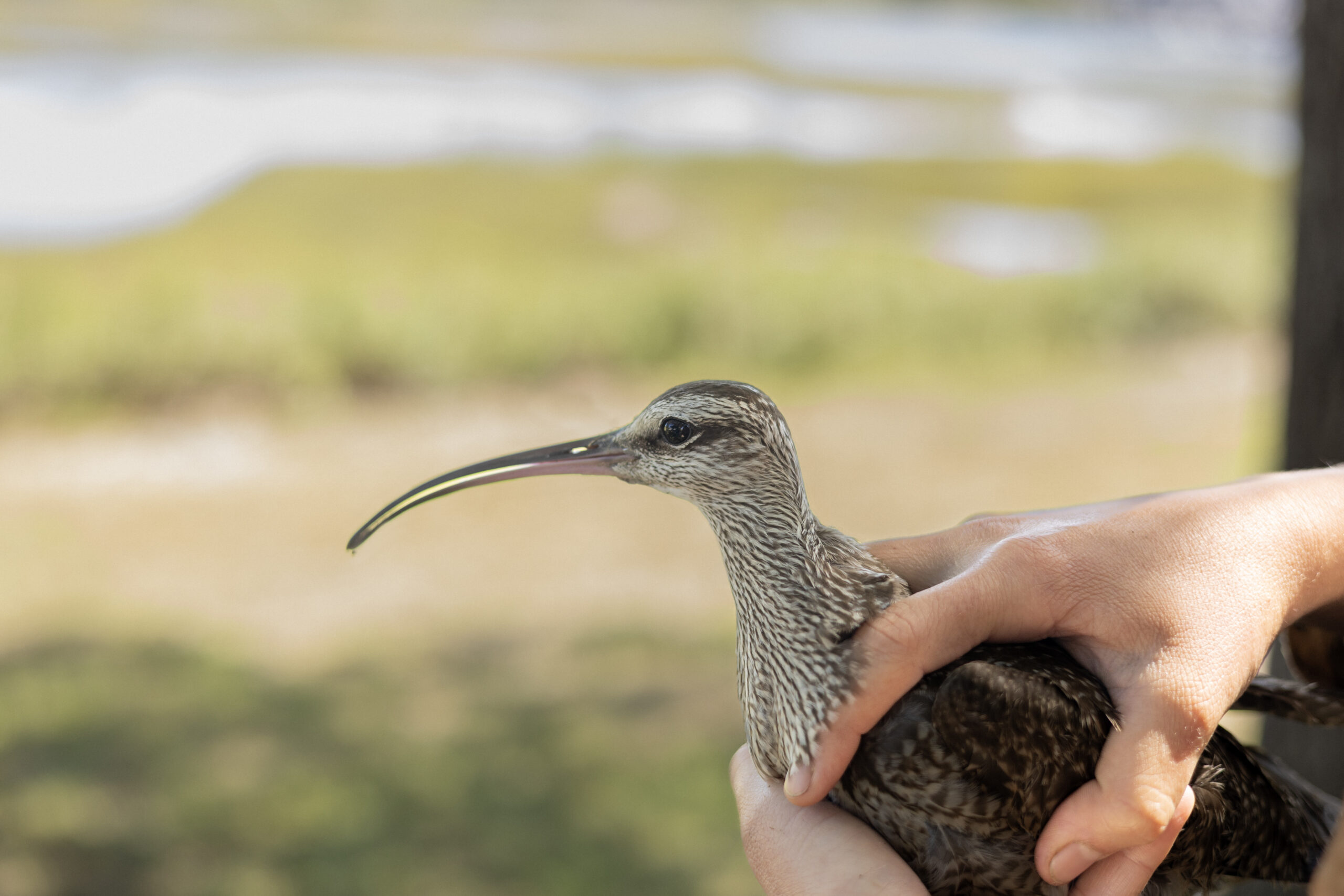

Alan Kneidel
SENIOR CONSERVATION BIOLOGIST
Advances in tracking technology have transformed our understanding of shorebird movements. “A global perspective on the annual cycles of Whimbrels” is the first attempt to synthesize Whimbrel tracking data on a global scale. Rather than looking at one population or flyway at a time, we combined most of the tracking datasets collected around the world to compare how different Whimbrel populations—Hudsonian Whimbrel (Numenius hudsonicus) and Eurasian Whimbrel (N. phaeopus)—move throughout their annual cycles, where the major gaps in our knowledge remain, and how those movements intersect with conservation threats.
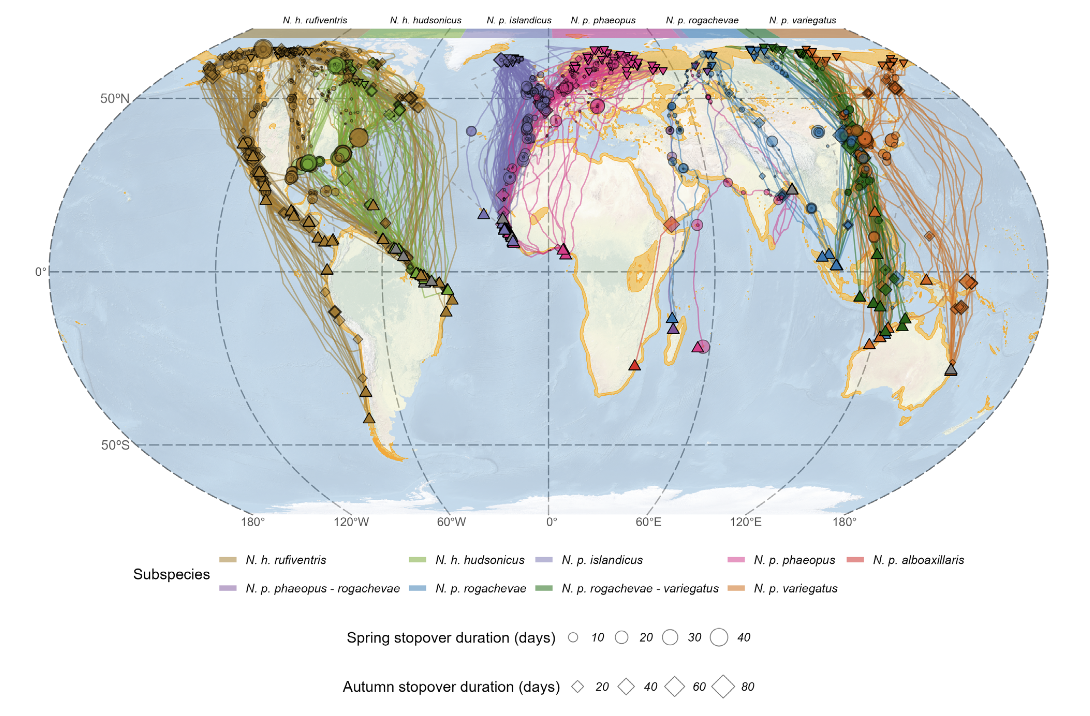
Altogether, the study assembled tracking data from 382 Whimbrels across 14 countries, including 251 birds that could be assigned to a particular subspecies for the comparative analyses. North America was especially well represented: the dataset included 83 rufiventris and 36 hudsonicus, Whimbrels with subspecies assignments (see bottom for explanation of rufiventris vs. hudsonicus), making the two North American populations a major component of this global dataset. Camilo Carneiro of the South Iceland Research Center at the University of Iceland led the analysis. The study brought together 54 authors from 39 institutions, including Manomet Conservation Sciences, and most of the Whimbrel tracking datasets collected to date, creating the first global-scale analysis of Whimbrel movements.
One interesting takeaway is how remarkable our North American birds’ migrations are in a global context. Both North American subspecies make major ocean crossings, and rufiventris had the longest migrations of any Whimbrel population studied; hudsonicus was also among the longest-distance migrants.
For rufiventris:
- Spring + autumn: 21,000 km+ annually
For hudsonicus:
- Spring + autumn: 19,000 km+ annually
The study also reinforces why a full annual-cycle approach matters for conservation: Whimbrels from different populations use very different migration strategies and face different suites of threats along the way. For Atlantic Flyway birds—including all hudsonicus and some rufiventris—the assessment identified hunting and recreational disturbance as important pressures during migration and winter. In contrast, the assessment identified climate-related changes on the breeding grounds as a particularly serious concern for hudsonicus. More broadly, the paper shows that even after this enormous synthesis, major geographic gaps in tracking remain, particularly across Africa, the Middle East, India and Russia, and concludes that better coordinated tracking, demographic work, and conservation of important stopover sites will be critical to understanding and reversing Whimbrel declines.
Clarification about hudsonicus and rufiventris subspecies
In North America, Hudsonian Whimbrels are sometimes divided into two subspecies: Numenius hudsonicus hudsonicus,which breeds primarily around Hudson Bay and eastern/central Arctic Canada, and N. h. rufiventris, which breeds primarily in Alaska and northwestern Canada. The distinction is based largely on geography and reported differences in size and plumage, with the western rufiventris birds generally described as somewhat larger. However, the validity and exact boundary of these two subspecies remain somewhat uncertain. Some taxonomic treatments recognize both, while others have treated rufiventris as a synonym of hudsonicus rather than a distinct subspecies. In this paper, “hudsonicus”and “rufiventris” serve as useful geographic groupings for comparing birds from the eastern and western portions of the North American breeding range. Still, they should not necessarily be interpreted as two sharply separated biological populations.