

 Back to all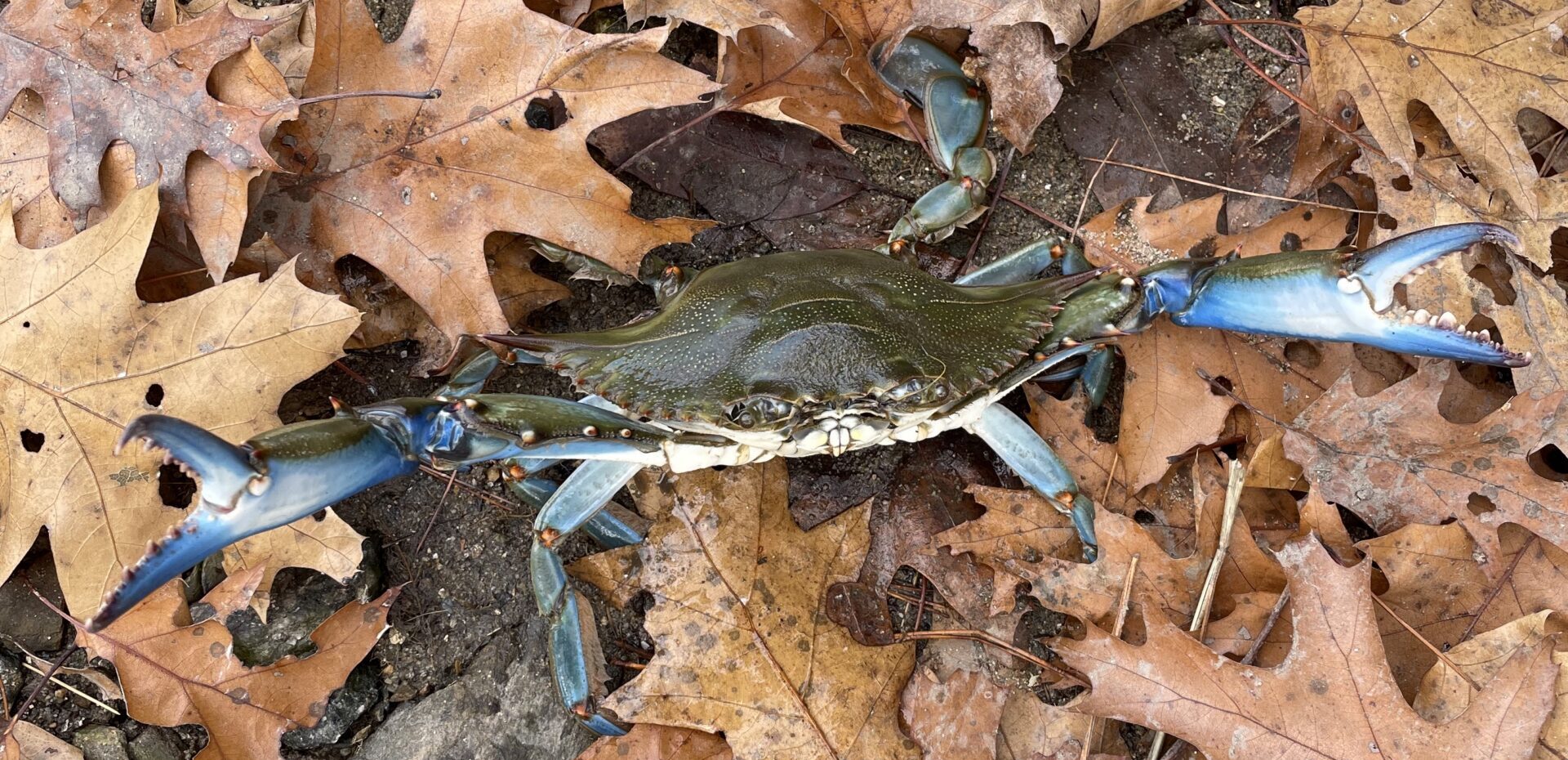
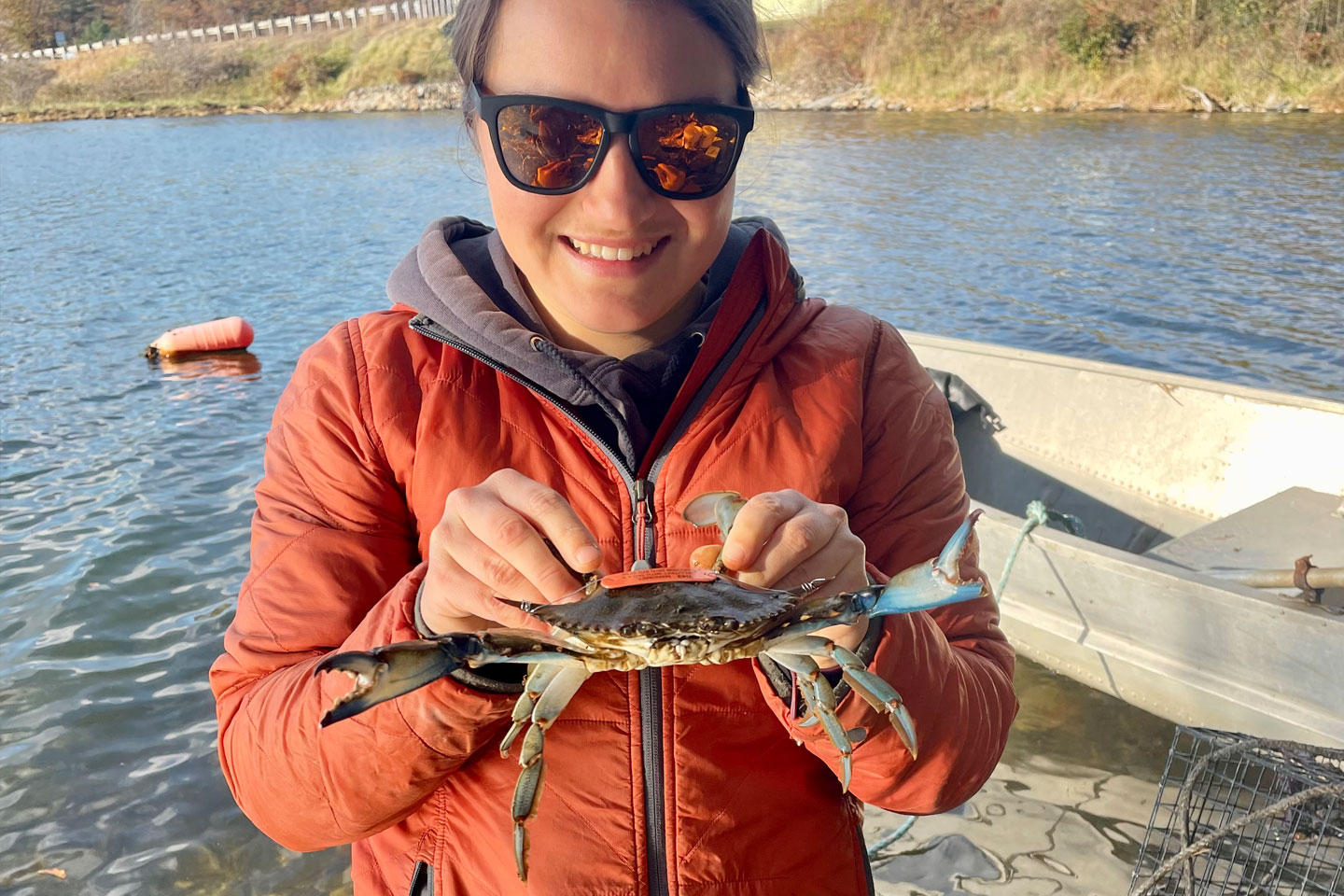
Jessie Batchelder
FISHERIES PROJECT MANAGER
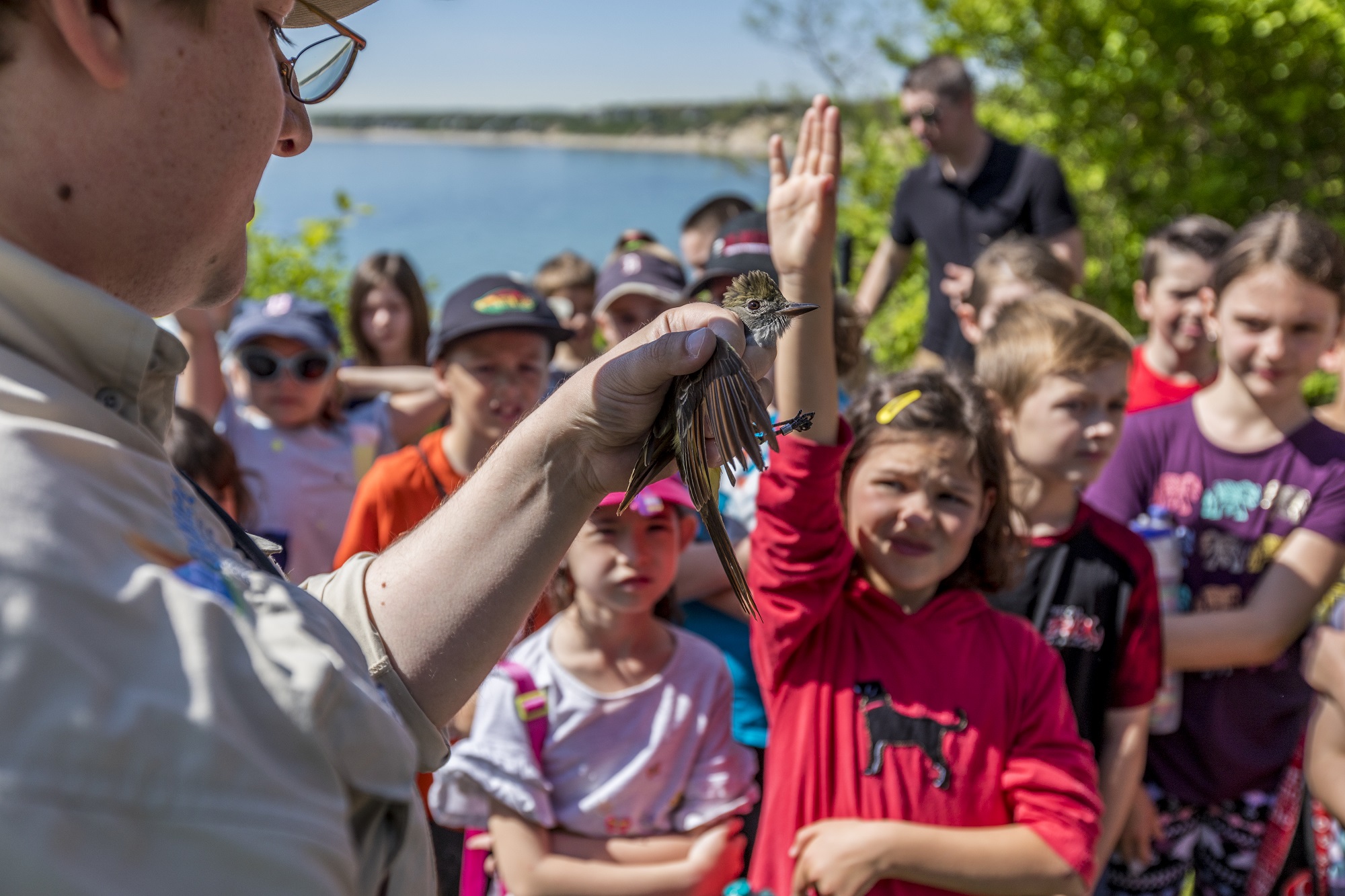
Manomet Conservation Sciences may be best known for tagging shorebirds across the Western Hemisphere, but our tracking work doesn’t stop with birds. Since 2021, our Fisheries team has also been tagging flightless creatures in Maine.
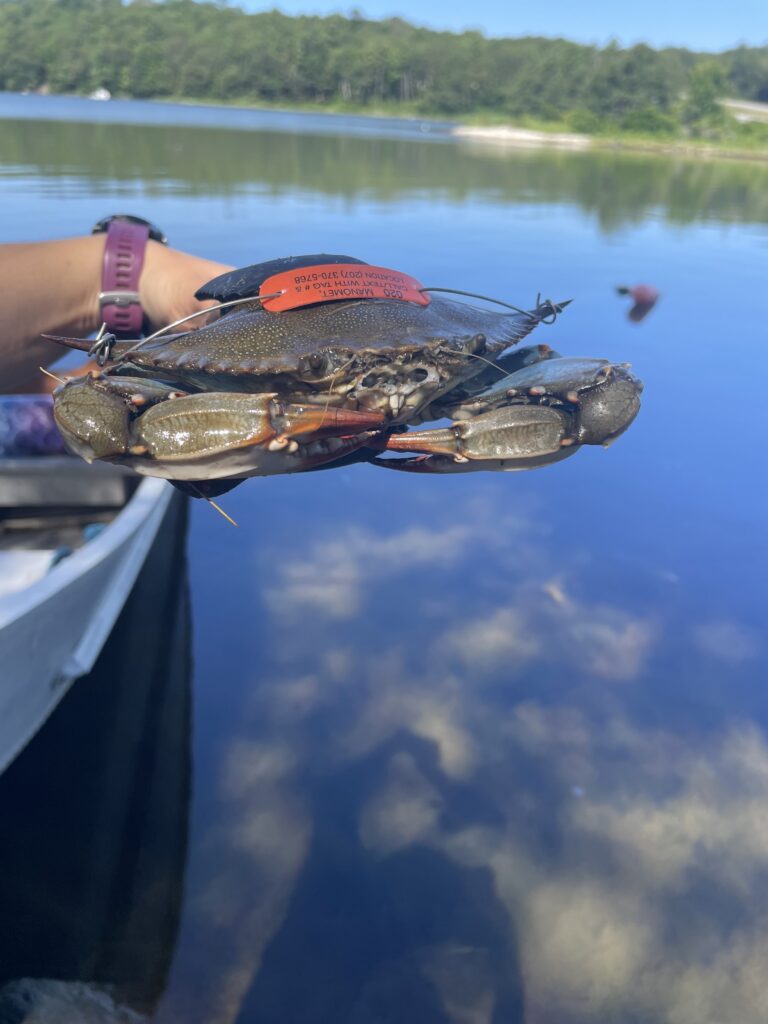
Blue crabs (Callinectes sapidus) are a range-expanding species that, as waters warm, are being found more frequently in the Gulf of Maine. Manomet has been working to better understand their populations, movements, and habitat use in coastal estuaries through a mark-recapture study.
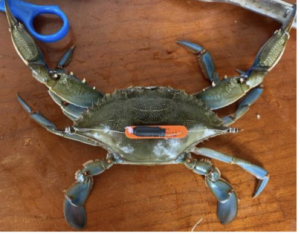
A few weeks ago, one of our tagged crabs was recaptured two years and more than 40 miles from where it was originally tagged.
The crab, #103, was originally tagged in July 2024. Until now, all our recaptured crabs had been found within just a few miles of their original tagging locations. While 40 miles may pale in comparison to the journeys of the shorebirds Manomet tracks, it is an impressive distance for this study.
Even more surprising was the fact that #103 had survived two of the coldest winters in recent years.
From 2021 through 2024, reports of blue crabs in the Gulf of Maine increased each year during a period of particularly warm temperatures. Then, following the cold winters of 2025 and 2026, sightings dropped dramatically. In 2024, Manomet trapped 70 blue crabs; in 2025, we trapped just four.
Similar declines have been observed across the Gulf of Maine. Partners at the Darling Marine Center, Wells National Estuarine Research Reserve, and Great Bay National Estuarine Research Reserve have also reported sharp declines in their catches, while reports from fishermen and community members through Manomet’s crowdsourced data platform have decreased as well.
Until now, the team had been working under the theory that recent cold winters were killing many of these range-expanding blue crabs as they pushed the boundaries of their cold-water tolerance. The unexpected recapture of #103 is making us rethink that theory and raises new questions about how blue crabs survive Maine winters. Unexpected twists are always exciting for scientists!
Figuring out where blue crabs go as temperatures drop is exactly what the team is trying to understand. In 2025, Manomet and partners at the Wells National Estuarine Research Reserve began using acoustic tags to follow blue crab movements in the New Meadows River.
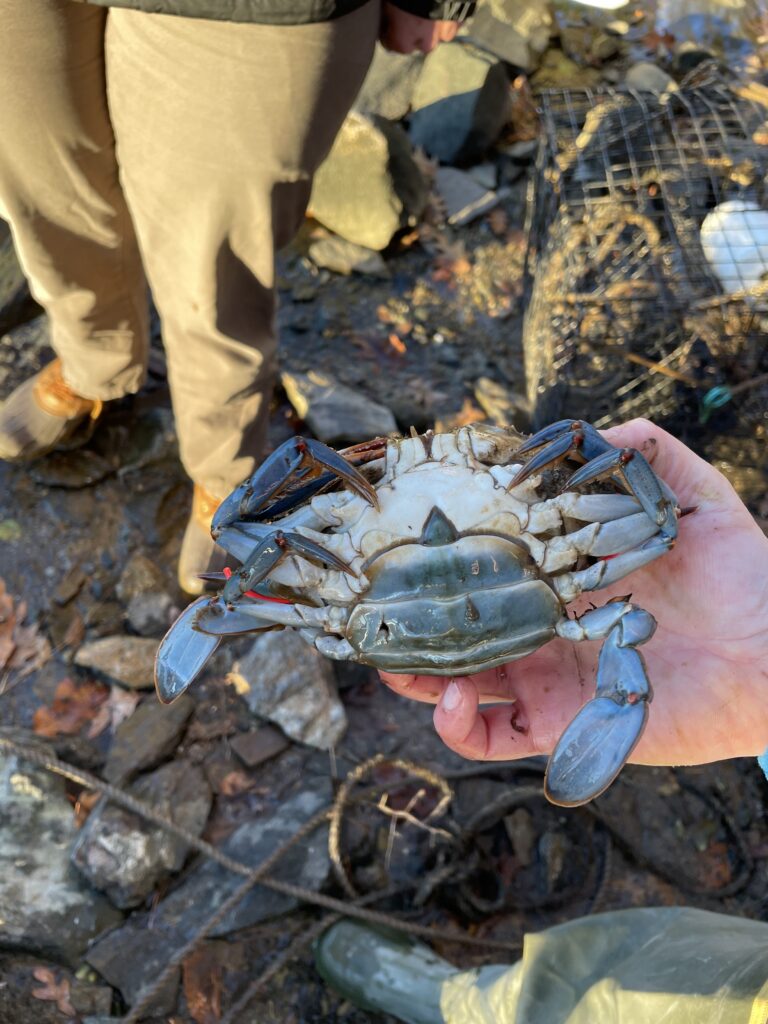
Acoustic telemetry uses an underwater array of receivers that “listen” for signals emitted by tags, allowing researchers to track where animals move. We tagged three blue crabs and followed their movements through the estuary. Two remained in the upper estuary, while the third traveled five miles in just four days before leaving the river.
Although it was a small sample, the three crabs offered an intriguing glimpse into different behaviors as temperatures dropped. Some may overwinter in shallow estuaries, while others may move into deeper water—a difference that could influence their ability to survive particularly cold winters.
There is still much to learn about blue crabs as they expand their range into the Gulf of Maine. But every tag, movement, and unexpected recapture adds another piece to the puzzle and helps us better understand how these animals are responding to a changing Gulf of Maine.