

 Back to all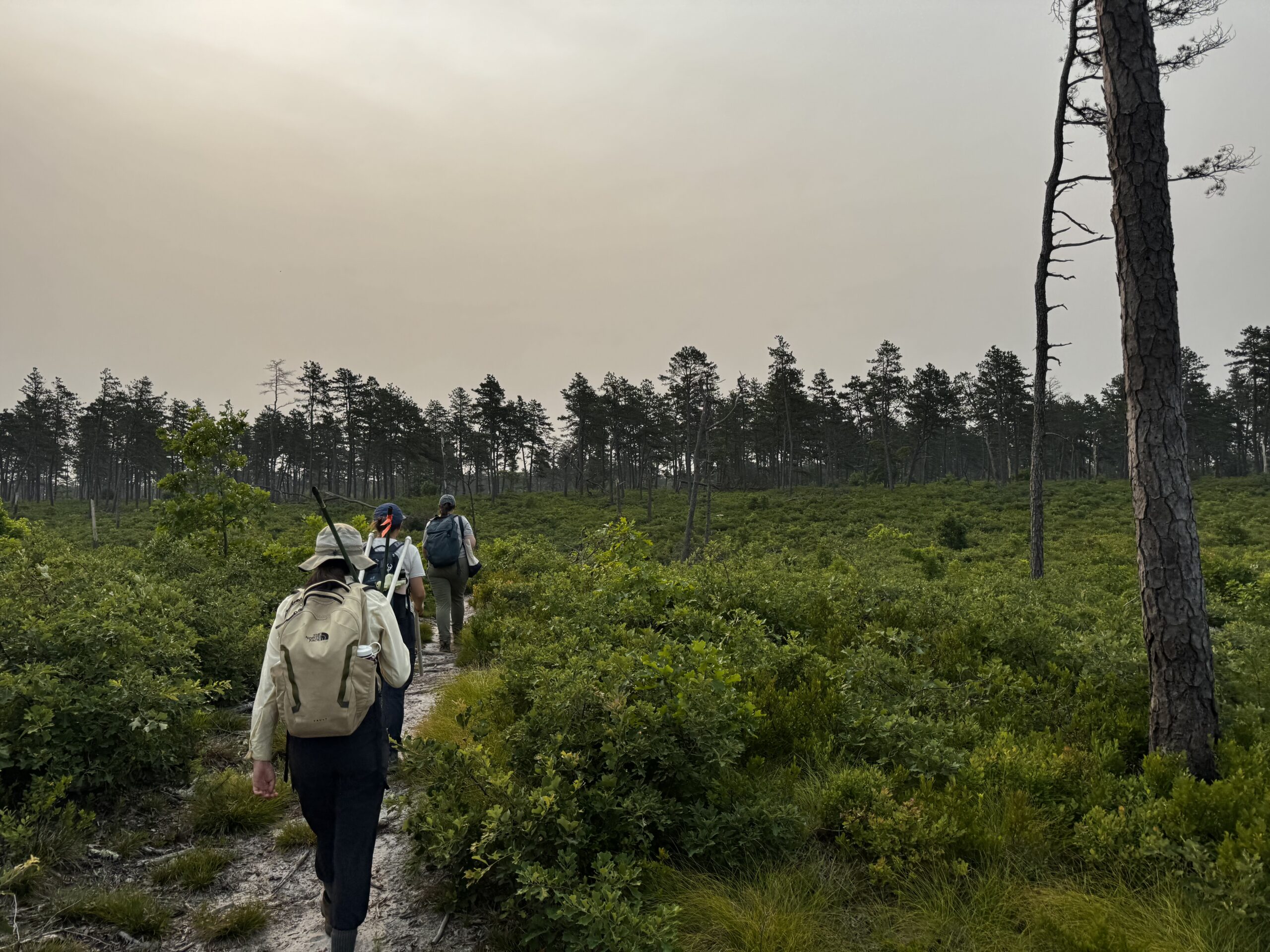

Chantal Schamber
Trevor Lloyd-Evans Bird Banding Intern
The Landbird Conservation Team has wrapped up another summer of breeding-season research at Myles Standish State Forest, where we’re studying how birds in the region’s pine barrens habitat respond to active habitat management.
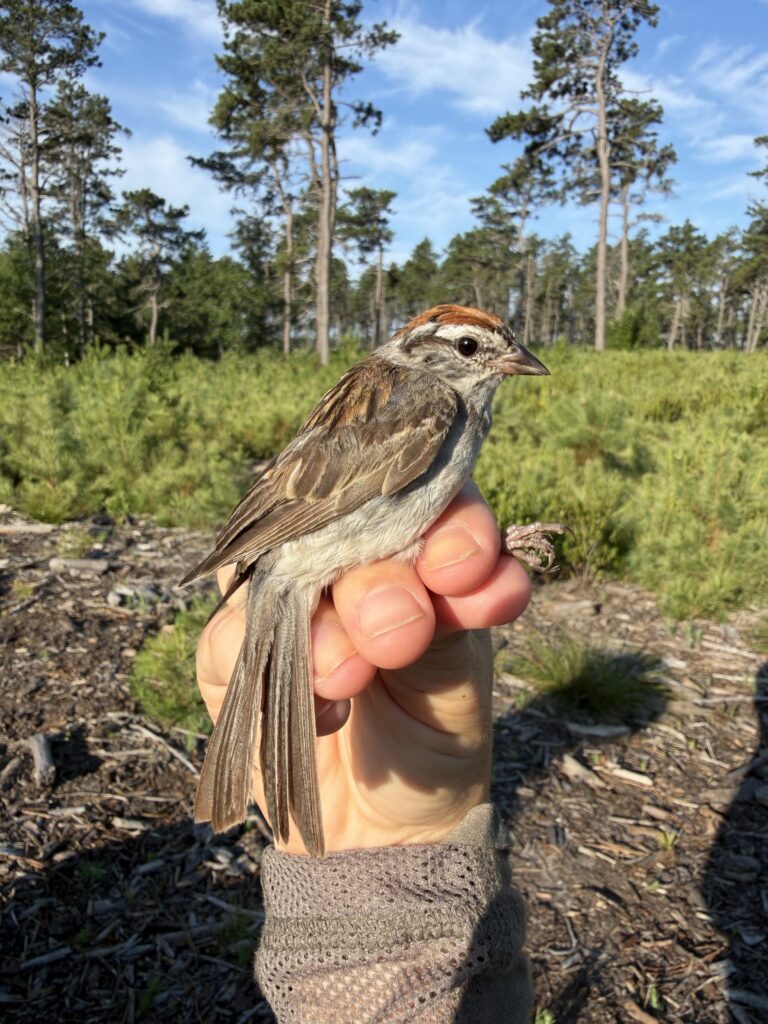
Following the MAPS (Monitoring Avian Productivity and Survivorship) protocol, the team recorded 134 captures representing 15 species, including 118 newly banded birds and 16 recaptures. Eastern Towhees led the season with 56 new birds banded, followed by Prairie Warblers with 17 and Brown Thrashers with eight. The team also captured all four of this season’s focal species: Eastern Towhee, Prairie Warbler, Pine Warbler, and Common Yellowthroat.
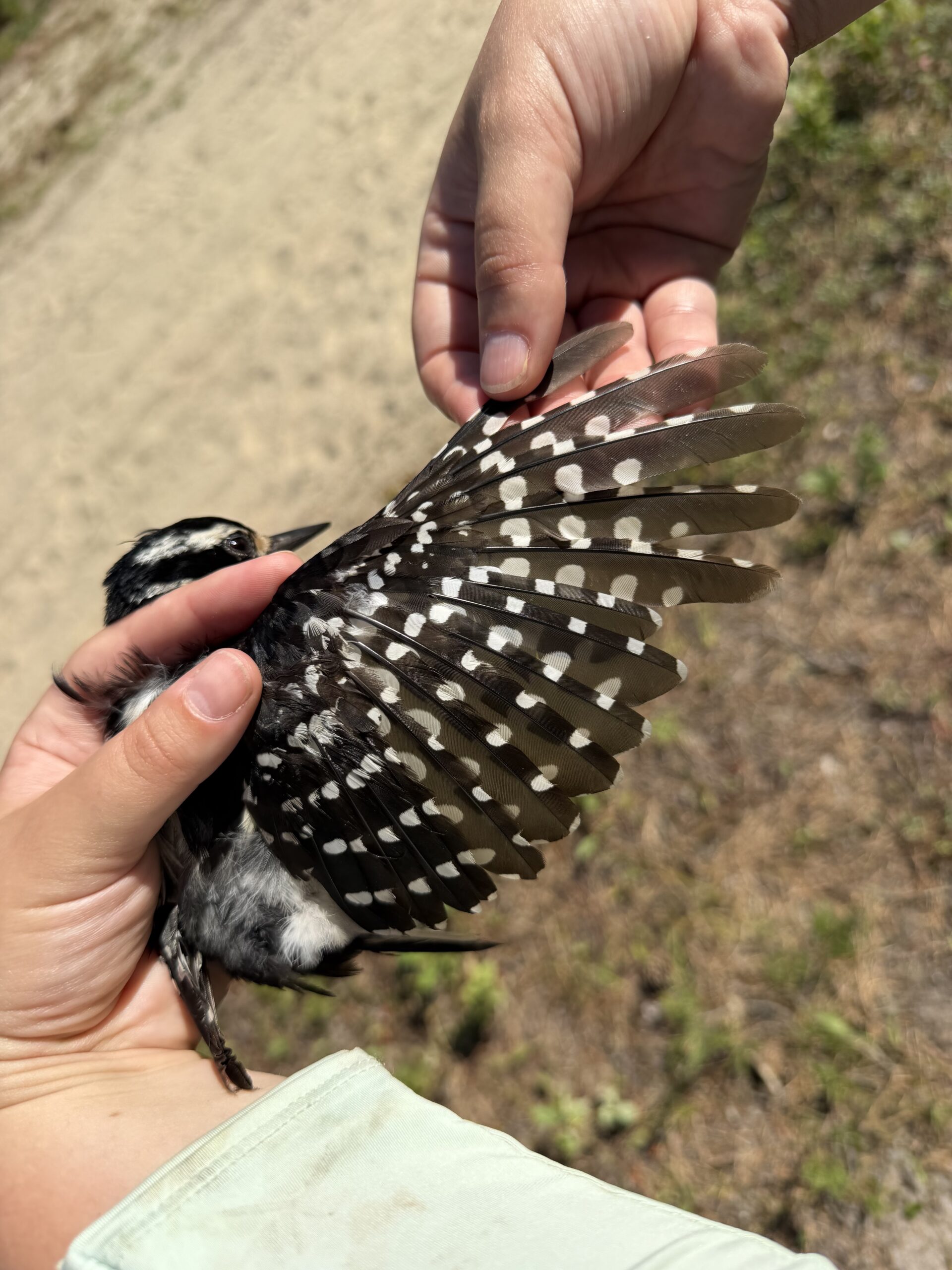
The season brought a few surprises, too. The team captured a juvenile Ovenbird, a species not typically expected in pine barren’s habitat. The young bird may have dispersed from elsewhere within the state’s forest before finding its way into our nets. Another memorable capture came when two three-year-old female Hairy Woodpeckers landed in the same net!
Young birds were a big part of the season: of the 118 newly banded birds, 60 were juveniles, and 58 were adults. The busiest day came on July 31, when the team recorded 37 captures, 33 of them Eastern Towhees!
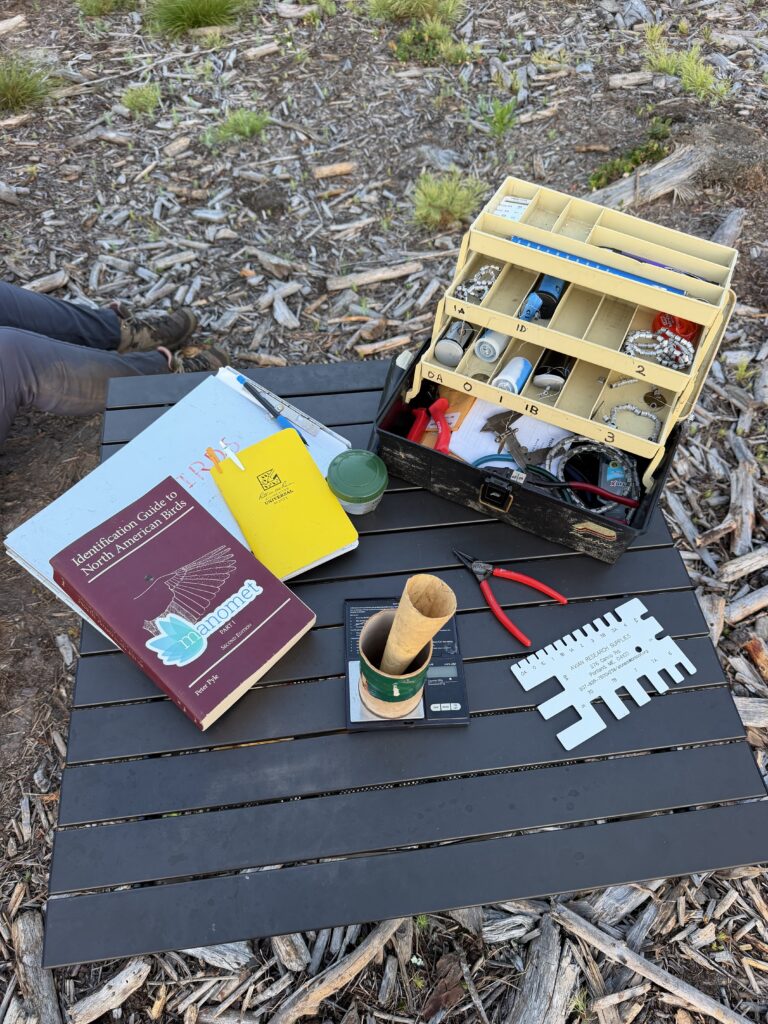
This research is especially important because pine barrens are a globally rare and regionally declining habitat throughout the Northeast, and Myles Standish is home to one of the largest remaining examples. To help restore and maintain this habitat, our partners at MassWildlife have implemented brush thinning and controlled burns in the southeastern portion of the forest.
Data collected this summer will contribute to our ongoing research on how breeding birds use this unique landscape and respond to habitat management efforts over time at Myles Standish.