



 Back to all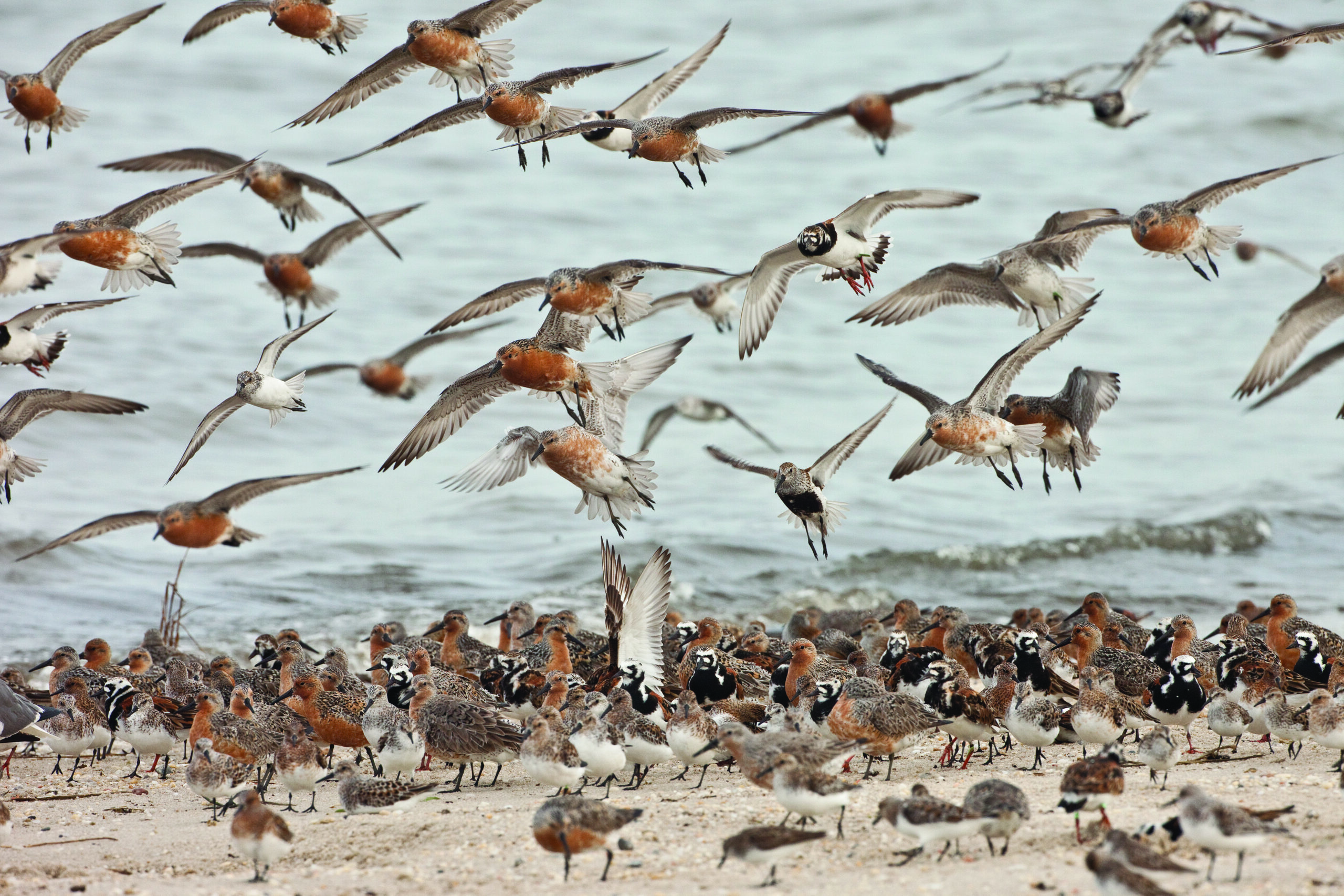
For Immediate Release
Contact: Ashley Baker, Vice President of External Relations | [email protected]
Manomet Conservation Sciences Statement on Revisions to the Rules Implementing the Endangered Species Act: Protecting Wildlife Requires Protecting Habitat
Manomet Conservation Sciences is grounded in the science of wildlife conservation and we are deeply concerned by recent revisions to the regulations implementing the Endangered Species Act (ESA) that narrow the long-standing regulatory definition of “harm.” These changes remove habitat modification and degradation from the regulatory definition of prohibited harm under Section 9 of the ESA.
This statement summarizes the legal change and the extensive body of peer-reviewed scientific evidence demonstrating that habitat loss and degradation are among the principal causes of population decline and extinction risk for imperiled species.
The Regulatory Change
Section 9 of the Endangered Species Act prohibits the “take” of listed endangered species, defining take to include actions that “harass, harm, pursue, hunt, shoot, wound, kill, trap, capture, or collect.”
For more than four decades, federal regulations interpreted “harm” to include significant habitat modification or degradation when that modification killed or injured wildlife by impairing essential behavioral patterns such as breeding, feeding, or sheltering. That interpretation was upheld by the U.S. Supreme Court in Babbitt v. Sweet Home Chapter of Communities for a Great Oregon (1995).
Beginning in September 2026, the U.S. Fish and Wildlife Service and the National Marine Fisheries Service will implement revised regulations that remove habitat modification from the regulatory definition of harm. Under this interpretation, habitat destruction alone generally will not constitute a prohibited take unless it can be shown to directly injure or kill identifiable individual animals.
From a conservation biology perspective, this change creates a significant disconnect between conservation law and the ecological processes that determine whether species persist. Wildlife populations do not exist independently of their habitats. The survival and recovery of endangered species depend upon the continued availability of the habitats and ecological processes that support feeding, breeding, migration, shelter, and movement throughout their life cycles.
The Biological Science Basis for Habitat Protection
Habitat is far more than the location where an animal happens to be found at a particular moment. Habitat encompasses the combination of food, water, shelter, breeding sites, migration corridors, and ecological conditions that allow a species to survive and reproduce throughout its life cycle. Protecting an individual animal while allowing destruction of the habitat that provides these essential resources does not remove the biological threat — it simply delays its consequences.
Decades of ecological research demonstrate that habitat loss reduces the number of individuals an ecosystem can support, lowers reproductive success, isolates populations, interrupts migration, and ultimately increases extinction risk (Fahrig 2003; Haddad et al. 2015). One of the clearest examples comes from studies of forest birds. Robinson et al. (1995) and Donovan et al. (1995) demonstrated that forest fragmentation can reduce nesting success through increased nest predation and brood parasitism, creating “demographic sinks” where birds continue to occupy habitat but produce too few young to sustain the population. Habitat may therefore appear occupied while population decline is already underway.
Habitat fragmentation also changes ecological conditions far beyond the area directly disturbed. Remaining habitat patches experience altered microclimates, greater exposure to predators and invasive species, and reduced connectivity between populations (Murcia 1995; Fahrig 2003). Small isolated populations become increasingly vulnerable to demographic instability, reduced genetic diversity, and local extinction (Frankham 2005).
In a recent analysis of bird species with the highest risk of extinction, habitat loss and degradation resulting from agriculture and logging were the threats affecting the greatest proportion of globally threatened bird species (73% and 50% respectively). In other words, habitat loss is the most significant driver of extinction risk at a global scale (BirdLife International 2025).
Habitat Protection Across the Full Annual Cycle
For migratory species, habitat conservation cannot be limited to breeding areas alone. Many birds depend on an interconnected network of breeding habitats, migration stopovers, staging areas, and wintering grounds. Habitat loss at any point in this annual cycle can reduce survival and reproductive success even when breeding habitat remains intact. Recent analyses based on data from Manomet’s International Shorebird Survey found that 26 of 28 monitored North American shorebird species have experienced long-term population declines, with an estimated one-third reduction in overall abundance since 1980 (Smith et al. 2023). These declines have accelerated for many species, emphasizing the urgent need to conserve habitat throughout the annual cycle.
One of the strongest demonstrations of this principle comes from the Yellow Sea. Studds et al. (2017) showed that shorebird species most dependent on rapidly disappearing tidal mudflats experienced the greatest population declines. Habitat loss at migration stopover sites thousands of miles from breeding grounds was directly associated with declining continental populations. Similarly, tracking studies of Semipalmated Sandpipers demonstrated that different breeding populations depend on distinct migration routes and stopover areas throughout the Western Hemisphere (Brown et al. 2017). Conserving breeding habitat alone cannot maintain these populations if critical migration habitats are lost elsewhere along the flyway.
Fish Depend on Connected Habitats
The same ecological principles apply to aquatic species. Fish require connected rivers, streams, estuaries, and marine habitats to complete different stages of their life cycles. River fragmentation, altered hydrology, degraded spawning habitat, and barriers to migration may not immediately kill individual fish, but they can prevent reproduction, isolate populations, and ultimately lead to long-term population decline.
Fausch et al. (2002) demonstrated that fish populations depend on connected “riverscapes” rather than isolated stream reaches. Beechie et al. (2010) further showed that successful recovery of salmon populations requires restoring the ecological processes that create and maintain spawning and rearing habitat, rather than focusing solely on protecting individual fish.
ESA Recovery Demonstrates the Importance of Habitat
Federal recovery programs consistently recognize habitat protection as fundamental to recovering threatened and endangered species.
Examples include:
Northern Spotted Owl – Recovery depends upon maintaining extensive late-successional and old-growth forest capable of supporting nesting, roosting, and foraging habitat.
Piping Plover – Recovery requires protection and management of dynamic coastal beaches, dunes, and overwash habitats that provide nesting and feeding opportunities.
Atlantic Salmon – Recovery depends on restoring connected river systems that allow fish access to spawning, nursery, and marine habitats while maintaining appropriate stream flows and water quality.
Bull Trout – Recovery planning emphasizes reconnecting fragmented cold-water habitats so fish can move among spawning, rearing, foraging, and overwintering areas.
Whooping Crane – Recovery requires protection of breeding wetlands, migration stopover habitats, and wintering grounds across the species’ entire migratory range.
In each of these examples, recovery depends not only on preventing direct mortality but also on protecting the habitats and ecological processes that sustain populations over time.
Conclusions
The relationship between wildlife and habitat is one of the best-established principles in modern conservation biology. Habitat provides the food, nesting and spawning conditions, refuge, migration pathways, and ecological processes necessary for survival and reproduction. Habitat loss or degradation can reduce carrying capacity, lower reproductive success, convert occupied areas into demographic sinks, isolate populations, block access to seasonal habitats, interrupt migration, and reduce long-term population viability.
Across birds, shorebirds, fish, amphibians, mammals, and countless other taxa, decades of peer-reviewed research consistently demonstrate that habitat destruction can cause biological harm long before individual animals are directly killed. Meaningful conservation of threatened and endangered species requires protection not only of individual organisms, but also of the habitats and ecological processes upon which those populations depend.
Scientific References
Beechie, T. J., et al. (2010). Process-based principles for restoring river ecosystems. BioScience, 60, 209–222.
BirdLife International (2025) State of the World’s Birds 2025 Annual Update. Downloaded from https://datazone.birdlife.org/articles/state-of-the-worlds-birds-2025-annual-update on 2026-08-05
Brown, S. C., et al. (2017). Migratory connectivity of Semipalmated Sandpipers and implications for conservation. The Condor: Ornithological Applications, 119, 207–224.
Donovan, T. M., Thompson, F. R., Faaborg, J., & Probst, J. R. (1995). Reproductive success of migratory birds in habitat sources and sinks. Conservation Biology, 9, 1380–1395.
Fahrig, L. (2003). Effects of habitat fragmentation on biodiversity. Annual Review of Ecology, Evolution, and Systematics, 34, 487–515.
Fausch, K. D., et al. (2002). Landscapes to riverscapes: Bridging the gap between research and conservation of stream fishes. BioScience, 52, 483–498.
Frankham, R. (2005). Genetics and extinction. Biological Conservation, 126, 131–140.
Haddad, N. M., et al. (2015). Habitat fragmentation and its lasting impact on Earth’s ecosystems. Science Advances, 1, e1500052.
Murcia, C. (1995). Edge effects in fragmented forests: Implications for conservation. Trends in Ecology & Evolution, 10, 58–62.
Robinson, S. K., Thompson, F. R., Donovan, T. M., Whitehead, D. R., & Faaborg, J. (1995). Regional forest fragmentation and the nesting success of migratory birds. Science, 267, 1987–1990.
Smith, P. A., et al. (2023). Accelerating declines of North America’s shorebirds signal the need for urgent conservation action. Ornithological Applications, 125, duad003.
Studds, C. E., et al. (2017). Rapid population decline in migratory shorebirds relying on Yellow Sea tidal mudflats as stopover sites. Nature Communications, 8, 14895.
About Manomet Conservation Sciences:
Manomet is a science-driven conservation organization with deep roots in bird conservation. Teams across the Western Hemisphere focus on improving the health of flyways and ecosystems challenged by climate change and human activities. The organization’s goals are to reverse the decline in shorebird populations, promote coastal resilience, and educate and empower the next generation of conservationists.