


 Back to all
Morgan Ziegenhorn, Ph.D.
Research Associate, Data Science and Acoustic Ecology
Each summer, Manomet scientists and partners travel to multiple field sites across the Arctic to better understand the factors driving dramatic declines in shorebird populations. Through this research, we are working to unlock the mysteries of these long-distance migrants and generate the science needed to guide conservation efforts across the Western Hemisphere. Manomet Conservation Sciences has been working in Arctic shorebird science for 25 years.
In this field blog entry, we head to Utqiagvik, Alaska, the northernmost city in the United States. Our research Associate in Data Science and Acoustic Ecology Morgan Ziegenhorn spent the 2026 season deploying acoustic monitors to explore whether sound can replace traditional visual surveys for estimating shorebird breeding populations, a method that could change how we count birds across the Arctic.
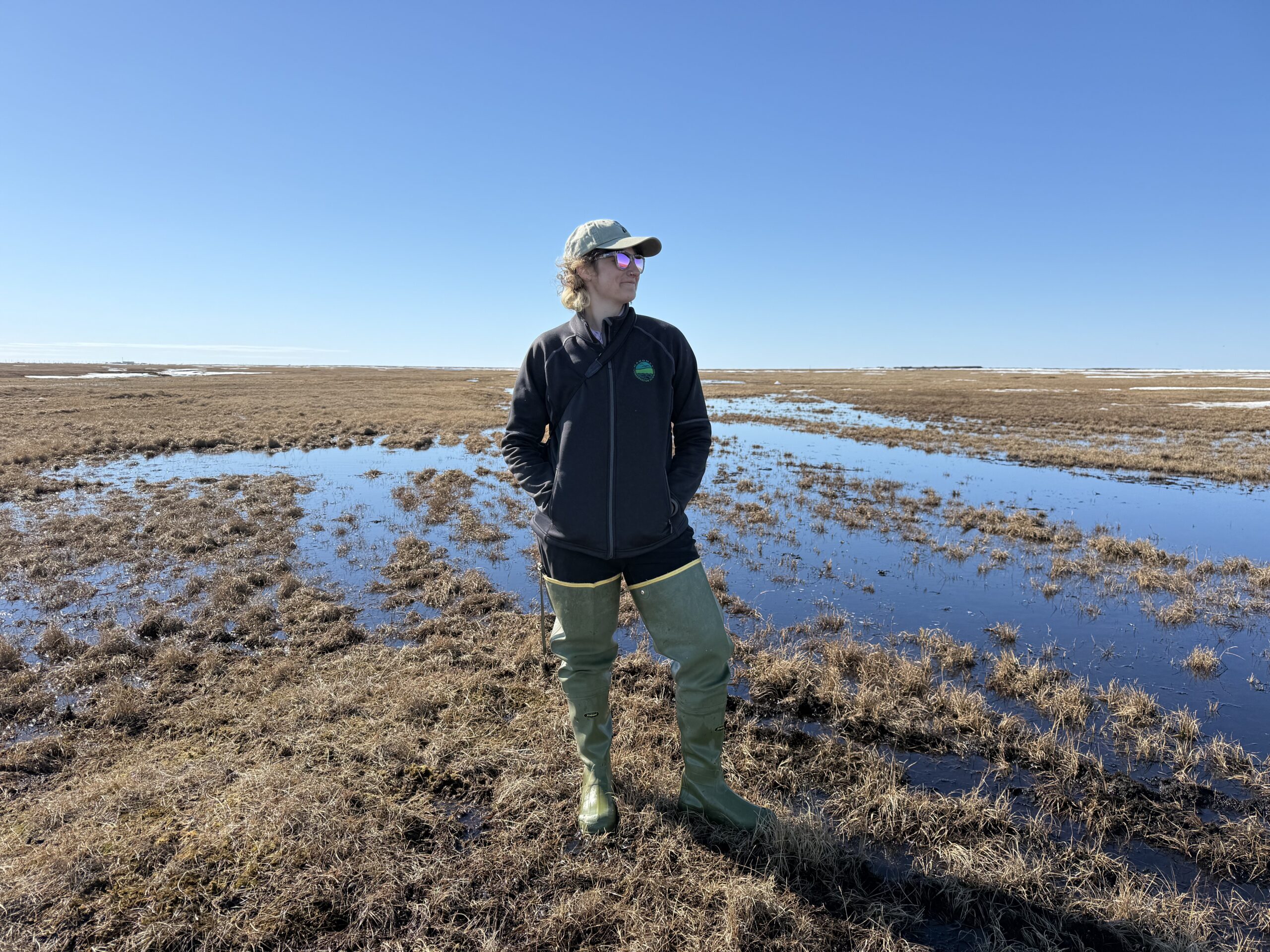
From May to June: The Tundra Transforms
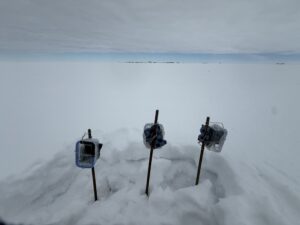
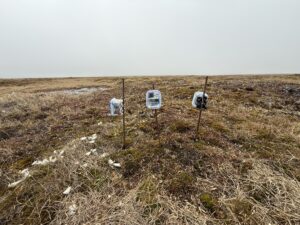
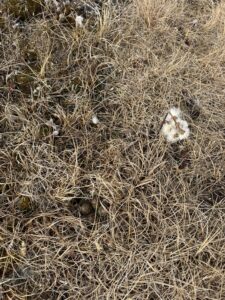
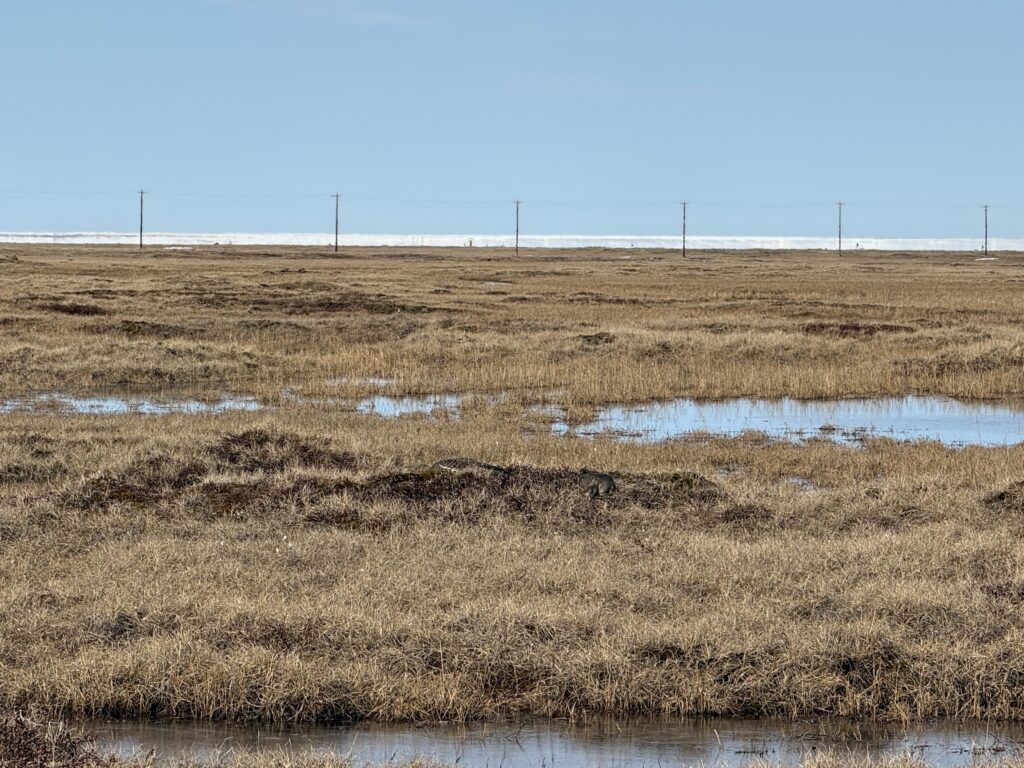
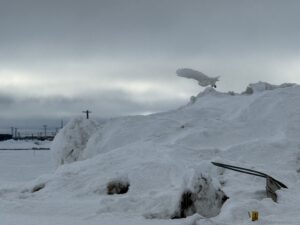
In late May, I traveled to the Utqiagvik for the third summer in a row to deploy Audiomoths: small, open-source acoustic recorders that passively capture environmental sound over long periods. The photos show three of them on the day I deployed them (May 30th) and the day I collected them (June 25th). Even though this is my third summer watching the seasonal snow melt, it still surprises me how much the tundra changes in just a few weeks!
This summer, I used these devices as part of our ongoing effort to estimate shorebird density from acoustic recordings instead of other commonly used monitoring methods, such as visual point counts or area search surveys. Estimating density is ultimately crucial for estimating overall abundance and population sizes, which in turn are key for species management, identifying important habitats, and defining endangered species and populations. Estimating density with acoustic monitoring is novel for Arctic birds, and I’m glad to be bringing this kind of cutting-edge research into Manomet’s portfolio with the help of colleagues at the University of St. Andrews, U.S. Fish and Wildlife Service, the Université de Moncton, and Environment and Climate Change Canada. The methods we’re using, which incorporate machine learning and advanced statistics, aren’t without their challenges, but I like to say there are too many smart people working on acoustic density estimation for us not to figure it out—and we’re making progress all the time!
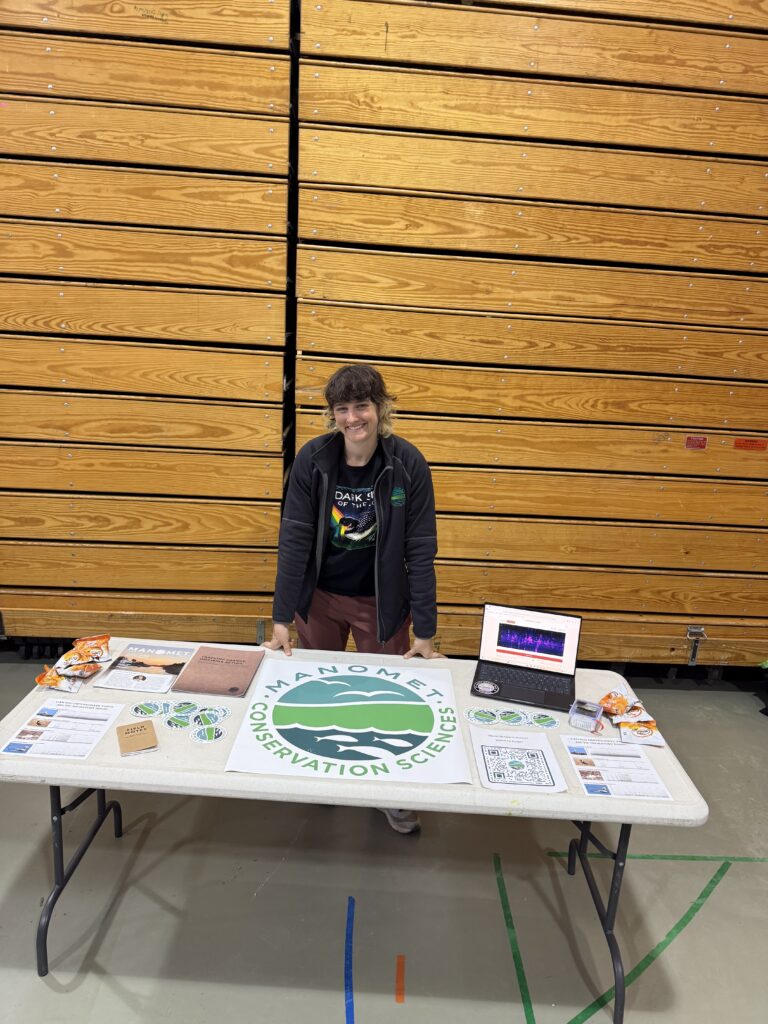
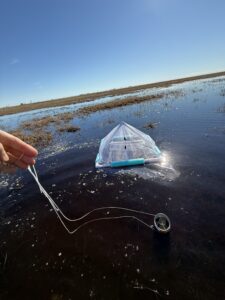
This year, I also helped set up emergence traps for an insect project led by Ph.D. student and entomologist Julia Berliner, who is looking at how the nutrients available to foraging shorebirds change throughout the breeding season — a great reminder that effective shorebird conservation requires considering the birds and their environments through many different lenses, including what they eat! I also represented Manomet at the 4th annual Utqiagvik Migratory Bird Festival, sharing knowledge about birds, their sounds, and Manomet’s conservation work in the Arctic and beyond with visitors and the local community.
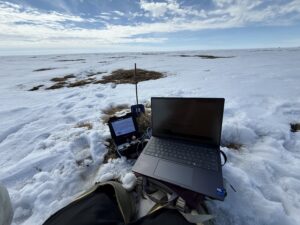
Even though our acoustic equipment runs on an automated schedule once it’s deployed, my work this summer required regular maintenance. Every few days, I checked batteries on the Audiomoths and the speakers we were using to test their detection range. By playing sounds from these speakers at known volumes and distances from the Audiomoths, we can get a clear picture of how far away our Audiomoths can hear various bird species. This is important for estimating abundance because it tells us how wide of an area around each Audiomoth we’re surveying. Maintaining the Audiomoths and speakers this summer sometimes meant taking my laptop out onto the snow, which always makes me a little nervous. No mishaps, though, and it still seems to be working just fine. 😊
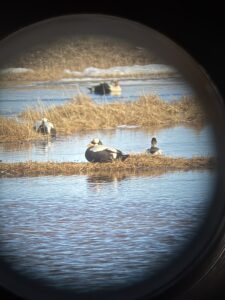
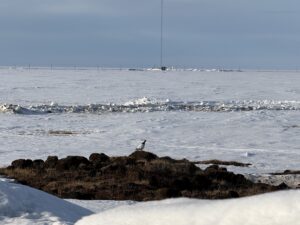
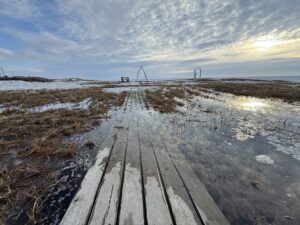
One of the most spectacular joys of Arctic fieldwork is 24-hour sunlight— the nights are just as lively as the days. The photos here were taken between 10:30 pm and 1 am around Utqiagvik. Some would argue that the birding is even better during those late hours, and I might agree— see the pictures of some of my favorite non-shorebird species to see in the Arctic: Snowy Owls, Spectacled Eiders, and Willow Ptarmigan. I’ve also included a sign near the center of the city that lists distance to far-off places, including New Bedford, Massachusetts — Utqiagvik’s sister city, which isn’t far from Manomet’s headquarters! Another photo captures a whalebone arch, made from the jawbones of a Bowhead Whale. These arches generally honor prominent community members who have passed. The arch pictured here honors Dr. Craig George, a beloved figure and key contributor to the Bowhead Whale Census here for many years.
Finally, spending June in the Arctic means I miss many Pride celebrations that happen back home during this time of year. As a queer scientist, it’s important to me to bring a little bit of that celebration to the field house for myself and others. This year we celebrated with Rice Krispie treats with an M&M rainbow 😊

As an acoustic ecologist and data scientist, it helps to like spending your days with your computer, and I do. But my ideas and work are often better after a month of outside adventures. I feel incredibly lucky that my work with Manomet lets me do both. I can’t wait to see where it will take me in the future, in the Arctic and beyond!
— Morgan 🙂