

 Back to all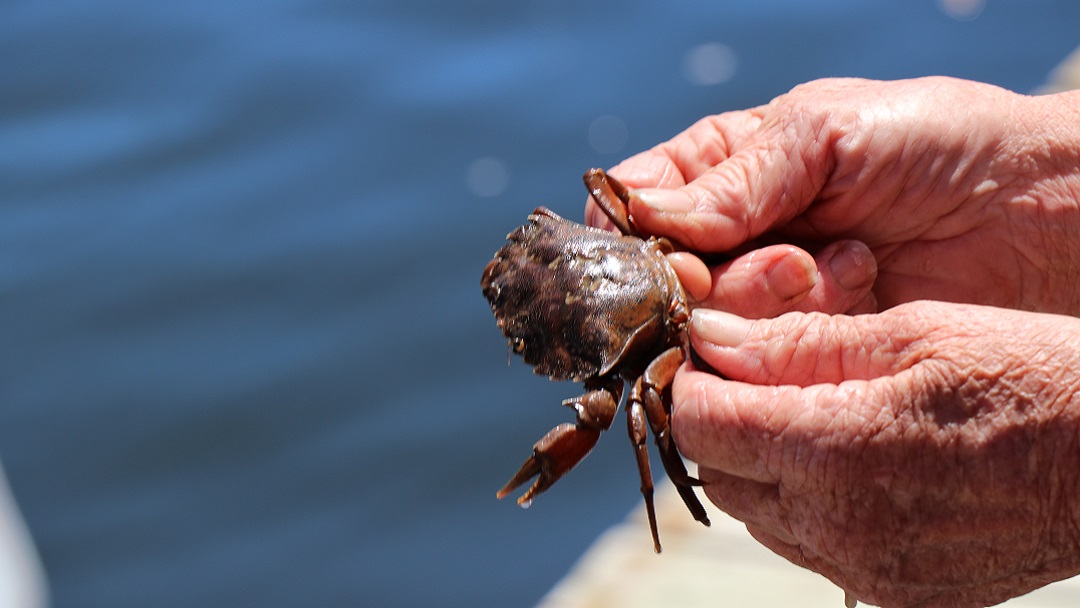
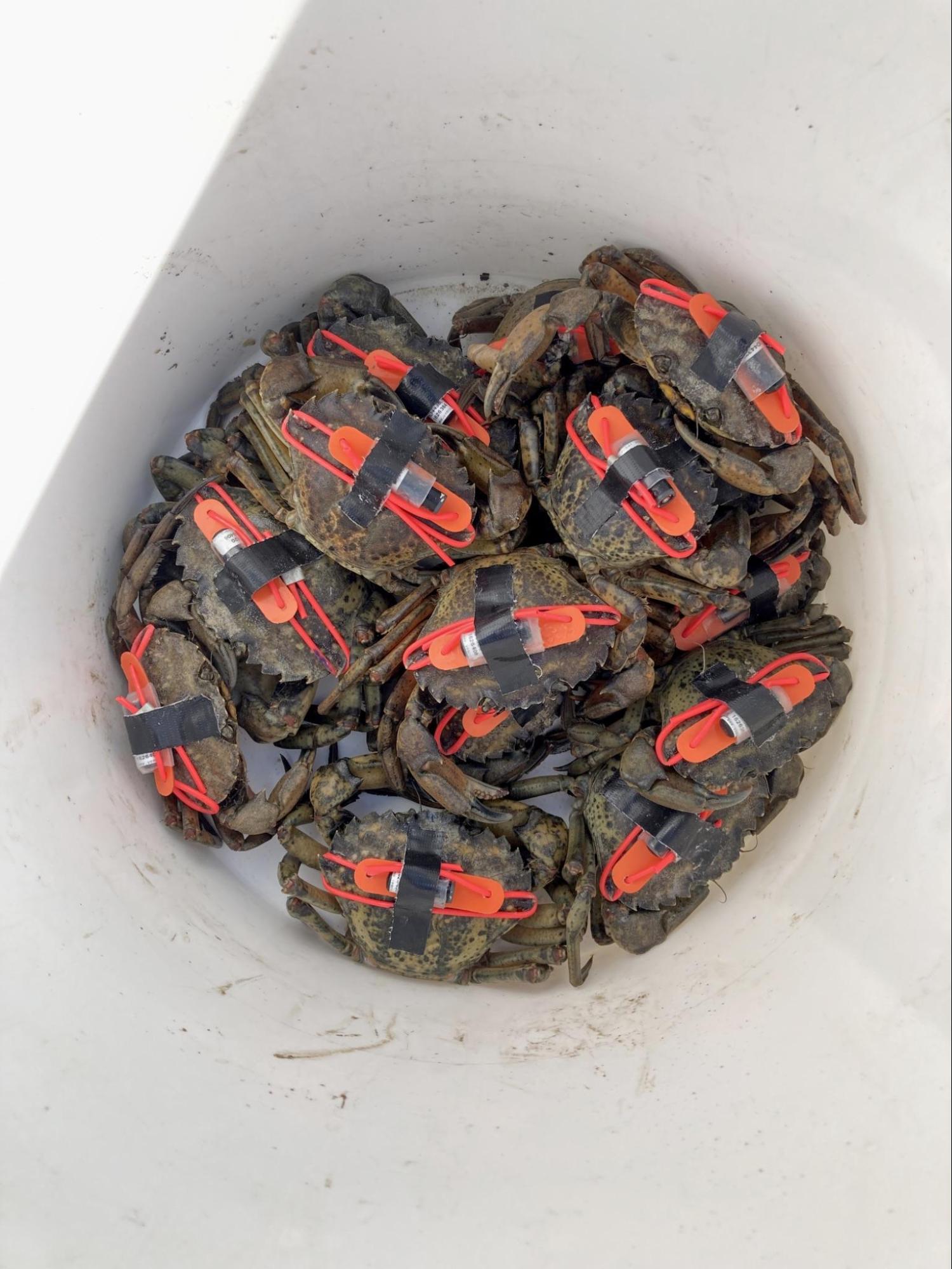
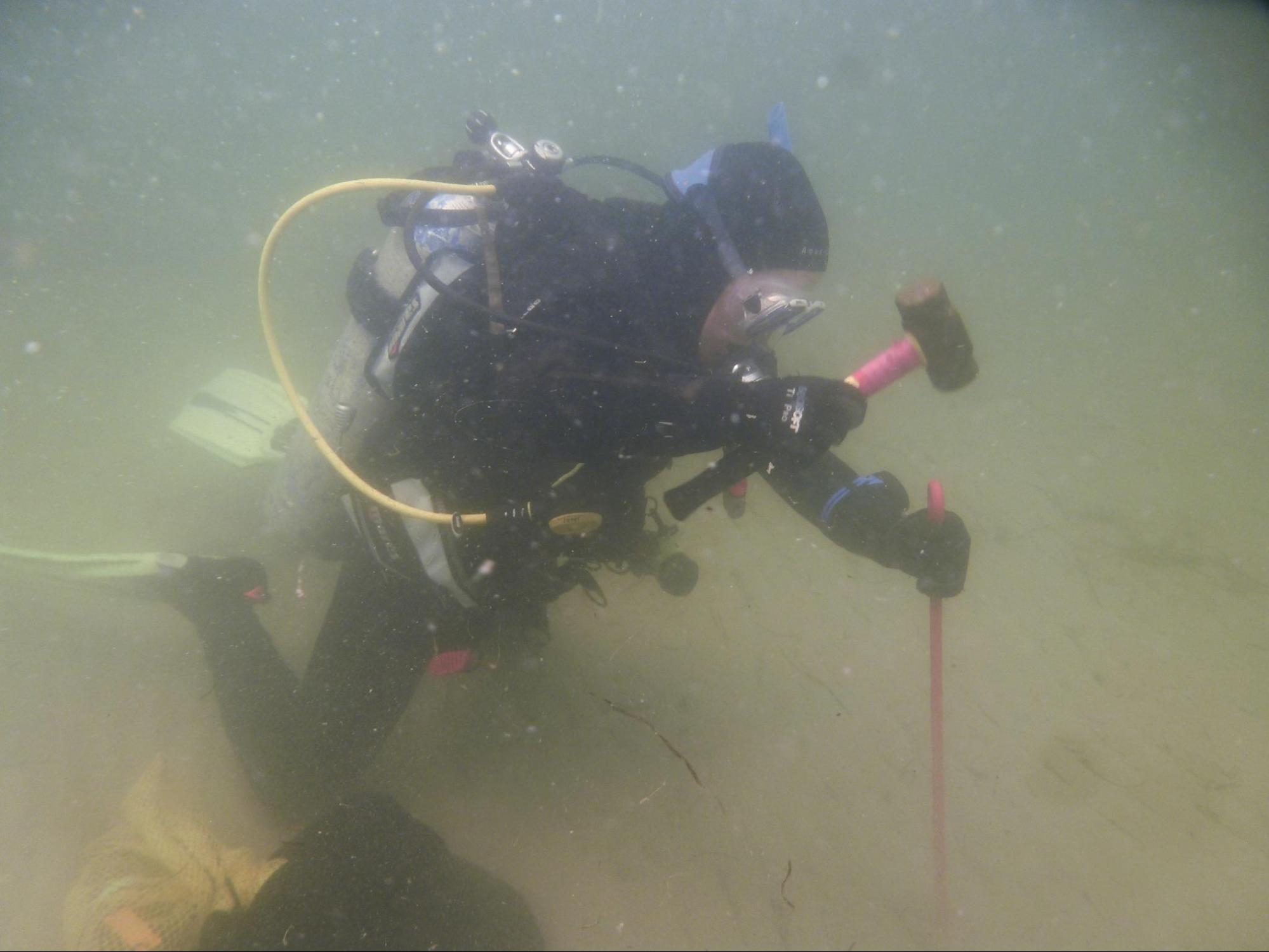
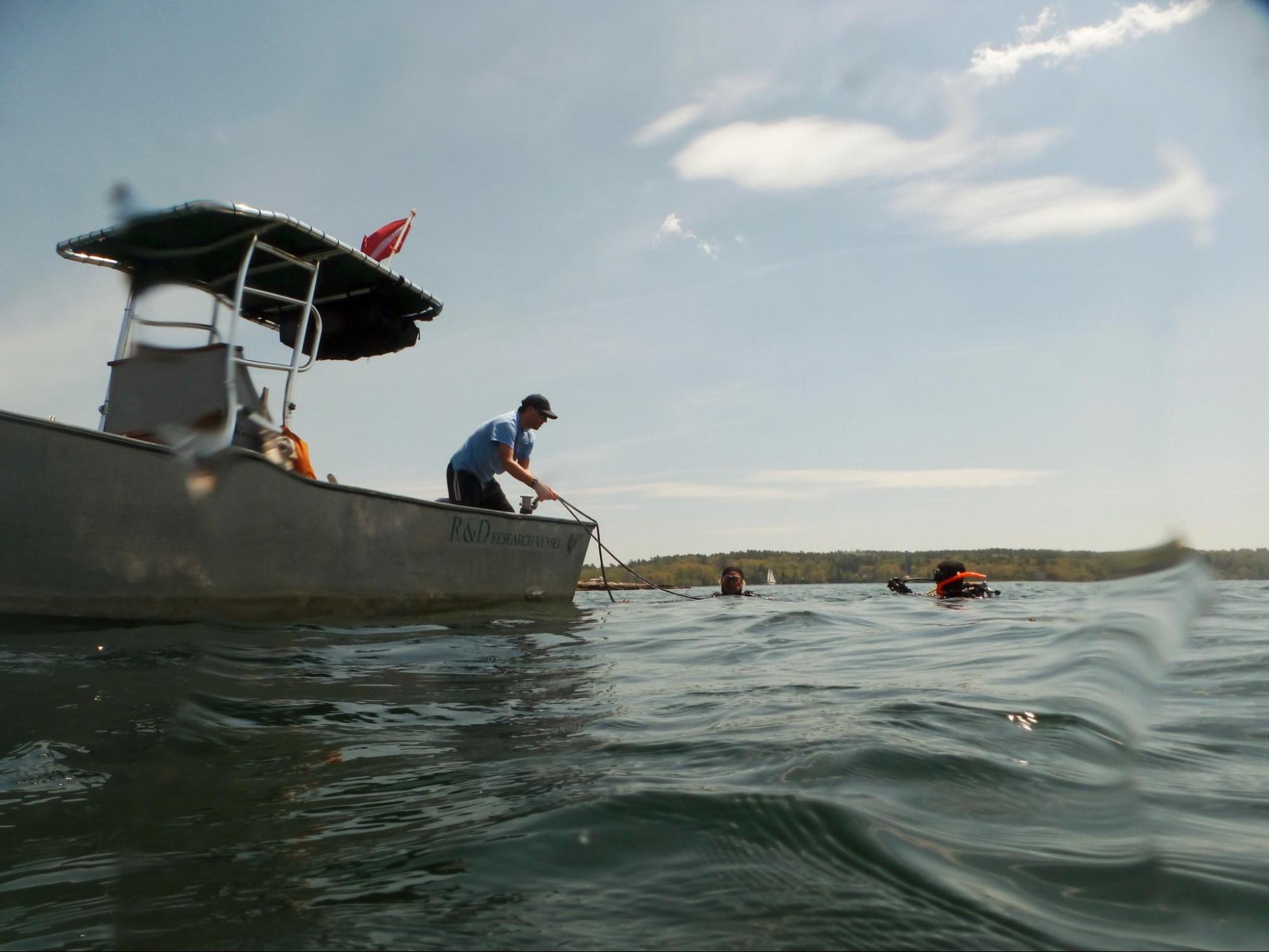
In May, Manomet’s Senior Director of Fisheries, Marissa McMahan, Fisheries Project Manager Jessie Batchelder, and partners Jason Goldstein and Ben Gutzler from the Wells Reserve dove into the water in Casco Bay to deploy acoustic receivers and tag green crabs with acoustic tags. These tags emit a signal that is detected by the receivers, allowing us to track green crab movement in eelgrass habitat. We hope this will help us better understand how green crabs use eelgrass and what impact they may be having on its health. Eelgrass beds are a critical coastal habitat — often called the “nursery of the sea” — yet they have declined significantly over the past two decades. This work is conducted in partnership with Wells National Estuarine Research Reserve and Casco Bay Estuary Partnership, with support from the Maine Coastal and Marine Climate Fund.
More broadly, Manomet is working with partners to better understand the drivers of eelgrass health and develop large-scale restoration strategies across Maine. This includes researching the impact of green crabs on eelgrass beds and mapping historical eelgrass locations in Casco Bay alongside local harvesters — part of a new project led by Casco Bay Estuary Partnership and funded by the Restore America’s Estuaries Program.