



 Back to all
For a long time, we’ve had a blind spot along the Pacific coast of the Americas, and a new study is finally helping to fill it. Published in the November 2025 issue of Ornithological Applications, this research offers the first comprehensive, flyway-wide assessment of nonbreeding shorebirds along the Pacific Americas Flyway. The results derive from the Migratory Shorebird Project (MSP)—the primary coordinated shorebird census along the Pacific Americas Flyway— led by Point Blue Conservation Science in partnership with Asociación Calidris and more than 30 other organizations.
Every year, millions of shorebirds finish their breeding season and fan out across the Pacific Americas Flyway to spend the nonbreeding months (from roughly November through February) on beaches, estuaries, mudflats, and coastal lagoons. But while people have studied shorebirds in certain places, we haven’t had a clear, flyway-wide picture of what’s happening to their populations during this part of their annual journey. This study was set out to answer a basic, urgent question: are shorebirds using the Pacific Americas Flyway also declining—and if so, which ones?
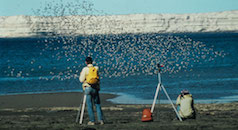
To find out, researchers and partners coordinated standardized surveys across an enormous stretch of coastline. Using the first 10 years of MSP data (2012–2013 through 2021–2022), teams analyzed trends for 22 species across 63 sites between Canada and Peru. The results are concerning, nearly half of the monitored species show declines.
“These findings are a wake-up call for the entire hemisphere. Shorebirds rely on a network of healthy habitats that crosses national boundaries,” said Rob Clay, PhD, Vice President of Flyways at Manomet Conservation Sciences, member of the MSP steering committee, and coauthor of the study, who helped shape the survey’s original design. “When ten years of data reveal such significant losses, it signals that the pressures are systemic and growing. This study gives us, for the first time, a clear picture of what is happening along the Pacific Flyway and underscores the urgent need for coordinated international conservation action.”
The paper reports negative trends for 14 of the 22 studied species, with 7 showing statistically significant declines, including:
- American Avocet (Recurvirostra americana)
- Black-bellied Plover (Pluvialis squatarola)
- Willet (Tringa semipalmata)
- Long-billed Dowitcher (Limnodromus scolopaceus)
- Short-billed Dowitcher (Limnodromus griseus)
- Pacific subspecies of Dunlin (Calidris alpina pacifica)
- Least Sandpiper (Calidris minutilla)
Three additional species exhibited notable non-significant downward trends:
- Hudsonian Whimbrel (Numenius phaeopus hudsonicus)
- Long-billed Curlew (Numenius americanus)
- Sanderling (Calidris alba
Two species showed increases, possibly reflecting successful wetland conservation or management efforts:
- Black-necked Stilt (Himantopus mexicanus)
- Greater Yellowlegs (Tringa melanoleuca)
Why it matters?
These findings matter for conservation across the Americas. Many of the species showing declines are long-distance migrants, which means protecting them takes coordination across countries. Others depend on specific regions or on wetlands that are disappearing fast.
This study offers helps pinpoint where action and resources are most urgently needed. Because declines are showing in many species across large areas, researchers suggest the underlying causes may be widespread and getting worse.
To turn these trends around, we will need to keep tracking shorebird numbers over time, expand surveys in places that have been undercounted, and invest in research that identifies what’s driving the declines so solutions can be targeted and effective.
Some results from this analysis contributed to the 2024 updates to the International Union for Conservation of Nature’s (IUCN) Red List, which elevated 16 migratory shorebird species in the Americas to higher threat categories. Several populations have declined by more than a third over the past few decades. Since 1964, the IUCN Red List has been the world’s most comprehensive assessment of extinction risk.
New recognition for the MSP network
The MSP approach, combining coordinated science with on-the-ground community engagement, is also gaining international recognition. In November 2025, the BBVA Foundation named the Migratory Shorebirds Project the recipient of its Award for Biodiversity Conservation in Latin America (Biophilia Awards), highlighting MSP’s work across 148 coastal wetlands in 11 countries and its documented success in reducing human disturbance to shorebirds. Asociación Calidris received the award on behalf of MSP partners, underscoring that this is a collective achievement built over more than a decade of collaboration.
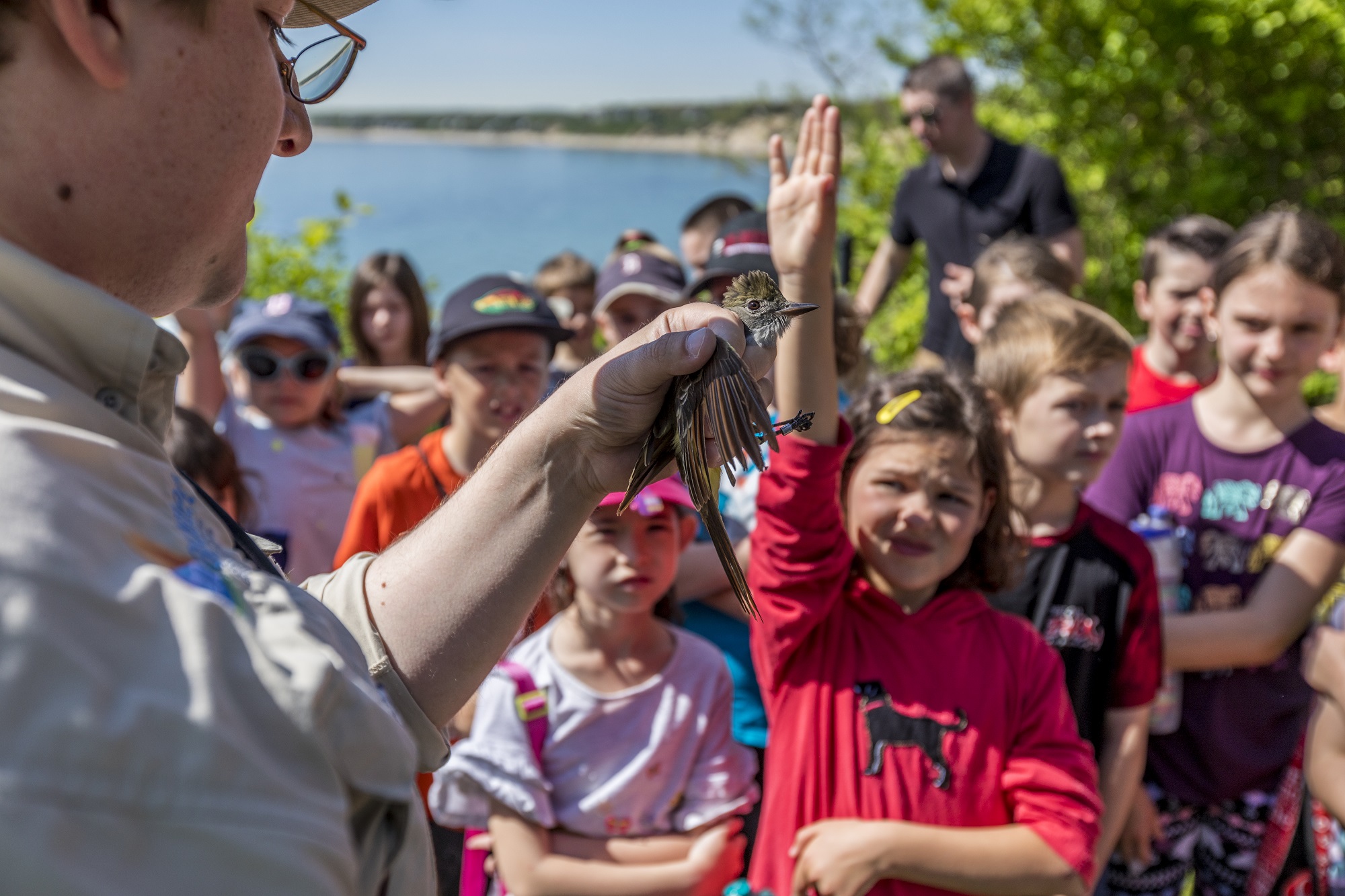
The Migratory Shorebird Project would not have been possible without the dedication of hundreds of volunteers and partner biologists each year representing over 50 organizations and agencies.
Read the full paper: Trends in nonbreeding shorebirds along the Pacific Americas Flyway here.