



 Back to all

Andrea Ferreira
Science Communications Manager
The southern tip of South America is more than a dramatic end-of-the-road landscape. It is a vital winter haven where shorebirds pause to refuel and survive the austral summer. This importance is reflected in four Western Hemisphere Shorebird Reserve Network (WHSRN) designations across the region, three in Argentina and one in Chile. The Atlantic Coast Reserve alone supports an estimated 42% of the continental population of Hudsonian Godwits (Limosa haemastica) and 13.7% of Red Knots (Calidris canutus rufa).
This is also where the legendary “Moonbird,” B95, was banded in 1995. Over his lifetime, B95 flew a distance greater than that between the Earth and the Moon, becoming a symbol of the extraordinary journeys shorebirds undertake and the importance of protecting every link in the flyway.
February started with a theoretical and hands-on training held at the Atlantic Coast Reserve in Tierra del Fuego, Argentina, a WHSRN site, that brought together provincial technical teams and conservation organizations. The goal was to strengthen regional capacity for shorebird monitoring, expand the use of emerging tracking technologies, and advance coordinated conservation strategies across borders.
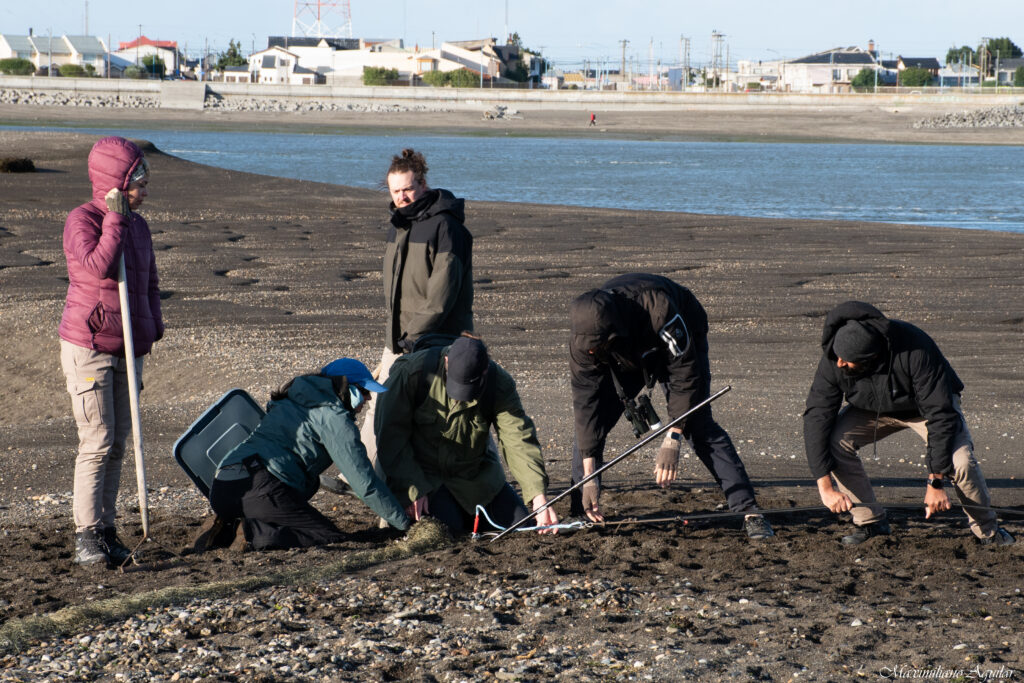
Designed for government technical staff and conservation practitioners, the workshop was organized by Asociación Ambiente Sur, Manomet Conservation Sciences, WHSRN, Fundación Avina, and the provincial government of Tierra del Fuego, with collaboration from Fundación Estepa Viva, Audubon Alaska, and Chile’s Cape Horn International Center (CHIC). The Municipality of Río Grande provided logistical support and access authorizations, alongside permits granted by the Provincial Government for scientific bird capture.

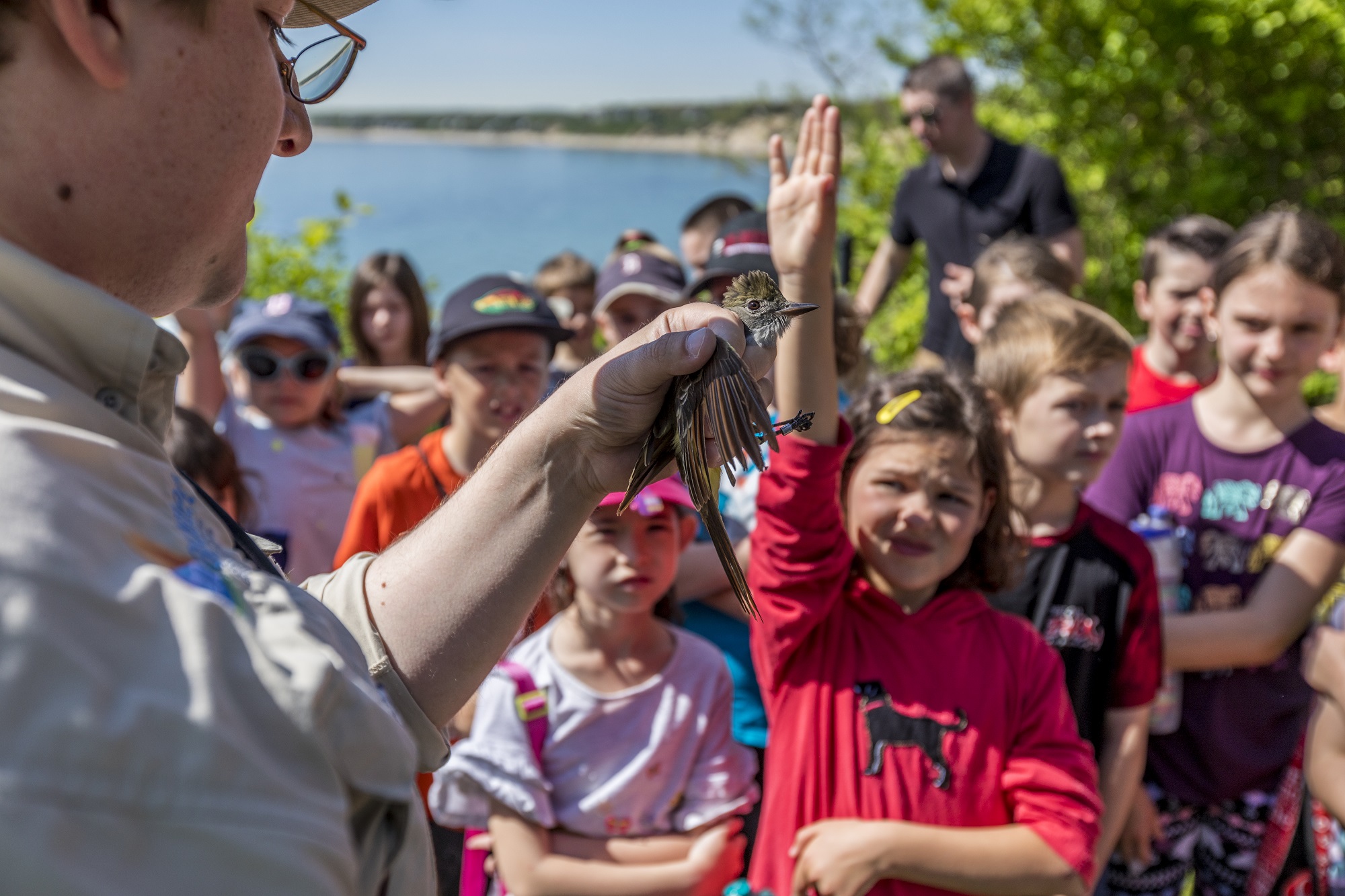
During the field sessions, participants conducted standardized counts following the International Shorebird Survey (ISS) protocol, established temporary banding stations, and practiced capturing techniques using mist nets and whoosh nets. Biometric data was collected, and six radio transmitters were deployed on White-rumped Sandpipers. Capturing techniques and bird handling was led by experienced specialists, including River Gates of Audubon Alaska, Carlos Valeris of CHIC, and Arne Lesterhuis of Manomet, ensuring high standards of animal welfare and scientific rigor.
The program also included theoretical sessions on Motus technology, transmitter deployment, receiver station design, and the use of automated radio telemetry in ecological research – drawing on case studies from South America and other global networks. During the workshop, a new Motus station was installed in Río Grande at a strategically located school building, expanding local capacity to track migratory birds moving through the region.
María Luisa Carranza, Director General of Biodiversity and Conservation for the Province of Tierra del Fuego, emphasized that training sessions like this help build strong technical teams capable of generating high-quality scientific data and supporting effective conservation decisions. Other local government officials echoed this view, noting that the initiative positions Río Grande as a strategic hub for southern hemisphere research while reinforcing long-term commitments to biodiversity conservation and ecosystem protection.
Protecting migratory shorebirds requires coordinated action across countries, institutions, and flyways. From Arctic breeding grounds to southern wintering sites, every stop matters. Trainings like this help ensure that conservation decisions are grounded in strong science and focused on the places where action is needed most.