

 Back to all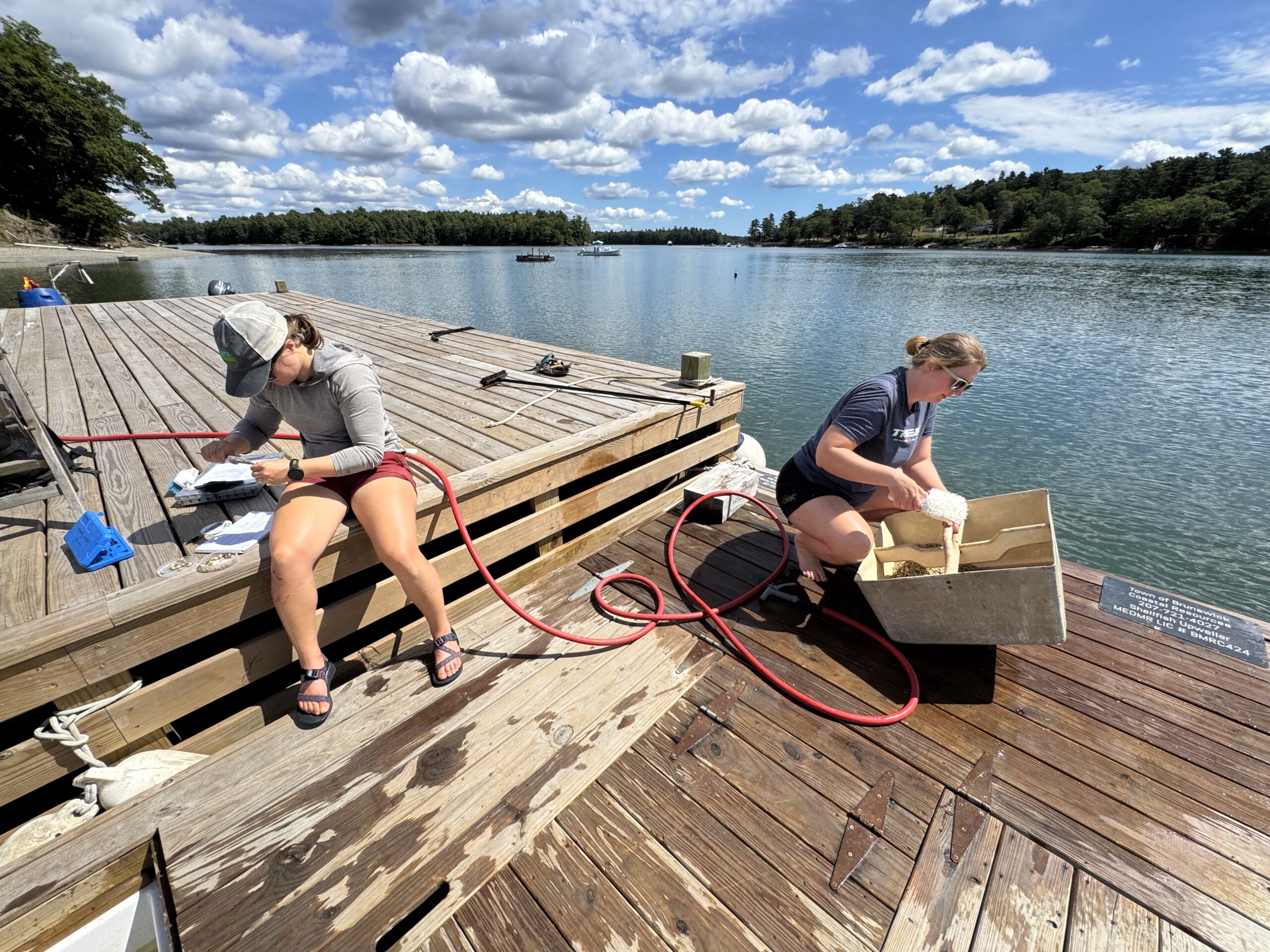
Marissa McMahan, Ph.D
SENIOR DIRECTOR OF FISHERIES
At the end of the 2024 field season, the Fisheries Team was in a bit of a pickle. We had just spent the entire summer testing a method for growing quahog seed (also called hard clams), and the experiment completely failed. All the quahogs, 200,000 of them, died. We think it was likely due to environmental conditions that were out of our control, but it left us feeling defeated and unsure what our next step was.
Quahogs are an important fishery along the East Coast of the U.S., but are relatively new in Maine where historically cold ocean temperatures kept abundance low. However, in recent years, warming waters have created more suitable habitat for quahogs along the coast of Maine and in many areas they have become an important part of local ecosystems and shellfish harvester livelihoods.
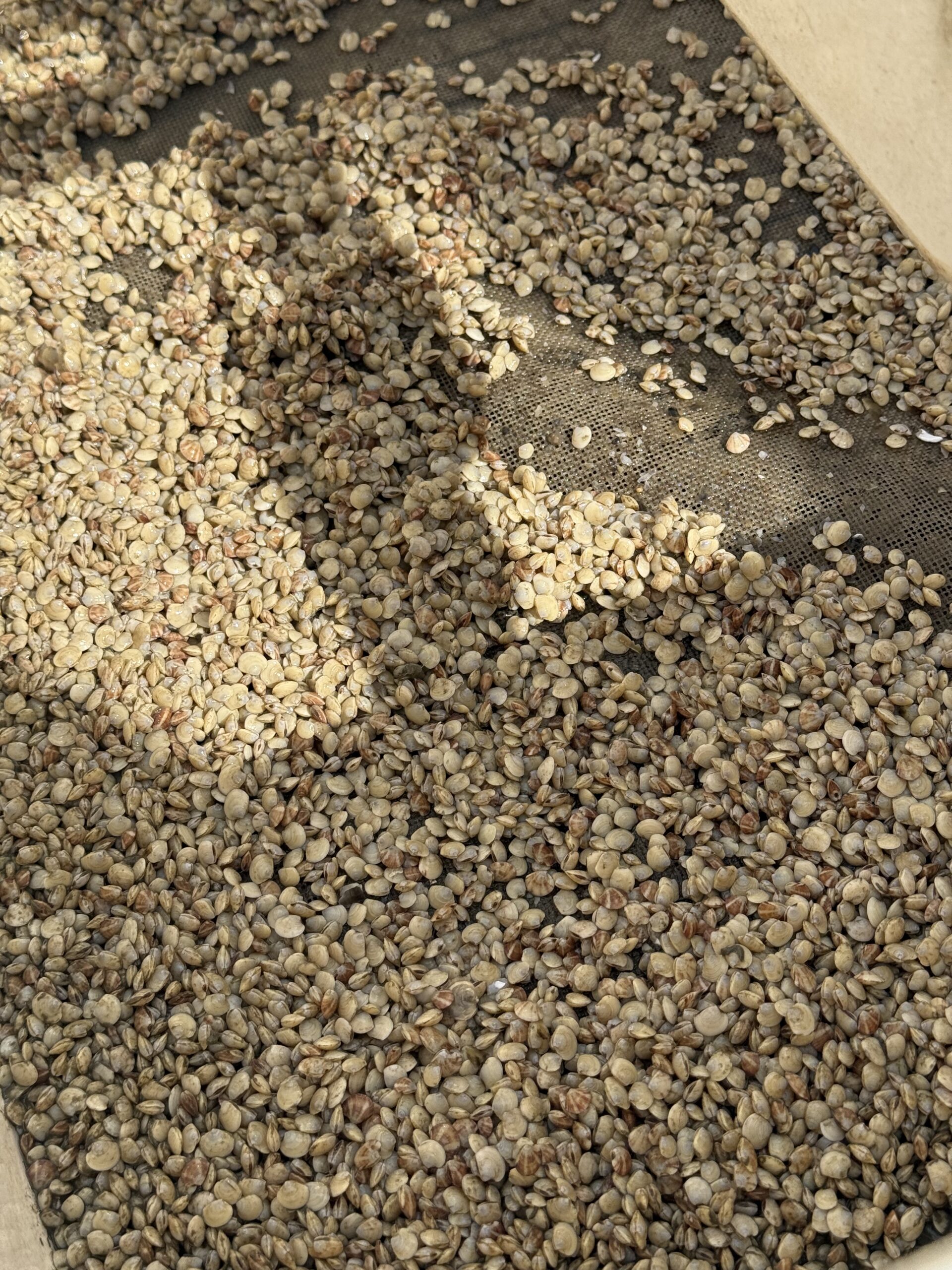
As part of managing a sustainable fishery, many municipal shellfish programs conduct wild stock enhancement to replenish shellfish populations – similar to how fish are stocked in lakes and ponds. This can be challenging with quahogs because there is a limited supply of hatchery raised seed to be purchased, and it is generally not available in the size range that is ideal for planting, which means municipalities then have to grow the seed over the course of several months before planting it. A time and cost intensive process.
The oyster aquaculture industry is also growing in Maine, and presents an interesting opportunity for increasing the production of quahog seed to be used for stock enhancement. Oyster farmers are interested in diversifying the species they grow, and quahogs can often be integrated into the footprint of their farms. Working with industry and research partners, we set out to determine if it is viable for oyster farmers to purchase quahog seed from a hatchery, grow it on their farms until it is large enough to plant, and then sell it to municipal shellfish programs for wild stock enhancement – thereby benefiting both the wild and farmed shellfish industries.
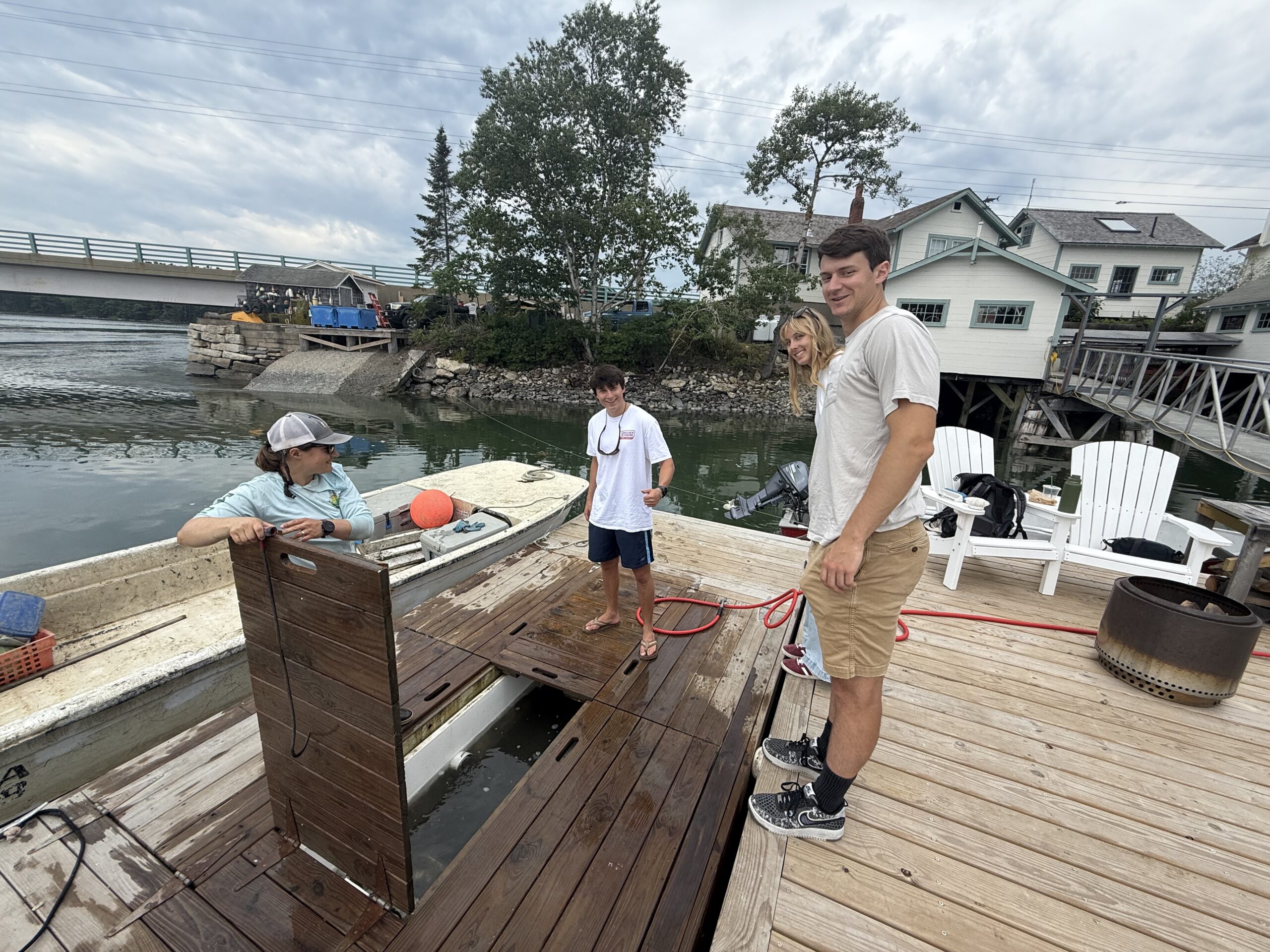
One of the methods we tested was growing quahog seed in a floating upweller system – basically a floating dock with silos where the quahogs are kept and a motor that keeps water constantly flowing through the system. This is a piece of equipment that many oyster farmers already use for raising oyster seed, so it made sense to test it with quahogs. But, quahogs are different from oysters in many ways, and as we soon discovered, a location that works well for growing oysters may not be a good fit for quahogs.
As we entered 2025, we knew we needed to repeat our failed experiment at a new location, specifically a place that had less fresh water influence, which quahogs are sensitive to. Luckily, one of our project partners, Dan Devereaux, the Coastal Resource Officer for the town of Brunswick, had a place in mind. The previous year, the Coastal Resource Office had conducted their own upweller experiments with quahogs at a place called Gurnet Village. Gurnet Village is a privately owned property that was purchased by Blake Civiello and Lili Liu in 2018. Historically, the property was an important working waterfront utilized by many local fishermen, and Blake and Lili were committed to maintaining this working waterfront status when they purchased the property and relocated to Maine from Los Angeles. They graciously agreed to let us run our experiments on their property in 2025, and we had the pleasure of working alongside lobstermen and oyster farmers who also utilize the property, as well as tourists who frequent the Airbnb rental Blake and Lili run.
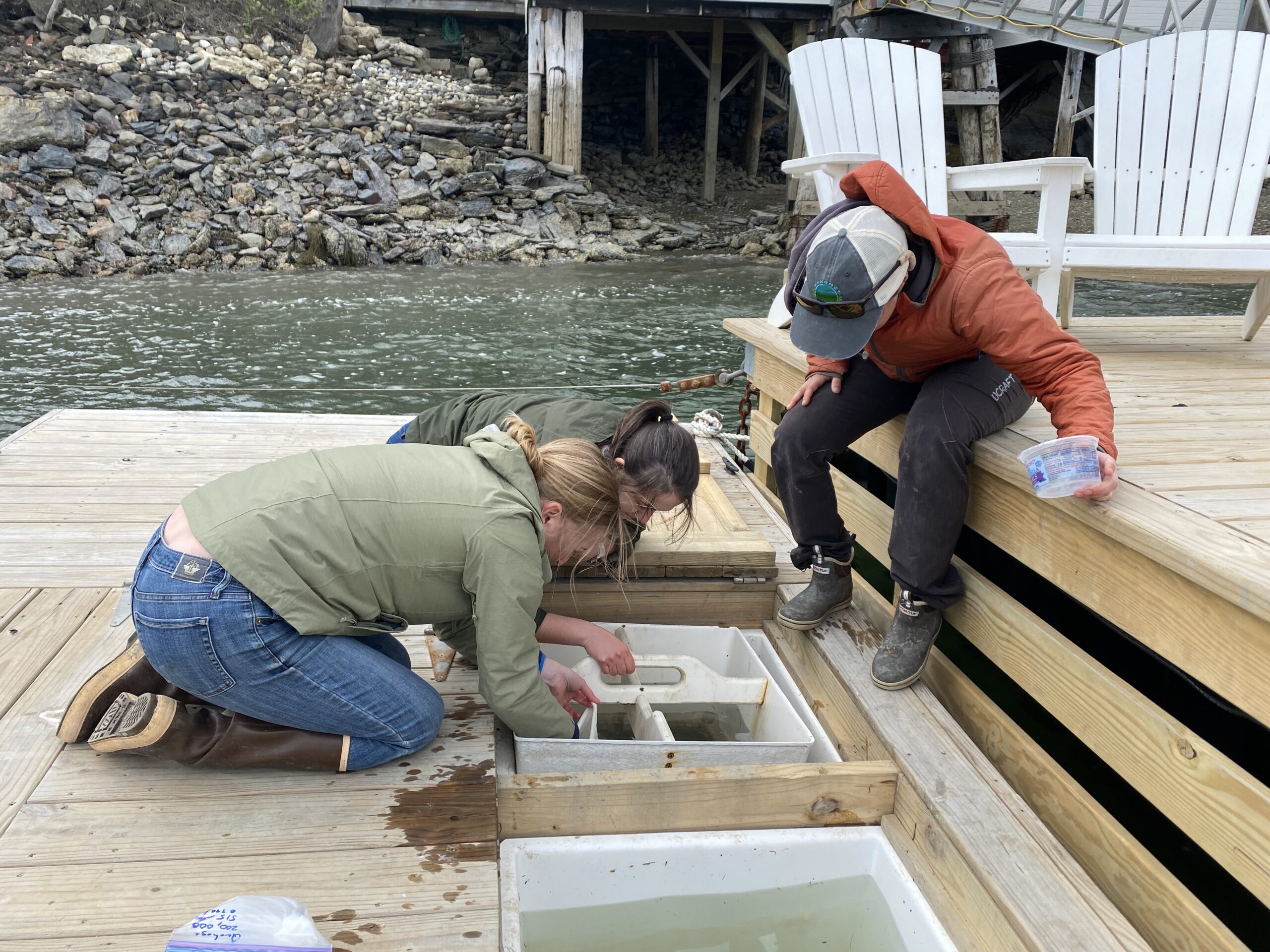
But back to the quahogs! Drumroll please… it was a huge success! We put 400,000 teeny tiny 2 mm sized quahog seeds into the upweller in May, and after careful and frequent rinsing and sorting and measuring, we produced beautiful 15 mm quahogs (PHOTO) that were ready for planting on Brunswick’s mudflats in September and October. What a relief for the project team, and a valuable reminder that failures are often just as important as successes and are how we learn and improve our results. Looking forward, we are excited to broadly share this work at the Northeast Aquaculture Conference and Exposition in January and the Maine Fishermen’s Forum in March.
**The upweller experiments are just one part of a much larger project that is testing multiple gear types, determining economic viability, documenting current and future demand for quahog seed, exploring market development, and ultimately supporting resilience in fishing communities and coastal ecosystems.
**This project is funded by the NOAA Saltonstall Kennedy Program and is being conducted in partnership with Colby College, the Gulf of Maine Research Institute, Sea Meadow Marine Foundation, the Brunswick Coastal Resource Program, Winnegance Oyster, Madeleine Point Oyster, the Phippsburg Shellfish Commission, and the Harpswell Marine Resources Committee.