
Manomet is a nonprofit committed to science-based decisions for humans and nature.
Our scientists and staff work from Alaska to Argentina. Our headquarters are located on a 40-acre waterfront campus in Plymouth, Massachusetts, on Cape Cod Bay, 45 miles south of Boston. We have a satellite office in Brunswick, Maine. With an annual budget of approximately $6M and more than 30 scientists and staff, Manomet offers an entrepreneurial atmosphere of dedicated professionals who support each other toward a common vision of creating a more sustainable world.
Spatial Analyst – Shorebird Tracking & Movement Ecology
Position Title: Spatial Analyst – Shorebird Tracking & Movement Ecology
Department: Science
Reports To: Vice President of Science
HR Job Category: Project Manager
POSITION SUMMARY
Manomet Conservation Sciences, a mission-driven conservation NGO, is seeking a Spatial Analyst to lead the analysis, interpretation, and visualization of shorebird tracking data across the full annual cycle. This position offers a unique opportunity to advance migratory bird conservation through cutting-edge spatial analysis grounded in real-world telemetry data. The ideal candidate is an experienced spatial ecologist with deep expertise in movement ecology, habitat modeling, and conservation applications of tracking data. This position will work closely with field teams, biologists, Indigenous partners, and international collaborators to inform the conservation of critical sites and migratory pathways. The major focus of this research position is to lead cutting edge analyses of shorebird tracking data to help identify factors limiting populations of these species, so that conservation action can be targeted to reverse declines and recover populations.
ABOUT MANOMET:
Manomet is a 501(c)(3) organization that empowers stakeholders through science and works with partners to make a world where ecosystems and human communities thrive. Since Manomet’s beginnings as a bird banding operation in 1969, its science and research have expanded to focus on ecosystem management and resilience, shorebird conservation, and educating tomorrow’s leaders about the importance of the natural world. Workplace diversity, science, and climate change are the fundamental principles driving Manomet’s work today.
ESSENTIAL JOB FUNCTIONS
- Lead the processing and analysis of high-resolution tracking data (e.g., GPS, satellite, archival tags) to identify migratory pathways, stopover sites, and habitat use across the full life cycle of shorebird species, and in particular flagship species in Manomet’s strategic plan and with a special focus on Whimbrel ecology and conservation.
- Develop spatial models to assess habitat selection, connectivity, exposure to threats (e.g., climate change, land use), and seasonal movement patterns.
- Maintain and curate long-term spatial databases and ensure data quality and accessibility for internal and partner use.
- Produce high-quality maps, visualizations, and interactive tools for internal use, reports and scientific publications, and public outreach.
- Contribute to development of spatial decision-support tools that prioritize conservation actions at local, regional, and flyway scales.
- Support the integration of Traditional Knowledge and community-based monitoring into spatial analysis frameworks.
- Collaborate with field scientists, Indigenous communities, and conservation partners to ground-truth spatial analyses and co-design research questions.
- Work across hemispheres with the Shorebird Science and Conservation Collective, NGOs, academic institutions, and government agencies to synthesize and share tracking data.
- Provide spatial science support for conservation planning, policy engagement, and species recovery initiatives.
- Help maintain long-term datasets and publish high-impact research in peer-reviewed journals.
OTHER DUTIES AND RESPONSIBILITIES
- Support data training and technical capacity-building for junior staff, students, and Indigenous partners.
- Co-author publications and contribute to science communication efforts to share research findings broadly.
- Help secure and manage funding through grant writing and reporting, donor proposals, and institutional partnerships.
- Work collaboratively with other scientists and conservation specialists across multiple projects
- Potential to participate in field research projects if desired.
PREPARATION, KNOWLEDGE, SKILLS & ABILITIES
- D. in Spatial Ecology, Wildlife Biology, Quantitative Ecology, or a related field.
- At least 4 years of experience working with animal movement data and geospatial datasets in a conservation context.
- Advanced proficiency in analytical program languages such as R or Python for spatial analysis.
- Strong GIS skills (ArcGIS, QGIS), including remote sensing, spatial statistics, and habitat modeling.
- Strong background with shorebird ecology and migratory connectivity.
- Familiarity with full life cycle demographic models and with incorporating spatial movement and connectivity data to guide conservation planning.
- Demonstrated experience publishing peer-reviewed articles and producing applied conservation products.
- Experience working with telemetry platforms (e.g., Motus, Lotek, CTT, ARGOS, GPS-UHF).
- Experience integrating environmental covariates (e.g., land cover, climate, disturbance) into movement models.
- Knowledge of conservation planning tools and site prioritization approaches.
- Experience working on collaborative research and conservation, and participation in large scale conservation efforts.
- Strong communication skills and a collaborative, interdisciplinary mindset.
- Excellent leadership, communication, and collaboration skills.
- Track record of publication in scientific journals related to bird conservation
- Experience raising grant funding to support research and conservation preferred
- Experience working respectfully with Indigenous communities and integrating Traditional Knowledge with Western science preferred.
- Familiarity with North American Flyway conservation frameworks (e.g., Atlantic, Pacific, Mid-continent, East Asian–Australasian) preferred.
- Must have reliable method of transportation, valid driver’s license and passport
- Must successfully pass a background check
WORKING CONDITIONS/PHYSICAL DEMANDS
- Ability and willingness to travel to various locations in the US as necessary to complete job duties, such as travel to scientific meetings and conferences. Travel may also occasionally be international. Travel is reimbursed (If applicable)
- Close work (paperwork, computer work, visual examination).
- Occasionally walking up and down stairs, standing, and bending.
- Remote/Hybrid remote work possible. Attendance is expected occasionally at Manomet headquarters for meetings, special events, and staff retreats.
SALARY RANGE: $72,000 – $79,000
Compensation commensurate with experience. Manomet offers excellent benefits, including health insurance, dental, 403b match, life insurance, and several other benefits.
HOW TO APPLY:
Please email a resume and cover letter to [email protected] by January 9th, 2026. Please reference the job title Spatial Analyst in the subject line.
The above statements are intended to describe the general nature and level of work being performed by people assigned to do this job. The above is not intended to be an exhaustive list of all responsibilities and duties required.
External and internal applicants, as well as position incumbents who become disabled as defined under the Americans with Disabilities Act must be able to perform the essential job functions (as listed) either unaided or with the assistance of a reasonable accommodation to be determined by management on a case-by-case basis.
Manomet provides equal employment opportunities to all employees and applicants for employment and prohibits discrimination and harassment of any type without regard to race, color, religion, age, sex, national origin, disability status, genetics, protected veteran status, sexual orientation, gender identity or expression, or any other characteristic protected by federal, state, or local laws.
Seasonal Songbird Bander Positions (2)
Position Title: Seasonal Songbird Bander Positions (2)
Department: Landbird Conservation
Reports To: Director of Landbird Conservation
POSITION SUMMARY
Manomet Conservation Sciences is seeking two experienced songbird banders to assist in the operation of our passerine banding station in Plymouth, Massachusetts for the spring 2026 season. Candidates must be available throughout the entire season (April 6 – June 12). At Manomet, Banders are responsible for the daily operation of the station and are expected to assist in hands-on training of two seasonal banding interns over the course of the season. This is an excellent opportunity to gain leadership and training experience, while learning about how to operate a banding station safe and efficiently.
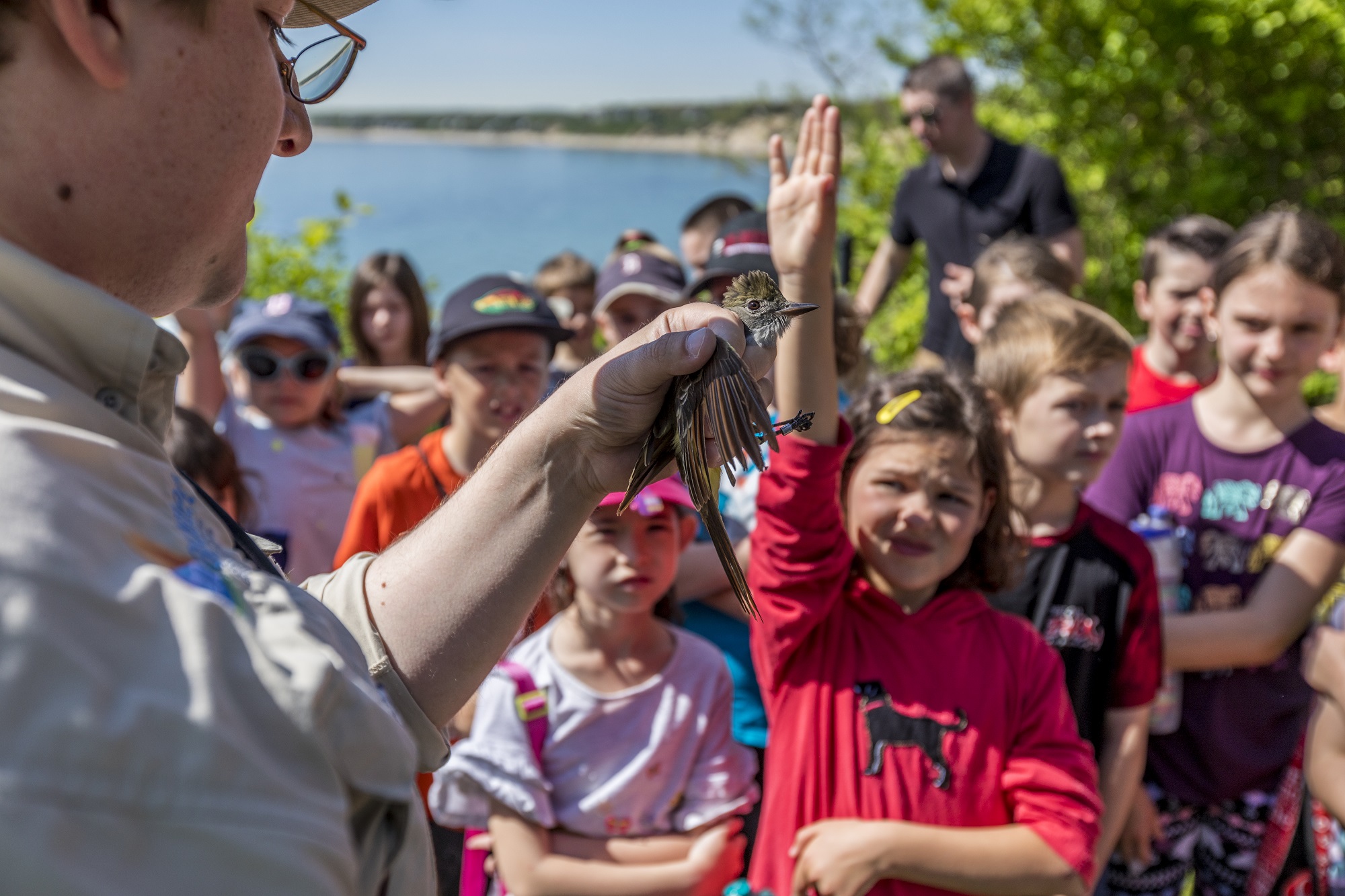
Work hours are Monday-Friday 8 hours/day (40 hours/week) starting a half hour before sunrise. Duties include (but are not limited to), mist-netting, bird banding, data management and biological surveys. Members of the banding staff regularly assist with educational programs and other outreach activities.
Ideal candidates must have significant experience in the use of mist-nets as well as extracting and banding passerines. Candidates must also be comfortable using up-to-date techniques to age and sex passerines and near-passerines using resources such the Identification Guide to North American Birds by Peter Pyle.
ABOUT MANOMET:
Manomet is a 501(c)(3) organization that empowers stakeholders through science and works with partners to make a world where ecosystems and human communities thrive. Since Manomet’s beginnings as a bird banding operation in 1969, its science and research have expanded to focus on ecosystem management and resilience, shorebird conservation, and educating tomorrow’s leaders about the importance of the natural world. Workplace diversity, science, and climate change are the fundamental principles driving Manomet’s work today.
ESSENTIAL JOB FUNCTIONS
- Overseeing daily operation of banding lab
- Training Banding Interns in safe and effective banding techniques
- Data Management and error-checking
- Perform related duties as directed by the Director, Landbird Conservation
PREPARATION, KNOWLEDGE, SKILLS & ABILITIES
- Extensive experience mist-netting and banding passerines
- Demonstrated ability to age and sex North American passerines and near-passerines
- Experience using the Pyle Guide to determine age and sex criteria
- Strong familiarity with birds found in Eastern North America by sight
- Detail oriented with willingness to learn new skills
- Ability to live and work on-site as part of a team
- Interest in environmental education (preferred)
- Must successfully pass a background check
WORKING CONDITIONS/PHYSICAL DEMANDS
- 8-hour days that begin before dawn five days per week
- Ability to work in adverse outdoor conditions, including but not limited to exposure to mosquitoes, ticks, poison ivy, and extremes in weather, like hot sun, cold temperatures, rain, snow, and high winds
- Ability to lift 30 lbs. or move up to 100 lbs. and assist others to do the same
- Frequent walking over uneven terrain and stairs, standing, and bending
- Handling wild birds
- Close work with others (paperwork, visual examination)
COMPENSATION:
Seasonal Songbird Banders will be provided free on-site housing and $20/hour
HOW TO APPLY:
Please email one document containing a cover letter, CV and contact information for at least two references to Evan Dalton. Please reference job title in subject line. CV should include numbers of birds independently extracted and banded. Please include at least one reference who can attest to your banding abilities. Position will be open until filled.
The above statements are intended to describe the general nature and level of work being performed by people assigned to do this job. The above is not intended to be an exhaustive list of all responsibilities and duties required.
External and internal applicants, as well as position incumbents who become disabled as defined under the Americans with Disabilities Act must be able to perform the essential job functions (as listed) either unaided or with the assistance of a reasonable accommodation to be determined by management on a case-by-case basis.
Manomet provides equal employment opportunities to all employees and applicants for employment and prohibits discrimination and harassment of any type without regard to race, color, religion, age, sex, national origin, disability status, genetics, protected veteran status, sexual orientation, gender identity or expression, or any other characteristic protected by federal, state, or local laws.
Songbird Banding Internship (2)
Position Title: Songbird Banding Internship (2)
Department: Landbird Conservation
Reports To: Director of Landbird Conservation
POSITION SUMMARY
Manomet Conservation Sciences is seeking two seasonal songbird banding interns for the spring migration season in Plymouth, Massachusetts. Candidates must be available throughout the entire season (April 6 – June 12). At Manomet, banding interns learn through immersive, hands-on training under the supervision of experienced bird banding staff. Interns are expected to band Monday-Friday 8 hours/day. Duties include (but are not limited to), mist-netting, bird banding, data management and biological surveys. Members of the banding staff regularly assist with educational programs and other outreach activities.
Ideal candidates must possess a fanatical desire to learn about the bird banding process. Familiarity and/or experience with bird-handling or banding, and using references, such as the Identification Guide to North American Birds by Peter Pyle are a bonus.
ABOUT MANOMET:
Manomet is a 501(c)(3) organization that empowers stakeholders through science and works with partners to make a world where ecosystems and human communities thrive. Since Manomet’s beginnings as a bird banding operation in 1969, its science and research have expanded to focus on ecosystem management and resilience, shorebird conservation, and educating tomorrow’s leaders about the importance of the natural world. Workplace diversity, science, and climate change are the fundamental principles driving Manomet’s work today.
ESSENTIAL JOB FUNCTIONS
- Mist-netting birds
- Bird banding
- Data management
- Biological surveys
- Perform related duties as directed by the Director, Landbird Conservation
PREPARATION, KNOWLEDGE, SKILLS & ABILITIES
- Desire to learn about the banding process
- Ability to identify (or learn) Eastern birds by sight
- Must successfully pass a background check
- Familiar with bird banding process (preferred)
- Interest in environmental education (preferred)
WORKING CONDITIONS/PHYSICAL DEMANDS
- 8-hour days that begin before dawn five days per week
- Ability to work in adverse outdoor conditions, including but not limited to exposure to mosquitoes, ticks, poison ivy, and extremes in weather, like hot sun, cold temperatures, rain, snow, and high winds
- Ability to lift 30 lbs. or move up to 100 lbs. and assist others to do the same
- Frequent walking over uneven terrain and stairs, standing, and bending
- Handling wild birds
- Close work with others (paperwork, visual examination)
- Ability to live and work on-site as part of a team
COMPENSATION:
Bird Banders will be provided on-site housing. In addition to housing, interns will receive a stipend of $630 per week.
HOW TO APPLY:
Please email one document containing a cover letter, CV and contact information for at least two references to Evan Dalton. Please reference job title in subject line. Position will be open until filled.
The above statements are intended to describe the general nature and level of work being performed by people assigned to do this job. The above is not intended to be an exhaustive list of all responsibilities and duties required.
External and internal applicants, as well as position incumbents who become disabled as defined under the Americans with Disabilities Act must be able to perform the essential job functions (as listed) either unaided or with the assistance of a reasonable accommodation to be determined by management on a case-by-case basis.
Manomet provides equal employment opportunities to all employees and applicants for employment and prohibits discrimination and harassment of any type without regard to race, color, religion, age, sex, national origin, disability status, genetics, protected veteran status, sexual orientation, gender identity or expression, or any other characteristic protected by federal, state, or local laws.