

 Back to all
 May 13, 2026
  12:00 PM to 1:00 PM
 Zoom
Zoom
Studying shorebirds on the Alaskan tundra using passive acoustics and machine learning
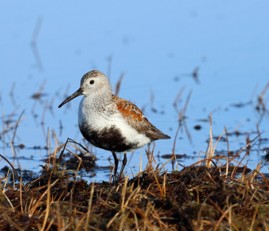
Join Morgan Ziegenhorn (they/she), Manomet’s Data Scientist and Acoustic Ecologist, on an exploration of how we collect and process sounds from the Alaskan tundra. Passive acoustic monitoring is a method of ecosystem surveying that involves passively recording sounds at a study site. However, acoustic data adds up quickly– think multiple terabytes within a couple of years– so automated AI tools for detecting bird sounds within the data are a key step in the analysis process. At Manomet, we’re working in collaboration with USFWS and Canadian partners to use passive acoustic monitoring to augment Manomet’s large scale monitoring of breeding shorebirds and explore whether audio monitoring can improve or replace visual observations of shorebird density. In this presentation, we’ll talk about the basics of passive acoustic monitoring: what it is, why we use it, and how using it in conjunction with AI can provide new, fascinating insights into the lives of birds in remote ecosystems.
About the presenter:
Morgan Ziegenhorn (they/she) is a Research Associate in Data Science and Acoustic Ecology at Manomet Conservation Sciences. Previously, Morgan worked in close collaboration with Manomet scientists as a postdoctoral researcher at the Universite de Moncton in New Brunswick, Canada, conducting groundbreaking research in the analysis of acoustic data sets applied to large-scale shorebird monitoring.
At Manomet, Morgan will continue to work in collaboration with Manomet’s USFWS and Canadian partners on cutting-edge machine learning and advanced statistical analyses of audio recordings of shorebirds in the Arctic. Their current research in this field includes improving automated detection and classification of Arctic shorebird vocalizations, species distribution modelling, and abundance estimation. Along with their colleagues, they are using these approaches to augment Manomet’s large-scale monitoring of breeding shorebirds and explore whether audio monitoring can improve or replace visual observations of shorebird density.